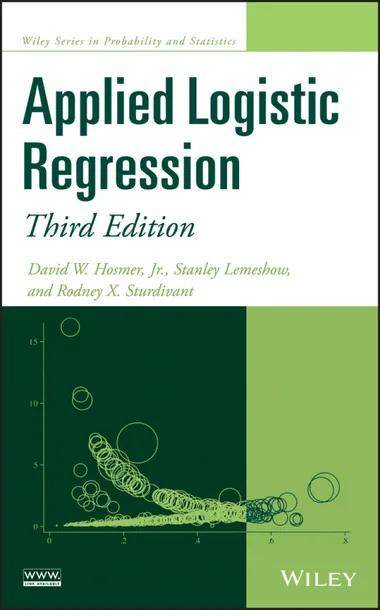
Applied Logistic Regression
by David W. Hosmer, Jr., Stanley Lemeshow, Rodney X. Sturdivant
3rd Edition
Publisher: Wiley
Book Details
| Print ISBN | 9780470582473 |
| eText ISBN | 9781118548356 |
| Publisher | Wiley |
| Publishing Year | 2013 |
| Edition | 3rd Edition |
| Language | English |
| Pages | 528 |
Applied Logistic Regression, 3rd Edition, is a textbook designed to introduce logistic regression modeling by examining relationships between dichotomous outcomes and sets of covariables. The volume emphasizes applications in the health sciences and addresses topics suited for modern statistical software.
Core areas of coverage include multiple logistic regression, model-building strategies, and procedures for assessing model fit. The text also addresses specialized study designs such as cohort investigations, case-control studies, and complex sample surveys, alongside models tailored for multinomial and ordinal responses.
Featuring end-of-chapter exercises and real-world investigations such as the ICU Study, the textbook supports researchers and professionals modeling nominal or ordinal outcomes in public health, medicine, and the social sciences.
Table of Contents
Chapter 1: Introduction to the Logistic Regression Model
- • 1.1 Introduction
- • 1.2 Fitting the Logistic Regression Model
- • 1.3 Testing for the Significance of the Coefficients
- • 1.4 Confidence Interval Estimation
- • 1.5 Other Estimation Methods
- • 1.6 Data Sets Used in Examples and Exercises
- • Exercises
Chapter 2: The Multiple Logistic Regression Model
- • 2.1 Introduction
- • 2.2 The Multiple Logistic Regression Model
- • 2.3 Fitting the Multiple Logistic Regression Model
- • 2.4 Testing for the Significance of the Model
- • 2.5 Confidence Interval Estimation
- • 2.6 Other Estimation Methods
- • Exercises
Chapter 3: Interpretation of the Fitted Logistic Regression Model
- • 3.1 Introduction
- • 3.2 Dichotomous Independent Variable
- • 3.3 Polychotomous Independent Variable
- • 3.4 Continuous Independent Variable
- • 3.5 Multivariable Models
- • 3.6 Presentation and Interpretation of the Fitted Values
- • 3.7 A Comparison of Logistic Regression and Stratified Analysis for 2 × 2 Tables
- • Exercises
Chapter 4: Model-Building Strategies and Methods for Logistic Regression
- • 4.1 Introduction
- • 4.2 Purposeful Selection of Covariates
- • 4.3 Other Methods for Selecting Covariates
- • 4.4 Numerical Problems
- • Exercises
Chapter 5: Assessing the Fit of the Model
- • 5.1 Introduction
- • 5.2 Summary Measures of Goodness of Fit
- • 5.3 Logistic Regression Diagnostics
- • 5.4 Assessment of Fit via External Validation
- • 5.5 Interpretation and Presentation of the Results from a Fitted Logistic Regression Model
- • Exercises
Chapter 6: Application of Logistic Regression with Different Sampling Models
- • 6.1 Introduction
- • 6.2 Cohort Studies
- • 6.3 Case-Control Studies
- • 6.4 Fitting Logistic Regression Models to Data from Complex Sample Surveys
- • Exercises
Chapter 7: Logistic Regression for Matched Case-Control Studies
- • 7.1 Introduction
- • 7.2 Methods For Assessment of Fit in a 1–M Matched Study
- • 7.3 An Example Using the Logistic Regression Model in a 1–1 Matched Study
- • 7.4 An Example Using the Logistic Regression Model in a 1–M Matched Study
- • Exercises
Chapter 8: Logistic Regression Models for Multinomial and Ordinal Outcomes
- • 8.1 The Multinomial Logistic Regression Model
- • 8.2 Ordinal Logistic Regression Models
- • Exercises
Chapter 9: Logistic Regression Models for the Analysis of Correlated Data
- • 9.1 Introduction
- • 9.2 Logistic Regression Models for the Analysis of Correlated Data
- • 9.3 Estimation Methods for Correlated Data Logistic Regression Models
- • 9.4 Interpretation of Coefficients from Logistic Regression Models for the Analysis of Correlated Data
- • 9.5 An Example of Logistic Regression Modeling with Correlated Data
- • 9.6 Assessment of Model Fit
- • Exercises
Chapter 10: Special Topics
- • 10.1 Introduction
- • 10.2 Application of Propensity Score Methods in Logistic Regression Modeling
- • 10.3 Exact Methods for Logistic Regression Models
- • 10.4 Missing Data
- • 10.5 Sample Size Issues when Fitting Logistic Regression Models
- • 10.6 Bayesian Methods for Logistic Regression
- • 10.7 Other Link Functions for Binary Regression Models
- • 10.8 Mediation
- • 10.9 More About Statistical Interaction
- • Exercises
Customer Reviews
0.0
0 reviews
No reviews yet. Be the first to review this book!
Write a Review
Reviewed by GradeFocus Editorial Team
Related Books
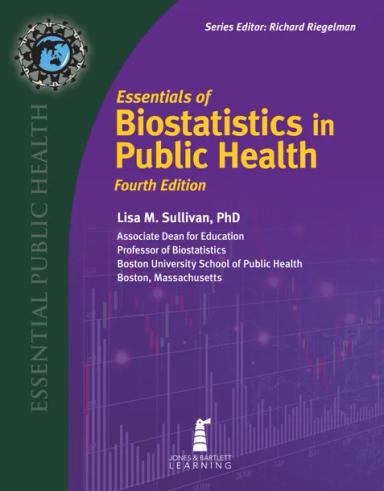
Essentials of Biostatistics in Public Health
Lisa M. Sullivan

Biostatistics for the Biological and Health Sciences
Marc M. Triola
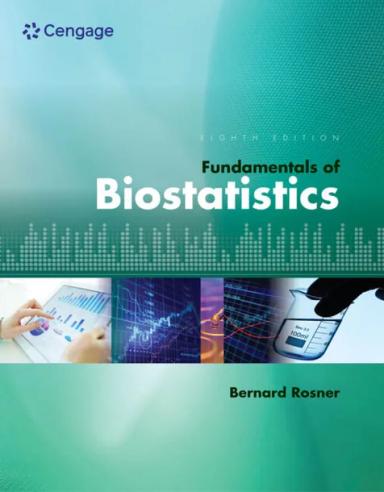
Fundamentals of Biostatistics
Bernard Rosner
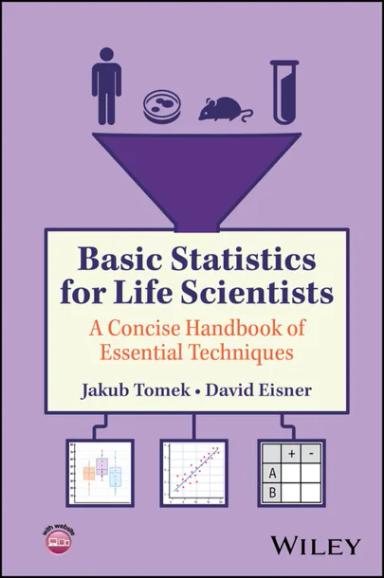
Basic Statistics for Life Scientists
Jakub Tomek
Essentials of Biostatistics in Public Health
Lisa M. Sullivan
Spatial Statistics and Analysis
Anzhelika Antipova