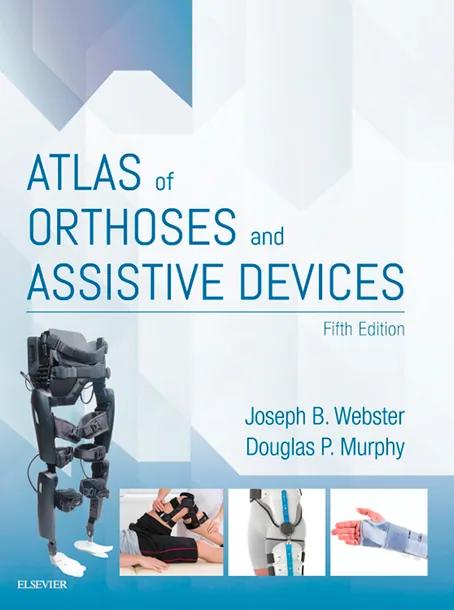
Atlas of Orthoses and Assistive Devices
by Joseph B. Webster, Douglas P. Murphy
5th Edition
Publisher: Elsevier
Book Details
| Print ISBN | 9780323483230 |
| eText ISBN | 9780323554275 |
| Publisher | Elsevier |
| Publishing Year | 2017 |
| Edition | 5th Edition |
| Language | English |
| Pages | 480 |
Atlas of Orthoses and Assistive Devices, 5th Edition, is a clinical reference book designed to help physiatrists, orthopaedic surgeons, orthotists, prosthetists, and rehabilitation specialists collaborate on selecting orthotic devices for patients.
The volume addresses foundational principles of prescription, materials science, and gait analysis alongside biomechanical considerations for spinal, upper limb, and lower limb orthoses. It also covers pediatric orthotics for congenital and acquired conditions as well as mobility aids and broader assistive technologies.
The 2017 edition incorporates developments in materials science, 3D printing, and microprocessor technologies, while introducing Brain-Computer Interface (BCI) systems in relation to assistive technology and orthotics. Every chapter includes a Key Points feature to assist clinical decision-making.
Table of Contents
Section 1: Basics
Section 1: Introduction
Chapter 1: The Orthotic Prescription
Chapter 2: Materials Science
Chapter 3: Principles of Fabrication
Chapter 4: Principles of Normal and Pathologic Gait
Section 2: Spinal Orthoses
Section 2: Introduction
Chapter 5: Biomechanics of the Spine
Chapter 6: Principles and Components of Spinal Orthoses
Chapter 7: Orthoses for Spinal Pain
Chapter 8: Orthoses for Spinal Deformities
Chapter 9: Orthoses for Spinal Trauma and Postoperative Care
Chapter 10: Orthoses for Osteoporosis
Section 3: Upper Limb Orthoses
Section 3: Introduction
Chapter 11: Biomechanics of the Upper Limb
Chapter 12: Principles and Components of Upper Limb Orthoses
Chapter 13: Upper Limb Orthoses for the Stroke and Brain-Injured Patient
Chapter 14: Upper limb Orthoses for Persons with Spinal Cord Injury and Brachial Plexus Injuries
Chapter 15: Orthoses for the Burned Hand
Chapter 16: Orthotic Considerations for Arthritis and Overuse Syndromes in the Upper Extremity
Chapter 17: Functional Bracing of Selected Upper Limb Fractures
Section 4: Lower Limb Orthoses
Section 4: Introduction
Chapter 18: Biomechanics of the Hip, Knee, and Ankle
Chapter 19: Foot Biomechanics
Chapter 20: Shoes and Shoe Modifications
Chapter 21: Foot Orthoses
Chapter 22: Lower Limb Orthoses
Chapter 23: Lower Limb Orthoses for Persons with Spinal Cord Injury
Chapter 24: Orthoses in Total Joint Arthroplasty
Chapter 25: Knee Orthoses for Sports-Related Issues
Chapter 26: Orthotic Management of Neuropathic and Dysvascular Feet
Chapter 27: Orthotic Management of Polio and Postpolio Syndrome
Chapter 28: Lower Limb Orthoses for Persons Who Have Had a Stroke
Chapter 29: Assessment and Orthotic Management of Gait Dysfunction in Individuals with Traumatic Brain Injury
Section 5: Pediatric Orthoses
Section 5: Introduction
Chapter 30: Congenital and Acquired Disorders
Chapter 31: Pediatric Hip Orthoses
Chapter 32: Orthoses for the Muscle Disease Patient
Chapter 33: Orthoses for Cerebral Palsy
Chapter 34: Orthoses for Myelomeningocele
Chapter 35: Cranial Remolding Orthoses
Section 6: Assistive Devices
Section 6: Introduction
Chapter 36: Canes, Crutches, and Walkers
Chapter 37: Wheeled Mobility: Evaluation for Orthotic Seating and Positioning
Chapter 38: Wheeled Mobility: Device Prescription and Care
Chapter 39: Wheelchair and Assistive Device Considerations for Remote Settings
Chapter 40: Communication Devices and Electronic Aids
Chapter 41: Sports Adaptations and Assistive Devices for Recreation
Chapter 42: Driving and Related Assistive Devices
Chapter 43: Neuromuscular Stimulation
Chapter 44: Exoskeletal Assisted Rehabilitation after Spinal Cord Injury
Chapter 45: Future Trends and Research in Orthoses
Customer Reviews
0.0
0 reviews
No reviews yet. Be the first to review this book!
Write a Review
Reviewed by GradeFocus Editorial Team
▶Research Sources (1)
Related Books
Braddom's Physical Medicine and Rehabilitation
David X. Cifu
Motor Control
Anne Shumway-Cook
Pedretti's Occupational Therapy
Heidi McHugh Pendleton
Dreeben-Irimia's Introduction to Physical Therapy Practice
Mark Dutton
Atlas of Interventional Pain Management
Steven D. Waldman
Assistive Technologies
Janice Miller Polgar