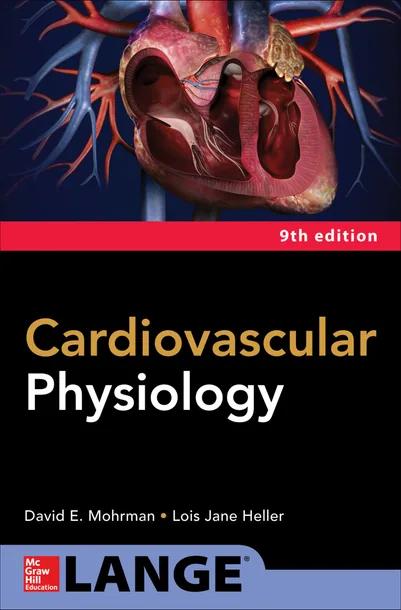
Cardiovascular Physiology
by David E. Mohrman, Lois Jane Heller
9th Edition
Publisher: McGraw-Hill Education / Medical
Book Details
| Print ISBN | 9781260026115 |
| eText ISBN | 9781260026122 |
| Publisher | McGraw-Hill Education / Medical |
| Publishing Year | 2019 |
| Edition | 9th Edition |
| Language | English |
Cardiovascular Physiology, 9th Edition, is a medical textbook that presents the fundamental operating principles of the intact cardiovascular system and demonstrates how those principles apply to clinical medicine.
The volume covers cardiac muscle cell mechanics, heart pump performance, vascular control, and hemodynamic interactions. It also details short-term and long-term regulation of arterial pressure along with cardiovascular adaptations to physiological stresses such as exercise, respiration, and gravity.
Intended for coursework, review for the USMLE Step 1 examination, and refresher study for experienced clinicians, this ninth edition was recognized as a Doody's Core Title for 2021.
Table of Contents
Chapter 1: Overview of the Cardiovascular System
- • Objectives
- • Evolution and Homeostatic Role of the Cardiovascular System
- • Overall Design of the Cardiovascular System
- • The Basic Physics of Blood Flow
- • Material Transport by Blood Flow
- • The Heart
- • The Vasculature
- • Blood
- • Perspectives
Chapter 2: Characteristics of Cardiac Muscle Cells
- • Objectives
- • Electrical Activity of Cardiac Muscle Cells
- • Mechanical Activity of the Heart
- • Relating Cardiac Muscle Cell Mechanics to Ventricular Function
- • Perspectives
Chapter 3: The Heart Pump
- • Objectives
- • Cardiac Cycle
- • Determinants of Cardiac Output
- • Influences on Stroke Volume
- • Summary of Determinants of Cardiac Output
- • Summary of Sympathetic Neural Influences on Cardiac Function
- • Cardiac Energetics
- • Perspectives
Chapter 4: Measurements of Cardiac Function
- • Objectives
- • Measurement of Mechanical Function
- • Measurement of Cardiac Excitation—The Electrocardiogram
- • Perspectives
Chapter 5: Cardiac Abnormalities
- • Objectives
- • Electrical Abnormalities and Arrhythmias
- • Cardiac Valve Abnormalities
- • Perspectives
Chapter 6: The Peripheral Vascular System
- • Objectives
- • Transcapillary Transport
- • Resistance and Flow in Networks of Vessels
- • Normal Conditions in the Peripheral Vasculature
- • Measurement of Arterial Pressure
- • Determinants of Arterial Pressure
- • Perspectives
Chapter 7: Vascular Control
- • Objectives
- • Vascular Smooth Muscle
- • Control of Arteriolar Tone
- • Control of Venous Tone
- • Summary of Primary Vascular Control Mechanisms
- • Vascular Control in Specific Organs
- • Perspectives
Chapter 8: Hemodynamic Interactions
- • Objectives
- • Key System Components
- • Central Venous Pressure: An Indicator of Circulatory Status
- • Perspectives
Chapter 9: Regulation of Arterial Pressure
- • Objectives
- • Short-Term Regulation of Arterial Pressure
- • Long-Term Regulation of Arterial Pressure
- • Perspectives
Chapter 10: Cardiovascular Responses to Physiological Stresses
- • Objectives
- • Primary Disturbances and Compensatory Responses
- • Effect of Respiratory Activity
- • Effect of Gravity
- • Effect of Exercise
- • Normal Cardiovascular Adaptations
- • Perspectives
Chapter 11: Cardiovascular Function in Pathological Situations
- • Objectives
- • Circulatory Shock
- • Cardiac Disturbances
- • Hypertension
- • Perspectives
Chapter Appendix A: Appendix A
Chapter Appendix B: Appendix B
Chapter Appendix C: Appendix C
Chapter Appendix D: Appendix D
Chapter Appendix E: Appendix E
Customer Reviews
0.0
0 reviews
No reviews yet. Be the first to review this book!
Write a Review
Reviewed by GradeFocus Editorial Team