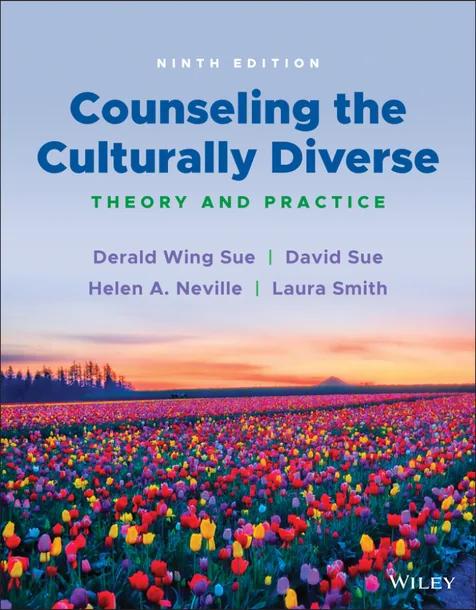
Counseling the Culturally Diverse
Theory and Practice
by Derald Wing Sue, David Sue, Helen A. Neville
9th Edition
Publisher: Wiley
Book Details
| Print ISBN | 9781119861904 |
| eText ISBN | 9781119861911 |
| Publisher | Wiley |
| Publishing Year | 2022 |
| Edition | 9th Edition |
| Language | English |
| Pages | 432 |
The textbook Counseling the Culturally Diverse: Theory and Practice, 9th Edition, is an academic work co-authored by Derald Wing Sue, David Sue, Helen A. Neville, and Laura Smith. Published by Wiley, this edition articulates theoretical frameworks and clinical intervention strategies designed for multicultural clinical practice.
Section 1 examines affective, conceptual, and clinical practice dimensions within multicultural counseling and therapy. Subsequent chapters build upon this foundational overview by analyzing critical clinical topics, including minority stress, microaggressions, social justice counseling, cultural humility, and the specific role of white allies in multicultural therapeutic environments.
To support learning and retention, the volume embeds Reflection and Discussion Questions within each chapter to encourage active reader engagement. The material offers structured guidance aligned with the professional needs of mental health practitioners, social workers, psychiatrists, and researchers.
Table of Contents
Chapter 1: Understanding Resistance to Multicultural Training: Obstacles to Developing Cultural Competence
- • Expections for the Course
- • Reflection and Discussion Questions
- • Reactions to the Course
- • By The Numbers
- • Emotional Self-Revelations and Fears: Majority Group Members
- • Emotional Invalidation Versus Affirmation: Marginalized Group Members
- • A Word of Caution
- • Recognizing and Understanding Resistance to Multicultural Training
- • Cognitive Resistance—Denial
- • Emotional Resistance
- • Did You Know?
- • Behavioral Resistance
- • Cultural Competence and Emotions
- • Implications for Clinical Practice
- • Summary
- • Glossary Terms
- • References
Chapter 2: Multicultural Counseling and Therapy (MCT)
- • Race and Culture Matter
- • Reflection and Discussion Questions
- • Culture-Universal (ETIC) Versus Culture-Specific (EMIC) Formulations
- • Cultural Concepts of Distress
- • Acknowledging Group Differences
- • Being Aware of Collectivistic Cultures
- • Attuning to Cultural and Clinical Clues
- • Balancing the Culture-Specific and Culture-Universal Orientations
- • The Nature of Multicultural Counseling Competence
- • The Harm of Cultural Insensitivity
- • Good Counseling is Culturally Responsive Counseling
- • By The Numbers
- • Understanding The Three Dimensions of Identity
- • Individual Level: “All Individuals Are in Some Respects Like No Other Individuals”
- • Group Level: “All Individuals Are in Some Respects Like Some Other Individuals”
- • Universal Level: “All Individuals Are in Some Respects Like All Other Individuals”
- • Individual and Universal Biases in Psychology and Mental Health
- • The Impact of Group Identities on Counseling and Psychotherapy
- • What is Multicultural Counseling and Therapy?
- • What is Cultural Competence?
- • Box 2.1: Multicultural Counseling Competencies
- • Did You Know?
- • Social Justice and Cultural Competence
- • Implications for Clinical Practice
- • Summary
- • Glossary Terms
- • References
Chapter 3: Cultural Perspectives and Barriers: The Individual Interplay of Cultural Experiences
- • Reflection and Discussion Questions
- • Characteristics of Conventional Counseling
- • Culture-Bound Values
- • Focus on the Individual
- • Verbal/Emotional/Behavioral Expressiveness
- • Insight
- • Self-Disclosure Openness and Intimacy
- • Styles of Communication
- • Did You Know?
- • Scientific Empiricism
- • Distinctions Between Mental and Physical Functioning
- • Patterns of Cultural Assumptions and Multicultural Family Counseling/Therapy
- • People–Nature Dimension
- • Time Dimension
- • Relational Dimension
- • Activity Dimension
- • Nature of People Dimension
- • Language Barriers
- • Class-Bound Values and Perspectives
- • By The Numbers
- • The Damaging Impact of Poverty
- • Therapeutic Class Bias
- • Overgeneralizing and Stereotyping
- • Implications for Clinical Practice
- • Summary
- • Glossary Terms
- • References
Chapter 4: Microaggressions: Implications for Counseling and Psychotherapy
- • Reflection and Discussion Questions
- • Contemporary Forms of Oppression: Racism Sexism & Heterosexism
- • The Evolution of the “ISMS”: Microaggressions
- • Microassault
- • Microinsult
- • Microinvalidation
- • By The Numbers
- • The Dynamics and Dilemmas of Microaggressions
- • Dilemma 1: The Clash of Sociodemographic Realities
- • Dilemma 2: The Invisibility of Unintentional Expressions of Bias
- • Dilemma 3: The Perceived Minimal Harm of Microaggressions
- • Dilemma 4: The Catch-22 of Responding to Microaggressions
- • Did You Know?
- • Therapeutic Implications
- • Microinterventions: The New Therapeutic Frontier
- • Implications for Clinical Practice
- • Summary
- • Glossary Terms
- • References
Chapter 5: Sociohistorical Privilege and Oppression: Implications for Counseling and Psychotherapy
- • An Open Letter to Brothers and Sisters of Color
- • Reflection and Discussion Questions
- • Mental Health Practice and the Reproduction of Oppression
- • Connecting the Dots Between Mental Health Practice and Social Justice: An Overview
- • The Danger of a Single Story: Ethnocentric Monoculturalism
- • Did You Know?
- • Understanding Ethnocentric Monoculturalism
- • Historical Manifestations of Ethnocentric Monoculturalism
- • Ethnocentric Monoculturalism Sociohistorical Oppression and Mental Health
- • Ethnocentric Monoculturalism and Foundational Psychotherapeutic Theory
- • Definitions of Mental Health
- • Connections to the Counseling and Mental Health Literature
- • Pathology and Persons of Color
- • By The Numbers
- • Ethnocentric Monoculturalism and Mental Health Practice: Psychotherapy as a Racial-Cultural Microcosm
- • MCT as a Social Justice Approach to Mental Health Practice
- • Social Justice Advocacy and Cultural Humility
- • Implications for Clinical Practice
- • Summary
- • Glossary Terms
- • References
Chapter 6: Racial Ethnic Cultural (REC) Identity Attitudes in People of Color: Counseling Implications
- • Case Study: Alejandro: Afro-Puerto
- • Racial Awakening
- • Just American to Puerto Rican/Afro-Latino
- • Denial Breakdown
- • The Internal Struggle for Identity
- • Locus of the Problem
- • REC Identity Attitude Models
- • Did You Know?
- • William E. Cross’ Nigrescence Model: Foundational Theory
- • A General Model of Rec Identity
- • Conformity Status
- • Dissonance Status
- • Resistance and Immersion Status
- • Introspection Status
- • Integrative Awareness Status
- • Counseling Implications of the R/CID Model
- • By The Numbers
- • Value of a General Rec Identity Framework
- • Reflection and Discussion Questions
- • Implications for Clinical Practice
- • Summary
- • Glossary Terms
- • References
Chapter 7: White Racial Consciousness: Implications for Counseling and Psychotherapy
- • Whiteness and Multicultural Counseling
- • Reflection and Discussion Questions
- • Steps Toward an Understanding of Whiteness and White Identity
- • Did You Know
- • Models of White Racial Identity Development
- • The Hardiman White Racial Identity Development Model
- • The Helms White Racial Identity Development Model
- • A Descriptive Model of White Identity: Seven Positions
- • By The Numbers
- • An Antiracist White Identity
- • White Antiracist Identifications
- • Principles of Prejudice Reduction
- • Principle 1: Learn About People of Color From Sources Within the Group
- • Principle 2: Learn From the Examples of Healthy and Strong People of the Culture
- • Principle 3: Learn From Experiential Reality
- • Principle 4: Learn From Constant Vigilance of Your Biases and Fears
- • Principle 5: Learn From Being Committed to Personal Action Against Racism
- • Implications for Clinical Practice
- • Summary
- • Glossary Terms
- • References
Chapter 8: Multicultural Counseling Competence and Cultural Humility for People of Color Counselors and Therapists
- • Interracial And Interethnic Biases
- • Impact On Interracial Counseling Relationships
- • Racial Stereotypes Held by People of Color
- • The Who-Is-More-Oppressed Game
- • Interracial and Interethnic Counseling
- • By The Numbers
- • Reflection and Discussion Questions
- • The Politics of Interracial and Interethnic Bias and Discrimination
- • The Political Relationships Between Groups of Color
- • African Americans and Asian Americans
- • Asian Americans and Latinx Americans
- • Latinx Americans and African Americans
- • American Indians and Black Latinx and Asian Americans
- • Within Group Differences Among Racial/Ethnic Groups
- • Cultural Values
- • Communication Styles
- • Issues Regarding Stage of Ethnic Identity
- • Did You Know?
- • Counselors of Color and Dyadic Combinations
- • Challenges Associated with Counselor of Color and White Client Dyads
- • Situation 1: Challenging the Competency of Counselors of Color
- • Situation 2: Needing to Prove Competence
- • Situation 3: Transferring Racial Animosity toward White Clients
- • Situation 4: Viewing the Counselor of Color as a Super Minority Counselor
- • Situation 5: Dealing with Client Expressions of Racism
- • Challenges Associated with Counselor of Color and Client of Color Dyads
- • Situation 1: Overidentifying with the Client
- • Situation 2: Encountering Clashes in Cultural Values
- • Situation 3: Experiencing Clashes in Communication and Counseling Styles
- • Situation 4: Receiving and Expressing Racial Animosity
- • Situation 5: Dealing with the Racial Identity Status of Counselors and Clients
- • Implications for Clinical Practice
- • Summary
- • Glossary Terms
- • References
Chapter 9: Multicultural Evidence-Based Practice
- • Reflection and Discussion Questions
- • Empirically-Supported Therapies (ESTs)
- • Empirically Supported Relationships (ESRs)
- • Did You Know?
- • The Therapeutic Alliance
- • Emotional or Interpersonal Bond
- • Empathy
- • Positive Regard Respect Warmth and Genuineness
- • Therapist Self-Disclosure
- • Management of Countertransference
- • Goal Consensus
- • Evidence-Based Practice and Diversity Issues in Counseling
- • By The Numbers
- • Implications for Clinical Practice
- • Summary
- • Glossary Terms
- • References
Chapter 10: Indigenous and Cultural Methods of Healing Among People of Color: Implications for Multicultural Counseling and Therapy (MCT)
- • Worldviews and Cultural Concepts of Distress
- • The Shaman and Traditional Healer as Therapist: Commonalities
- • Case Study: The Nguyen Family
- • A Case of Child Abuse?
- • Did You Know?
- • The Principles of Indigenous Healing
- • Holistic Outlook Interconnectedness and Harmony
- • Belief in Metaphysical Levels of Existence
- • Acceptance of Spirituality in Life and the Cosmos
- • By The Numbers
- • Reflection and Discussion Questions
- • Radical Healing Among People of C
Customer Reviews
0.0
0 reviews
No reviews yet. Be the first to review this book!
Write a Review
Reviewed by GradeFocus Editorial Team
▶Research Sources (8)
- Counseling the Culturally Diverse | Rent | 9781119861911
- Counseling the Culturally Diverse: Theory and Practice
- Counseling the Culturally Diverse
- Counseling the Culturally Diverse - ISBN 9781119861911
- Counseling the Culturally Diverse Theory and Practice 9th
- [Book] Counseling the Culturally Diverse: Theory and ...
- Counseling the Culturally Diverse: Theory and… by Derald ...
- Counseling the Culturally Diverse: Theory and Practice 9th Edition.