
Discipline of Nursing
Three-time Knowledge
by Michel Nadot
1st Edition
Publisher: John Wiley & Sons P&T
Book Details
| Print ISBN | 9781786304292 |
| eText ISBN | 9781119801597 |
| Publisher | John Wiley & Sons P&T |
| Publishing Year | 2020 |
| Edition | 1st Edition |
| Language | English |
| Pages | 304 |
Discipline of Nursing: Three-time Knowledge, 1st Edition, examines the historical and epistemological foundations of nursing. The volume investigates the roots of care practices to clarify the nature of nursing services and address persistent myths and misrepresentations about the profession's background.
The text organizes the evolution of nursing knowledge into three chronological phases: lay knowledge, protodisciplinary knowledge, and scientific knowledge. It explores early hospital settings, domestic care, and the gradual transition of training into educational institutions.
A central feature compares the nineteenth-century training models developed by Florence Nightingale in Great Britain and Valérie de Gasparin-Boissier in Switzerland.
Table of Contents
Chapter Foreword: Foreword
Chapter Preface: Preface
Chapter Introduction: Introduction
Part 1: Lay Knowledge
Chapter 1: Role of History
- • 1.1. Lay knowledge
- • 1.2. A difficult history for an ordinary experience
Chapter 2: The Hospital as a Place to Talk
- • 2.1. The origin of the hospital
- • 2.2. The care environment
Chapter 3: Care Before 1850
- • 3.1. Maison staff
- • 3.2. Sacred values in the period of lay knowledge
- • 3.3. Nurses (enfermières)
- • 3.4. Nurses and gardes-malades
- • 3.5. City physicians
Chapter 4: Practices and Knowledge
- • 4.1. Domus or looking after property life
- • 4.2. Hominem or looking after human life
- • 4.3. Familia or looking after group life
- • 4.4. Never enough time to do everything
Chapter 5: A Return to Image: Minion Syndrome
- • 5.1. Even more knowledge
- • 5.2. The economically unnecessary provision of services
Part 2: Protodisciplinary Knowledge
Chapter 6: From Hospital-School to School-Hospital
- • 6.1. A non-religious form of training
- • 6.1.1. Valérie de Gasparin
- • 6.2. Valérie de Gasparin and Florence Nightingale
Chapter 7: The Advent of Medical Writing
- • 7.1. The ERR process for practical knowledge
- • 7.2. Nursing students and writing
Chapter 8: Towards Higher Education
- • 8.1. Women’s groups
- • 8.2. Non-university higher education structures
- • 8.3. Towards university schools and scientific research
- • 8.4. Europe and the Hautes écoles spécialisées (HES)
Chapter 9: A Return to Image: The Shaping of Knowledge
- • 9.1. Duplication of reduced knowledge
- • 9.2. The problematic identity of knowledge
Part 3: Scientific Knowledge
Chapter 10: Nursing Sciences?
- • 10.1. Profession first, discipline and science second!
- • 10.2. Historical constants of the discipline
- • 10.2.1. Domus–familia–(ad)hominem
- • 10.2.2. Three cultural and linguistic systems
- • 10.2.3. Medium, mediation, cultural intermediary
- • 10.2.4. Concepts of the nursing disciplinary metaparadigm
- • 10.2.5. Fourteen groups of practices
Chapter 11: The Construction of the Discipline
- • 11.1. The green knowledge theory
- • 11.2. Compulsory basic knowledge
Chapter 12: Identity and Discipline
- • 12.1. Why health mediology?
- • 12.2. The identity of our knowledge and health mediology
Chapter 13: A Return to Image: “Where Do We Go Now”?
- • 13.1. An intergenerational continuity of knowledge
- • 13.2. Ordinary practices before advanced practices
Chapter Conclusion: Conclusion
Chapter References: References
Chapter Index: Index
Customer Reviews
0.0
0 reviews
No reviews yet. Be the first to review this book!
Write a Review
Reviewed by GradeFocus Editorial Team
Related Books
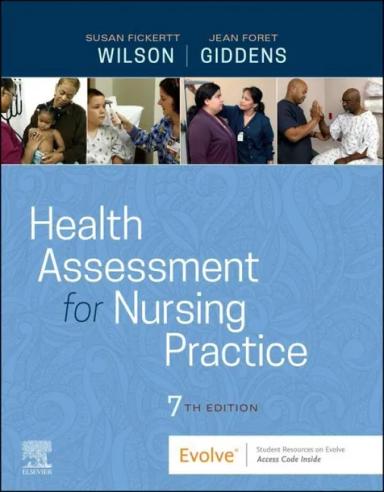
Health Assessment for Nursing Practice
Susan Fickertt Wilson
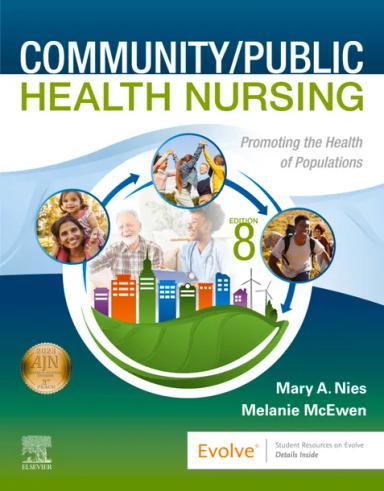
Community/Public Health Nursing
Mary A. Nies

Leddy & Pepper's Professional Nursing
Lucy J. Hood

Nursing Informatics and the Foundation of Knowledge
Dee McGonigle

Nursing Informatics and the Foundation of Knowledge
Dee McGonigle

Davis Advantage for Fundamentals of Nursing Care
Marti Burton