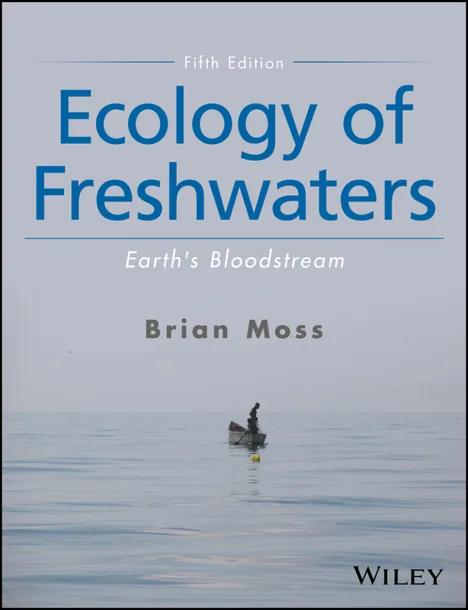
Ecology of Freshwaters
Earth's Bloodstream
by Brian R. Moss
5th Edition
Publisher: Wiley-Blackwell
Book Details
| Print ISBN | 9781119239406 |
| eText ISBN | 9781119239437 |
| Publisher | Wiley-Blackwell |
| Publishing Year | 2018 |
| Edition | 5th Edition |
| Language | English |
| Pages | 560 |
Ecology of Freshwaters: Earth's Bloodstream, 5th Edition, presents a global examination of freshwater habitats, aquatic communities, and ecosystem functioning. The textbook explores the natural dynamics of inland waters alongside the growing impacts of human society.
The volume addresses fundamental aquatic physics and chemistry, biological diversity across microscopic and multicellular life, and the distinct characteristics of rivers and lakes. It highlights human pressures in the Anthropocene epoch, including widespread ecosystem alteration and the consequences of ongoing climate change.
Illustrated with full-color figures, this revised edition provides clear discussions without technical jargon. It serves undergraduate and graduate students, scientific researchers, and water managers working across freshwater resource management and conservation.
Table of Contents
Chapter 1: The world as it was and the world as it is
- • 1.1 Early ecological history
- • 1.2 The more recent past
- • 1.3 Characteristics of freshwater organisms
- • 1.4 Freshwater biodiversity
- • 1.5 A spanner in the works?
- • 1.6 Politics and pollution
- • 1.7 On the nature of textbooks
- • 1.8 Further reading
Chapter 2: Early evolution and diversity of freshwater organisms
- • 2.1 Introduction
- • 2.2 The freshwater biota
- • 2.3 Bacteria
- • 2.4 The variety of bacteria
- • 2.5 Viruses
- • 2.6 Two sorts of cells
- • 2.7 The diversity of microbial eukaryotes
- • 2.8 Algae
- • 2.9 Kingdoms of eukaryotes
- • 2.10 Further reading
Chapter 3: Diversity continued: multicellular organisms in freshwaters
- • 3.1 Introduction
- • 3.2 Osmoregulation
- • 3.3 Reproduction, resting stages and aestivation
- • 3.4 Getting enough oxygen
- • 3.5 Insects
- • 3.6 Big animals, air‐breathers and swamps
- • 3.7 Dispersal among freshwaters
- • 3.8 Patterns in freshwater diversity
- • 3.9 Fish faunas
- • 3.10 The fish of Lake Victoria
- • 3.11 Overall diversity in freshwaters
- • 3.12 Environmental DNA
- • 3.13 Further reading
Chapter 4: Water: a remarkable unremarkable substance
- • 4.1 Introduction
- • 4.2 The molecular properties of water and their physical consequences
- • 4.3 Melting and evaporation
- • 4.4 How much water is there and where is it?
- • 4.5 Patterns in hydrology
- • 4.6 Bodies of water and their temperatures
- • 4.7 An overview of mixing patterns
- • 4.8 Viscosity of water and fluid dynamics
- • 4.9 Diffusion
- • 4.10 Further reading
Chapter 5: Water as a habitat: some background water chemistry
- • 5.1 Introduction
- • 5.2 Polar and covalent compounds
- • 5.3 The atmosphere
- • 5.4 Carbon dioxide
- • 5.5 Major ions
- • 5.6 The big picture
- • 5.7 Further reading
Chapter 6: Key nutrients, trace elements and organic matter
- • 6.1 Introduction
- • 6.2 Concepts of limiting substances
- • 6.3 Experiments on nutrient limitation
- • 6.4 Nutrient supply and need
- • 6.5 Phosphorus
- • 6.6 Nitrogen
- • 6.7 Pristine concentrations
- • 6.8 Trace elements and silicon
- • 6.9 Organic substances
- • 6.10 Substance budgets and movements
- • 6.11 Sediment-water relationships
- • 6.12 Further reading
Chapter 7: Light thrown upon the waters
- • 7.1 Light
- • 7.2 Effects of the atmosphere
- • 7.3 From above to under the water
- • 7.4 Remote sensing
- • 7.5 Further reading
Chapter 8: Headwater streams and rivers
- • 8.1 Introduction
- • 8.2 General models of stream ecosystems
- • 8.3 The basics of stream flow
- • 8.4 Flow and discharge
- • 8.5 Laminar and turbulent flow
- • 8.6 Particles carried
- • 8.7 The response of stream organisms to shear stress
- • 8.8 Community composition in streams
- • 8.9 Algal and plant communities
- • 8.10 Macroinvertebrates
- • 8.11 Streams in different climates: the polar and alpine zones
- • 8.12 Invertebrates of kryal streams
- • 8.13 Food webs in cold streams
- • 8.14 Stream systems in the cold‐temperate zone
- • 8.15 Allochthonous sources of energy
- • 8.16 Stream orders
- • 8.17 The river continuum concept
- • 8.18 Indirectly, wolves are stream animals too
- • 8.19 Scarcity of nutrients
- • 8.20 Warm‐temperate streams
- • 8.21 Desert streams
- • 8.22 Tropical streams
- • 8.23 Further reading
Chapter 9: Uses, misuses and restoration of headwater streams and rivers
- • 9.1 Traditional use of headwater river systems
- • 9.2 Deforestation
- • 9.3 Acidification
- • 9.4 Eutrophication
- • 9.5 Commercial afforestation
- • 9.6 Settlement
- • 9.7 Engineering impacts
- • 9.8 Alterations of the fish community and introduced species
- • 9.9 Sewage and toxic pollution and their treatment
- • 9.10 Diffuse pollution
- • 9.11 River monitoring
- • 9.12 The Water Framework Directive
- • 9.13 Implementation of the Directive
- • 9.14 Restoration and rehabilitation ecology
- • 9.15 Further reading
Chapter 10: Rich systems: floodplain rivers
- • 10.1 Introduction
- • 10.2 From an erosive river to a depositional one
- • 10.3 Submerged plants
- • 10.4 Growth of submerged plants
- • 10.5 Methods of measuring the primary productivity of submerged plants
- • 10.6 Enclosure methods
- • 10.7 Other methods
- • 10.8 Submerged plants and the river ecosystem
- • 10.9 Farther downstream: swamps and floodplains
- • 10.10 Productivity of swamps and floodplain marshes
- • 10.11 Swamp soils and the fate of the high primary production
- • 10.12 Oxygen supply and soil chemistry in swamps
- • 10.13 Emergent plants and flooded soils
- • 10.14 Swamp and marsh animals
- • 10.15 Whitefish and blackfish
- • 10.16 Latitudinal differences in floodplains
- • 10.17 Polar floodplains
- • 10.18 Cold‐temperate floodplains
- • 10.19 Warm‐temperate floodplains
- • 10.20 Tropical floodplains
- • 10.21 The Sudd
- • 10.22 Further reading
Chapter 11: Floodplains and human affairs
- • 11.1 Introduction
- • 11.2 Floodplain services
- • 11.3 Floodplain fisheries
- • 11.4 Floodplain swamps and human diseases
- • 11.5 Case studies: the Pongola River
- • 11.6 River and floodplain management and rehabilitation
- • 11.7 Mitigation: plant bed management in rivers
- • 11.8 Enhancement
- • 11.9 Rehabilitation
- • 11.10 Inter‐basin transfers and water needs
- • 11.11 Further reading
Chapter 12: Lakes and other standing waters
- • 12.1 Introduction
- • 12.2 The origins of lake basins
- • 12.3 Lake structure
- • 12.4 The importance of the catchment area
- • 12.5 Lakes as autotrophic or heterotrophic systems
- • 12.6 The continuum of lakes
- • 12.7 Lake history
- • 12.8 Organic remains
- • 12.9 General problems of interpretation of evidence from sediment cores
- • 12.10 Two ancient lakes
- • 12.11 Younger lakes
- • 12.12 Filling in
- • 12.13 Summing‐up
- • 12.14 Further reading
Chapter 13: The communities of shallow standing waters: mires,shallow lakes and the littoral zone
- • 13.1 Introduction
- • 13.2 What determines the nature of mires and littoral zones?
- • 13.3 Temperature
- • 13.4 Nutrients
- • 13.5 Littoral communities in lakes
- • 13.6 The structure of littoral communities
- • 13.7 Periphyton
- • 13.8 Heterotrophs among the plants
- • 13.9 Neuston
- • 13.10 Linkages, risks and insurances among the littoral communities
- • 13.11 Latitude and littorals
- • 13.12 The role of the nekton
- • 13.13 Further reading
Chapter 14: Plankton communities of the pelagic zone
- • 14.1 Kitchens and toilets
- • 14.2 Phytoplankton and sinking
- • 14.3 Photosynthesis and growth of phytoplankton
- • 14.4 Net production and growth
- • 14.5 Nutrient uptake and growth rates of phytoplankton
- • 14.6 Distribution of freshwater phytoplankton
- • 14.7 Washout
- • 14.8 Cyanobacterial blooms
- • 14.9 Heterotrophs in the plankton: viruses and bacteria
- • 14.10 The microbial pathway
- • 14.11 Zooplankton
- • 14.12 Grazing
- • 14.13 Feeding and grazing rates of zooplankton
- • 14.14 Competition and predation among grazers
- • 14.15 Predation on zooplankters by invertebrates
- • 14.16 Fishes in the open‐water community
- • 14.17 Predation on the zooplankton and fish production
- • 14.18 Avoidance of vertebrate predation by the zooplankton
- • 14.19 Piscivores and piscivory
- • 14.20 Functioning of the open‐water community
- • 14.21 Polar lakes
- • 14.22 Cold‐temperate lakes
- • 14.23 Warm‐temperate lakes
- • 14.24 Very warm lakes in the tropics
- • 14.25 Further reading
Chapter 15: The profundal zone and carbon storage
- • 15.1 The end of the line
- • 15.2 The importance of oxygen
- • 15.3 Profundal communities
- • 15.4 Biology of selected benthic invertebrates
- • 15.5 What the sediment‐living detritivores really eat
- • 15.6 Influence of the open‐water community on the profundal benthos
- • 15.7 Sediment storage and the global carbon cycle
- • 15.8 Further reading
Chapter 16: Fisheries in standing waters
- • 16.1 Some general principles
- • 16.2 Some basic fish biology
- • 16.3 Eggs
- • 16.4 Feeding
- • 16.5 Breeding
- • 16.6 Choice of fish for a fishery
- • 16.7 Measurement of fish production
- • 16.8 Growth measurement
- • 16.9 Fish production and commercial fisheries in lakes
- • 16.10 Changes in fisheries: a case study
- • 16.11 The East African Great Lakes
- • 16.12 Fish culture
- • 16.13 Stillwater angling
- • 16.14 Amenity culture and the aquarium trade
- • 16.15 Further reading
Chapter 17: The uses, abuses and restoration of standing waters
- • 17.1 Introduction
- • 17.2 Services provided by standing waters
- • 17.3 Domestic water supply, eutrophication and reservoirs
- • 17.4 Eutrophication – nutrient pollution
- • 17.5 Dams and reservoirs
- • 17.6 Fisheries in new lakes
- • 17.7 Effects downstream of the new lake
- • 17.8 New tropical lakes and human populations
- • 17.9 Man‐made tropical lakes, the balance of pros and cons
- • 17.10 Amenity and conservation
- • 17.11 The alternative states model
- • 17.12 Ponds
- • 17.13 Restoration approaches for standing waters: symptom treatment
- • 17.14 Treatment of proximate causes: nutrient control
- • 17.15 Present supplies of phosphorus, their relative contributions and how they are related to the algal crop
- • 17.16 Methods available for reducing total phosphorus loads
- • 17.17 In‐lake methods
- • 17.18 Complications for phosphorus control – sediment sources
- • 17.19 Nitrogen reduction
- • 17.20 Habitat creation
- • 17.21 Further reading
Chapter 18: Climate change and the future of freshwaters
- • 18.1 Introduction
- • 18.2 Climate change
- • 18.3 Existing effects of freshwaters
- • 18.4 Future effects
- • 18.5 Future effects on freshwaters
- • 18.6 Switches and feedbacks
- • 18.7 Wicked problems
- • 18.8 Mitigation of global warming
- • 18.9 The remedy of ultimate causes
- • 18.10 Rewilding the world
- • 18.11 Reforming governments
- • 18.12 Further reading
Customer Reviews
0.0
0 reviews
No reviews yet. Be the first to review this book!
Write a Review
Reviewed by GradeFocus Editorial Team