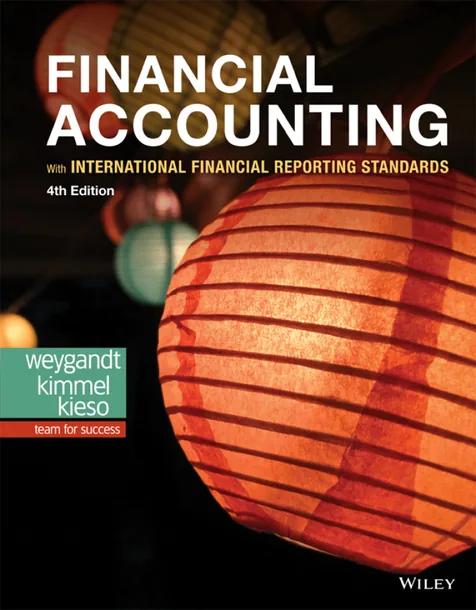
Financial Accounting with International Financial Reporting Standards
by Jerry J. Weygandt, Paul D. Kimmel, Donald E. Kieso
4th Edition
Publisher: Wiley
Book Details
| Print ISBN | 9781119504306 |
| eText ISBN | 9781119503408 |
| Publisher | Wiley |
| Publishing Year | 2019 |
| Edition | 4th Edition |
| Language | English |
| Pages | 864 |
Financial Accounting with International Financial Reporting Standards, 4th Edition, is a textbook that presents core accounting principles and procedures within an international framework. The volume examines International Financial Reporting Standards while highlighting an increased integration of U.S. GAAP rules.
Coverage centers on the complete accounting cycle alongside core corporate reporting practices. Discussion addresses how business activities are recorded, adjusted, and presented across financial statements, including the statement of cash flows.
Structured around modular learning objectives, the textbook centers on international company operations. To reflect global practice, end-of-chapter exercises and problems feature foreign currency examples instead of relying solely on U.S. dollars.
Table of Contents
Chapter 1: Accounting in Action
- • Knowing the Numbers
- • Accounting Activities and Users
- • Three Activities
- • Who Uses Accounting Data
- • The Building Blocks of Accounting
- • Ethics in Financial Reporting
- • Accounting Standards
- • Measurement Principles
- • Assumptions
- • The Accounting Equation
- • Assets
- • Liabilities
- • Equity
- • Analyzing Business Transactions
- • Accounting Transactions
- • Transaction Analysis
- • Summary of Transactions
- • Financial Statements
- • Income Statement
- • Retained Earnings Statement
- • Statement of Financial Position
- • Statement of Cash Flows
- • Comprehensive Income Statement
- • Appendix 1A: Career Opportunities in Accounting
- • Public Accounting
- • Private Accounting
- • Governmental Accounting
- • Forensic Accounting
- • A Look at U.S. GAAP
Chapter 2: The Recording Process
- • Accidents Happen: Bank of Taiwan
- • Accounts, Debits, and Credits
- • The Account
- • Debits and Credits
- • Equity Relationships
- • Summary of Debit/Credit Rules
- • The Journal
- • The Recording Process
- • The Ledger and Posting
- • The Ledger
- • Posting
- • Chart of Accounts
- • The Recording Process Illustrated
- • Summary Illustration of Journalizing and Posting
- • The Trial Balance
- • Limitations of a Trial Balance
- • Locating Errors
- • Currency Signs and Underlining
- • A Look at U.S. GAAP
Chapter 3: Adjusting the Accounts
- • What Was Your Profit?: Cadbury
- • Accrual-Basis Accounting and Adjusting Entries
- • Fiscal and Calendar Years
- • Accrual- versus Cash-Basis Accounting
- • Recognizing Revenues and Expenses
- • The Need for Adjusting Entries
- • Types of Adjusting Entries
- • Adjusting Entries for Deferrals
- • Prepaid Expenses
- • Unearned Revenues
- • Adjusting Entries for Accruals
- • Accrued Revenues
- • Accrued Expenses
- • Summary of Basic Relationships
- • Adjusted Trial Balance and Financial Statements
- • Preparing the Adjusted Trial Balance
- • Preparing Financial Statements
- • Appendix 3A: Alternative Treatment of Deferrals
- • Summary of Additional Adjustment Relationships
- • Appendix 3B: Financial Reporting Concepts
- • Qualities of Useful Information
- • Assumptions in Financial Reporting
- • Principles in Financial Reporting
- • Cost Constraint
- • A Look at U.S. GAAP
Chapter 4: Completing the Accounting Cycle
- • Speaking the Same Language: IASB
- • The Worksheet
- • Steps in Preparing a Worksheet
- • Preparing Financial Statements from a Worksheet
- • Preparing Adjusting Entries from a Worksheet
- • Closing the Books
- • Preparing Closing Entries
- • Posting Closing Entries
- • Preparing a Post-Closing Trial Balance
- • The Accounting Cycle and Correcting Entries
- • Summary of the Accounting Cycle
- • Reversing Entries—An Optional Step
- • Correcting Entries—An Avoidable Step
- • Classified Statement of Financial Position
- • Intangible Assets
- • Property, Plant, and Equipment
- • Long-Term Investments
- • Current Assets
- • Equity
- • Non-Current Liabilities
- • Current Liabilities
- • Appendix 4A: Reversing Entries
- • Reversing Entries Example
- • A Look at U.S. GAAP
Chapter 5: Accounting for Merchandise Operations
- • Who Doesn’t Shop?: Carrefour
- • Merchandising Operations and Inventory Systems
- • Operating Cycles
- • Flow of Costs
- • Recording Purchases Under a Perpetual System
- • Freight Costs
- • Purchase Returns and Allowances
- • Purchase Discounts
- • Summary of Purchasing Transactions
- • Recording Sales Under a Perpetual System
- • Sales Returns and Allowances
- • Sales Discounts
- • The Accounting Cycle for a Merchandising Company
- • Adjusting Entries
- • Closing Entries
- • Summary of Merchandising Entries
- • Financial Statements for a Merchandiser
- • Income Statement
- • Classified Statement of Financial Position
- • Appendix 5A: Worksheet for a Merchandising Company
- • Using a Worksheet
- • Appendix 5B: Periodic Inventory System
- • Determining Cost of Goods Sold Under a Periodic System
- • Recording Merchandise Transactions
- • Recording Purchases of Merchandise
- • Recording Sales of Merchandise
- • Journalizing and Posting Closing Entries
- • A Look at U.S. GAAP
Chapter 6: Inventories
- • “Where is That Spare Bulldozer Blade?”: Komatsu
- • Classifying and Determining Inventory
- • Classifying Inventory
- • Determining Inventory Quantities
- • Inventory Methods and Financial Effects
- • Specific Identification
- • Cost Flow Assumptions
- • Financial Statement and Tax Effects of Cost Flow Methods
- • Using Inventory Cost Flow Methods Consistently
- • Effects of Inventory Errors
- • Income Statement Effects
- • Statement of Financial Position Effects
- • Inventory Statement Presentation and Analysis
- • Presentation
- • Lower-of-Cost-or-Net Realizable Value
- • Analysis
- • Appendix 6A: Inventory Cost Flow Methods in Perpetual Inventory Systems
- • First-In, First-Out (FIFO)
- • Average-Cost
- • Appendix 6B: Estimating Inventories
- • Gross Profit Method
- • Retail Inventory Method
- • Appendix 6C: LIFO Inventory Method
- • A Look at U.S. GAAP
Chapter 7: Fraud, Internal Control, and Cash
- • Minding the Money at Nick’s: Nick’s Steakhouse and Pizza
- • Fraud and Internal Control
- • Fraud
- • Internal Control
- • Principles of Internal Control Activities
- • Limitations of Internal Control
- • Cash Controls
- • Cash Receipts Controls
- • Cash Disbursements Controls
- • Petty Cash Fund
- • Control Features of a Bank Account
- • Making Bank Deposits
- • Writing Checks
- • Electronic Funds Transfer (EFT) System
- • Bank Statements
- • Reconciling the Bank Account
- • Reporting Cash
- • Cash Equivalents
- • Restricted Cash
- • A Look at U.S. GAAP
Chapter 8: Accounting for Receivables
- • Are You Going to Pay Me—or Not?: BNP Paribas
- • Recognition of Accounts Receivable
- • Types of Receivables
- • Recognizing Accounts Receivable
- • Valuation and Disposition of Accounts Receivable
- • Valuing Accounts Receivable
- • Disposing of Accounts Receivable
- • Notes Receivable
- • Determining the Maturity Date
- • Computing Interest
- • Recognizing Notes Receivable
- • Valuing Notes Receivable
- • Disposing of Notes Receivable
- • Presentation and Analysis
- • Presentation
- • Analysis
- • A Look at U.S. GAAP
Chapter 9: Plant Assets, Natural Resources, and Intangible Assets
- • How Much for a Ride to the Beach?: Rent-A-Wreck
- • Plant Asset Expenditures
- • Determining the Cost of Plant Assets
- • Expenditures During Useful Life
- • Depreciation Methods
- • Factors in Computing Depreciation
- • Component Depreciation
- • Depreciation and Income Taxes
- • Revaluation of Plant Assets
- • Revising Periodic Depreciation
- • Plant Asset Disposals
- • Retirement of Plant Assets
- • Sale of Plant Assets
- • Natural Resources and Intangible Assets
- • Natural Resources and Depletion
- • Intangible Assets
- • Statement Presentation and Analysis
- • Presentation
- • Analysis
- • Appendix 9A: Exchange of Plant Assets
- • Loss Treatment
- • Gain Treatment
- • A Look at U.S. GAAP
Chapter 10: Current Liabilities
- • Financing His Dreams: Wilbert Murdock
- • Accounting for Current Liabilities
- • What is a Current Liability?
- • Notes Payable
- • Value-Added and Sales Taxes Payable
- • Unearned Revenues
- • Salaries and Wages
- • Current Maturities of Long-Term Debt
- • Reporting and Analyzing Current Liabilities
- • Reporting Uncertainty
- • Reporting of Current Liabilities
- • Analysis of Current Liabilities
- • A Look at U.S. GAAP
Chapter 11: Non-Current Liabilities
- • Are We Living on Borrowed Time?
- • Overview of Bonds
- • Types of Bonds
- • Issuing Procedures
- • Bond Trading
- • Determining the Market Price of a Bond
- • Bond Transactions
- • Issuing Bonds at Face Value
- • Discount or Premium on Bonds
- • Issuing Bonds at a Discount
- • Issuing Bonds at a Premium
- • Redeeming Bonds
- • Accounting for Non-Current Liabilities
- • Long-Term Notes Payable
- • Lease Liabilities
- • Reporting and Analyzing Non-Current Liabilities
- • Presentation
- • Analysis
- • Debt and Equity Financing
- • Appendix 11A: Eff ective-Interest Method of Bond Amortization
- • Amortizing Bond Discount
- • Amortizing Bond Premium
- • Appendix 11B: Straight-Line Amortization
- • A Look at U.S. GAAP
Chapter 12: Corporations: Organization, Share Transactions, and Equity
- • To the Victor Go the Spoils: adidas
- • The Corporate Form of Organization
- • Characteristics of a Corporation
- • Forming a Corporation
- • Shareholder Rights
- • Share Issue Considerations
- • Corporate Capital
- • Accounting for Share Transactions
- • Accounting for Ordinary Shares
- • Accounting for Preference Shares
- • Accounting for Treasury Shares
- • Dividends and Splits
- • Accounting for Cash Dividends
- • Dividend Preferences
- • Accounting for Share Dividends
- • Accounting for Share Splits
- • Reporting and Analyzing Equity
- • Retained Earnings
- • Presentation of Statement of Financial Position
- • Analysis
- • Appendix 12A: Statement of Changes in Equity
- • Appendix 12B: Book Value—Another per Share Amount
- • Book Value per Share
- • Book Value versus Market Price
- • A Look at U.S. GAAP
Chapter 13: Investments
- • Playing for Fun and Profit: Sony
- • Debt Investments
- • Why Companies Invest
- • Accounting for Debt Investments
- • Share Investments
- • Holdings of Less than 20%
- • Holdings Between 20% and 50%
- • Holdings of More than 50%
- • Valuing and Reporting Investments
- • Categories of Securities
- • Statement of Financial Position Presentation
- • Presentation of Realized and Unrealized Gain or Loss
- • Classified Statement of Financial Position
- • Appendix 13A: Preparing Consolidated Financial Statements
- • Consolidated Statement of Financial Position
- • Consolidated Income Statement
- • A Look at U.S. GAAP
Chapter 14: Statement of Cash Flows
- • What Should We Do with This Cash?: Keyence
- • Statement of Cash Flows: Usefulness and Format
- • Usefulness of the Statement of Cash Flows
- • Classification of Cash Flows
- • Significant Non-Cash Activities
- • Format of the Statement of Cash Flows
- • Preparing the Statement of Cash Flows—Indirect Method
- • Indirect and Direct Methods
- • Indirect Method—Computer Services International
- • Step 1: Operating Activities
- • Summary of Conversion to Net Cash Provided by Operating Activities—Indirect Method
- • Step 2: Investing and Financing Activities
- • Step 3: Net Change in Cash
- • Using Cash Flows to Evaluate a Company
- • Free Cash Flow
- • Appendix 14A: Statement of Cash Flows—Direct Method
- • Appendix 14B: Statement of Cash Flows—T-Account Approach
- • A Look at U.S. GAAP
Chapter 15: Financial Analysis: The Big Picture
- • Making Money the Old-Fashioned Way: Li Ka-shing
- • Basics of Financial Statement Analysis
- • Need for Comparative Analysis
- • Tools of Analysis
- • Horizontal Analysis
- • Vertical Analysis
- • Ratio Analysis
- • Liquidity Ratios
- • Profitability Ratios
- • Solvency Ratios
- • Summary of Ratios
- • Sustainable Income
- • Discontinued Operations
- • Changes in Accounting Principle
- • Comprehensive Income
- • A Look at U.S. GAAP
Chapter Appendix A: Specimen Financial Statements: Taiwan Semiconductor Manufacturing Company, Limited
Chapter Appendix B: Specimen Financial Statements: Nestlé SA
Chapter Appendix C: Specimen Financial Statements: Delfi Limited
Chapter Appendix D: Specimen Financial Statements: Apple Inc.
Chapter Appendix E: Time Value of Money
- • Interest and Future Values
- • Nature of Interest
- • Future Value of a Single Amount
- • Future Value of an Annuity
- • Present Value Concepts
- • Present Value Variables
- • Present Value of a Single Amount
- • Present Value of an Annuity
- • Time Periods and Discounting
- • Present Value of a Long-Term Note or Bond
- • Using Financial Calculators
- • Present Value of a Single Sum
- • Useful Applications of the Financial Calculator
Chapter Appendix F: Accounting for Partnerships
- • Forming a Partnership
- • Characteristics of Partnerships
- • Organizations with Partnership Characteristics
- • Advantages and Disadvantages of Partnerships
- • The Partnership Agreement
- • Accounting for a Partnership Formation
- • Accounting for Net Income or Net Loss
- • Dividing Net Income or Net Loss
- • Partnership Financial Statements
- • Liquidation of a Partnership
- • No Capital Deficiency
- • Capital Deficiency
- • Admissions and Withdrawals of Partners
- • Admission of a Partner
- • Withdrawal of a Partner
Chapter Appendix G: Subsidiary Ledgers and Special Journals
- • Subsidiary Ledgers
- • Subsidiary Ledger Example
- • Advantages of Subsidiary Ledgers
- • Special Journals
- • Sales Journal
- • Cash Receipts Journal
- • Purchases Journal
- • Cash Payments Journal
- • Effects of Special Journals on the General Journal
- • Cybersecurity: A Final Comment
Customer Reviews
0.0
0 reviews
No reviews yet. Be the first to review this book!
Write a Review
Reviewed by GradeFocus Editorial Team