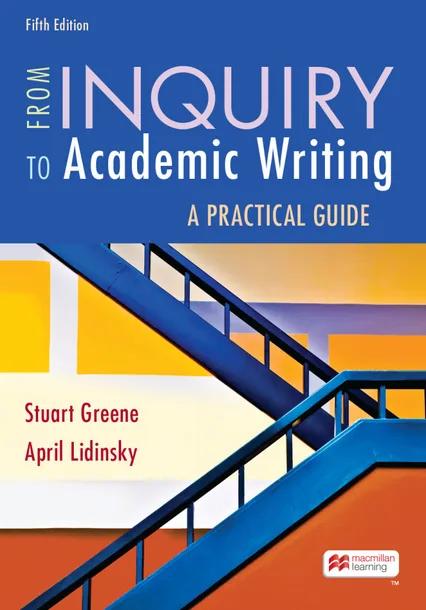
From Inquiry to Academic Writing: A Practical Guide
by Stuart Greene, April Lidinsky
5th Edition
Publisher: Bedford/St. Martin's
Book Details
| Print ISBN | 9781319244040 |
| eText ISBN | 9781319322731 |
| Publisher | Bedford/St. Martin's |
| Publishing Year | 2021 |
| Edition | 5th Edition |
| Language | English |
From Inquiry to Academic Writing: A Practical Guide, 5th Edition, co-authored by Stuart Greene and April Lidinsky, is a college textbook that structures academic writing as a step-by-step process adaptable across disciplines. The text introduces students to higher-level inquiry, helping them cultivate the analytical habits required for academic composition.
The volume provides thirteen chapters of rhetorical instruction that structure the writing process from initial questioning to final revision. Throughout these chapters, the material emphasizes critical thinking and analytical reading as tools for evaluating multiple perspectives, encouraging writers to engage thoughtfully with diverse viewpoints.
To ground rhetorical strategies in authentic discourse, this fifth edition incorporates 28 readings on interdisciplinary topics, nine of which are new to this edition. These selections offer concrete models for analysis and discussion, making the textbook a practical resource for college students across academic writing courses.
Table of Contents
Chapter 1: Starting with Inquiry: Habits of Mind of Academic Writers
- • What Is Academic Writing?
- • What Are the Habits of Mind of Academic Writers?
- • Academic Writers Make Inquiries
- • Steps to Inquiry
- • A Practice Sequence: Inquiry Activities
- • Academic Writers Seek and Value Complexity
- • *Moves to Model in Academic Writing
- • Steps to Seeking and Valuing Complexity
- • A Practice Sequence: Seeking and Valuing Complexity
- • Academic Writers See Writing as a Conversation
- • *Moves to Model in Academic Conversations
- • Steps to Joining an Academic Conversation
- • A Practice Sequence: Joining an Academic Conversation
- • Academic Writers Understand That Writing Is a Process
- • Collect Information and Material
- • Steps to Collecting Information and Material
- • Draft, and Draft Again
- • Steps to Drafting
- • Revise Significantly
- • Steps to Revising
- • Academic Writers Reflect
- • Steps to Reflection
- • A Practice Sequence: Reflection Activities
- • Becoming Academic: Three Narratives
- • Ta-Nehisi Coates, from Between the World and Me
- • Richard Rodriguez, Scholarship Boy
- • *Tara Westover, from Educated
- • A Practice Sequence: Composing a Literacy Narrative
Chapter 2: From Reading as a Writer to Writing as a Reader
- • Reading as an Act of Composing: Annotating
- • Reading as a Writer: Analyzing a Text Rhetorically
- • E. D. Hirsch Jr., Preface to Cultural Literacy
- • Identify the Situation
- • Identify the Writer’s Purpose
- • Identify the Writer’s Claims
- • *Moves to Model for Making a Claim
- • *Identify the Writer’s Appeals: Ethos, Pathos, and Logos
- • Identify the Writer’s Audience
- • Steps to Analyzing a Text Rhetorically
- • A Practice Sequence: Analyzing a Text Rhetorically
- • *Nick Hanauer, Education Isn’t Enough
- • Writing as a Reader: Composing a Rhetorical Analysis
- • David Tyack, Whither History Textbooks?
- • An Annotated Student Rhetorical Analysis
- • Quentin Collie, A Rhetorical Analysis of "Whither History Textbooks?" (Student Writing)
- • Writing a Rhetorical Analysis
- • Sherry Turkle, The Flight from Conversation
- • A Practice Sequence: Writing a Rhetorical Analysis
Chapter 3: From Writing Summaries and Paraphrases to Writing Yourself into Academic Conversations
- • Summaries, Paraphrases, and Quotations
- • Writing a Paraphrase
- • Steps to Writing a Paraphrase
- • A Practice Sequence: Writing a Paraphrase
- • Writing a Summary
- • Clive Thompson, On the New Literacy
- • Describe the Key Claims of the Text
- • Select Examples to Illustrate the Author’s Argument
- • Present the Gist of the Author’s Argument
- • Contextualize What You Summarize
- • Steps to Writing a Summary
- • *Moves to Model for Summarizing
- • A Practice Sequence: Writing a Summary
- • Writing Yourself into Academic Conversations
- • Steps to Writing Yourself into an Academic Conversation
- • A Practice Sequence: Writing Yourself into an Academic Conversation
- • Tom Standage, History Retweets Itself
Chapter 4: From Identifying Claims to Analyzing Arguments
- • Identifying Types of Claims
- • Dana Radcliffe, Dashed Hopes: Why Aren’t Social Media Delivering Democracy?
- • Identify Claims of Fact
- • Identify Claims of Value
- • Identify Claims of Policy
- • Steps to Identifying Claims
- • A Practice Sequence: Identifying Claims
- • Analyzing Arguments
- • Analyze the Reasons Used to Support a Claim
- • Identify Concessions
- • Identify Counterarguments
- • *Moves to Model for Analyzing Arguments
- • An Annotated Student Argument
- • Marques Camp, The End of The World May Be Nigh, and It’s the Kindle’s Fault (Student Writing)
- • Steps to Analyzing an Argument
- • A Practice Sequence: Analyzing an Argument
- • Susan D. Blum, The United States of (Non)Reading: The End of Civilization or a New Era?
- • Recognizing Logical Fallacies
- • Analyzing and Comparing Arguments
- • Stuart Rojstaczer, Grade Inflation Gone Wild
- • Phil Primack, Doesn’t Anybody Get a C Anymore?
- • A Practice Sequence: Analyzing and Comparing Arguments
Chapter 5: From Identifying Issues to Forming Questions
- • Identifying Issues
- • Draw on Your Personal Experience
- • Identify What Is Open to Dispute
- • Resist Binary Thinking
- • Build on and Extend the Ideas of Others
- • Read to Discover a Writer’s Frame
- • Consider the Constraints of the Situation
- • Steps to Identifying Issues
- • Identifying Issues in an Essay
- • Anna Quindlen, Doing Nothing Is Something
- • A Practice Sequence: Identifying Issues
- • Formulating Issue-Based Questions
- • Refine Your Topic
- • Explain Your Interest in the Topic
- • Identify an Issue
- • *Moves to Model for Identifying an Issue
- • Formulate Your Topic as a Question
- • Acknowledge Your Audience
- • Steps to Formulating an Issue-Based Question
- • A Practice Sequence: Formulating an Issue-Based Question
- • Academic Writing for Analysis
- • *Ronald E. Purser, Mindful Schools
Chapter 6: From Formulating to Developing a Thesis
- • Working versus Definitive Theses
- • Developing a Working Thesis: Four Models
- • The Correcting-Misinterpretations Model
- • The Filling-the-Gap Model
- • The Modifying-What-Others-Have-Said Model
- • The Hypothesis-Testing Model
- • A Practice Sequence: Identifying Types of Theses
- • Establishing a Context for a Thesis
- • An Annotated Student Introduction: Providing a Context for a Thesis
- • Colin O’Neill, Money Matters: Framing the College Access Debate (Student Writing)
- • Establish That the Issue Is Current and Relevant
- • Briefly Present What Others Have Said
- • Explain What You See as the Problem
- • State Your Thesis
- • *Moves to Model for Formulating a Thesis
- • Steps to Establishing a Context for a Thesis
- • Analyze the Context of a Thesis
- • Kris Gutiérrez, from Teaching Toward Possibility: Building Cultural Supports for Robust Learning
- • *Moves to Model for Developing a Working Thesis
- • A Practice Sequence: Building a Thesis
- • An Annotated Student Essay: Stating and Supporting a Thesis
- • Veronica Stafford, Texting and Literacy (Student Writing)
Chapter 7: From Finding to Evaluating Sources
- • Identifying Sources
- • Consult Experts Who Can Guide Your Research
- • Develop a Working Knowledge of Standard Sources
- • Distinguish between Primary and Secondary Sources
- • Distinguish between Popular and Scholarly Sources
- • Steps to Identifying Sources
- • A Practice Sequence: Identifying Sources
- • Searching for Sources
- • Perform a Keyword Search
- • Try Browsing
- • Steps to Searching for Sources
- • A Practice Sequence: Searching for Sources
- • Evaluating Library Sources
- • Examine the Table of Contents and Index
- • Read the Introductory Sections
- • Skim for the Argument
- • Check the Notes and Bibliographic References
- • Steps to Evaluating Library Sources
- • A Practice Sequence: Evaluating Library Sources
- • *Evaluating Internet and Social Media Sources
- • Evaluate the Author of the Content
- • Evaluate the Organization That Supports the Content
- • Evaluate the Purpose of the Content
- • Evaluate the Information
- • Steps to Evaluating Internet and Social Media Sources
- • A Practice Sequence: Evaluating Internet and Social Media Sources
- • Writing an Annotated Bibliography
- • Steps to Writing an Annotated Bibliography
- • A Practice Sequence: Writing an Annotated Bibliography
Chapter 8: From Synthesis to Researched Argument
- • Writing a Synthesis
- • Paul Rogat Loeb, Making Our Lives Count
- • Anne Colby and Thomas Ehrlich, with Elizabeth Beaumont and Jason Stephens, Undergraduate Education and the Development of Moral and Civic Responsibility
- • Laurie Ouellette, Citizen Brand: ABC and the Do Good Turn in US Television
- • Make Connections among Different Texts
- • Decide What Those Connections Mean
- • Formulate the Gist of What You’ve Read
- • Steps to Writing a Synthesis
- • *Moves to Model for Writing a Synthesis
- • A Practice Sequence: Writing a Synthesis
- • *Maryanne Wolf, Skim Reading Is the New Normal
- • *Maria Gilje Torheim, Do We Read Differently On Paper Than On a Screen?
- • *Naomi Baron, Do Students Lose Depth in Digital Reading?
- • Avoiding Plagiarism
- • Steps to Avoiding Plagiarism
- • *Integrating Sources into Your Writing
- • *Identify the Source
- • *Take an Active Stance
- • *Using Quotations
- • *Use Signal Phrases to Introduce Quotations
- • *Indicate Changes and Omissions in Quotations
- • *Set Off Long Quotations as Block Quotations
- • *Moves to Model for Integrating Quotations
- • Steps to Integrating Sources into Your Writing
- • A Practice Sequence: Integrating Quotations
- • An Annotated Student Researched Argument: Synthesizing Sources
- • Nancy Paul, A Greener Approach to Groceries: Community-Based Agriculture in LaSalle Square (Student Writing)
- • A Practice Sequence: Thinking about Copyright
Chapter 9: From Ethos and Pathos to Logos: Appealing to Your Readers
- • Connecting with Readers: A Sample Argument
- • James W. Loewen, The Land of Opportunity
- • Appealing to Ethos
- • Establish That You Have Good Judgment
- • Convey to Readers That You Are Knowledgeable
- • Show That You Understand the Complexity of a Given Issue
- • Steps to Appealing to Ethos
- • Appealing to Pathos
- • Show That You Know What Your Readers Value
- • Use Illustrations and Examples That Appeal to Readers’ Emotions
- • Consider How Your Tone May Affect Your Audience
- • Steps to Appealing to Pathos
- • A Practice Sequence: Appealing to Ethos and Pathos
- • Appealing to Logos: Using Reason and Evidence to Fit the Situation
- • State the Premises of Your Argument
- • Use Credible Evidence
- • Demonstrate That the Conclusion Follows from the Premises
- • Steps to Appealing to Logos
- • *Moves to Model for Appealing to Ethos, Pathos, and Logos
- • Analyzing the Appeals in a Researched Argument
- • *Lisa V. Blitz, Denise Yull, and Matthew Clauhs, Bringing Sanctuary to School
- • A Practice Sequence: Analyzing the Appeals in a Researched Argument
Chapter 10: From Analyzing Visuals to Using Them in Writing
- • Analyzing Visual Advertisements
- • Notice Where the Ad Appears
- • Identify and Reflect on What Draws Your Attention
- • Consider the Ethos of the Ad
- • Analyze the Pathos in the Ad
- • Understand the Logos of the Ad
- • A Practice Sequence: Analyzing the Rhetoric of an Advertisement
- • *Analyzing Infographics
- • *Consider the Images and Text That Draw Your Attention
- • *Identify the Organization, Its Ethos, and Framing Concepts
- • *Determine the Credibility of the Data
- • *Analyze How an Infographic Appeals to Logos
- • *Analyze How an Infographic Appeals to Pathos
- • Steps to Visual Analysis
- • *A Practice Sequence: Analyzing an Infographic
- • Using Visual Rhetoric: Photographs, Maps, Tables, and Graphs
- • Using Photographs to Provide Context or Stir Emotions
- • Using Maps to Make a Point
- • *Richard Florida, How the One Percent Is Pulling America’s Cities and Regions Apart
- • Using Tables to Present Findings
- • *Amina Chaudhri and William H. Teale, Stories of Multiracial Experiences in Literature for Children, Ages 9–14
- • Using Graphs to Visualize Data
- • Steps to Using Visuals in Writing an Argument
- • A Practice Sequence: Using Visuals to Enhance an Argument
- • Nathan Jindra, Neighbors Need LaSalle Branch (Student Writing)
Chapter 11: From Introductions to Conclusions: Drafting an Essay
- • Drafting Introductions
- • The Inverted-Triangle Introduction
- • The Narrative Introduction
- • The Interrogative Introduction
- • The Paradoxical Introduction
- • The Minding-the-Gap Introduction
- • *The Reframing Introduction
- • Steps to Drafting Introductions: Six Strategies
- • A Practice Sequence: Drafting an Introduction
- • Developing Paragraphs
- • Elizabeth Martínez, from Reinventing "America": Call for a New National Identity
- • Use Topic Sentences to Focus Your Paragraphs
- • Create Unity in Your Paragraphs
- • *Moves to Model for Changing the Conversation
- • Use Critical Strategies to Develop Your Paragraphs
- • Steps to Developing Paragraphs
- • A Practice Sequence: Working with Paragraphs
- • Drafting Conclusions
- • Echo the Introduction
- • Challenge the Reader
- • Look to the Future
- • Pose Questions
- • Conclude with a Quotation
- • Steps to Drafting Conclusions: Five Strategies
- • A Practice Sequence: Drafting a Conclusion
- • Analyzing Strategies for Writing: From Introductions to Conclusions
- • Barbara Ehrenreich, Cultural Baggage
Chapter 12: From Revising to Editing: Working with Peer Groups
- • Revising versus Editing
- • The Peer Editing Process
- • Steps in the Peer Editing Process
- • Peer Groups in Action: A Sample Session
- • An Annotated Student Draft
- • Rebecca Jegier, Student-Centered Learning: Catering to Students’ Impatience (Student Writing)
- • Working with Early Drafts
- • Understand the Writer’s Responsibilities
- • Understand the Reader’s Responsibilities
- • Analyze an Early Draft
- • Tasha Taylor, Memory through Photography (early draft)
- • Working with Later Drafts
- • Analyze a Later Draft
- • Tasha Taylor, Memory through Photography (later draft)
- • Working with Final Drafts
- • Analyze a Near-Final Draft
- • Tasha Taylor, Memory through Photography (near-final draft)
- • Further Suggestions for Peer Editing Groups
Chapter 13: Other Methods of Inquiry: Interviews and Focus Groups
- • Why Do Original Research?
- • Getting Started: Writing an Idea Sheet
- • A Student’s Annotated Idea Sheet
- • Dan Grace, Idea Sheet for Parent/Child Autism Study (Student Writing)
- • Writing a Proposal
- • Describe Your Purpose
- • Review Relevant Research
- • Define Your Method
- • Discuss Your Implications
- • Include Additional Materials That Support Your Research
- • Establish a Timeline
- • Steps to Writing a Proposal
- • An Annotated Student Proposal
- • Laura Hartigan, Proposal for Research: The Affordances of Multimodal, Creative, and Academic Writing (Student Writing)
- • Interviewing
- • Plan the Interview
- • Prepare Your Script
- • *Moves to Model for Interviewing
- • Conduct the Interview
- • Make Sense of the Interview
- • Turn Your Interview into an Essay
- • Steps to Interviewing
- • Using Focus Groups
- • Select Participants for the Focus Group
- • Plan the Focus Group
- • Conduct the Focus Group
- • Interpret the Data from the Focus Group
- • Important Ethical Considerations
- • Steps for Conducting a Focus Group
Chapter Appendix: Citing and Documenting Sources
Customer Reviews
0.0
0 reviews
No reviews yet. Be the first to review this book!
Write a Review
Reviewed by GradeFocus Editorial Team
▶Research Sources (11)
- From Inquiry to Academic Writing: A Practical Guide, 5th Edition
- Book Information
- From Inquiry to Academic Writing: A Practical Guide
- From Inquiry to Academic Writing: A Practical Guide | Rent
- From Inquiry to Academic Writing: A Practical Guide 5th Edition
- From Inquiry to Academic Writing A Practical Guide
- From Inquiry to Academic Writing: A Practical Guide, 6th Edition
- From Inquiry to Academic Writing: a Practical Guide
- From Inquiry to Academic Writing: A Practical Guide
- From inquiry to academic writing : a practical guide
- From Inquiry to Academic Writing 4th Edition Greene
Related Books
Spoken English: The Basics
Michael McCarthy
A Cognitive Approach to English Grammar
N. P. Sudharshana
Introducing English Grammar
Kersti Börjars
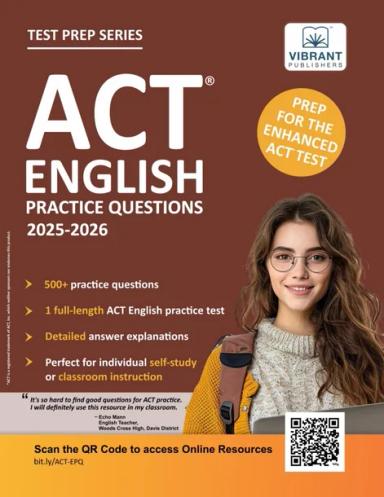
ACT English Practice Questions
Vibrant Publishers
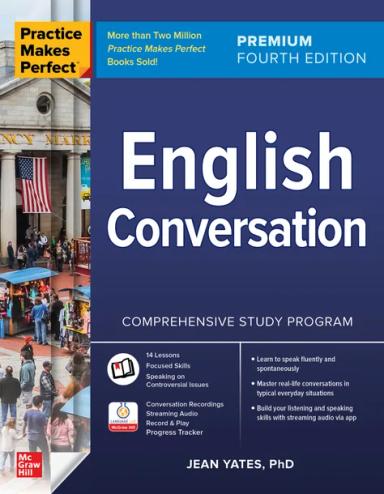
Practice Makes Perfect: English Conversation, Premium
Jean Yates
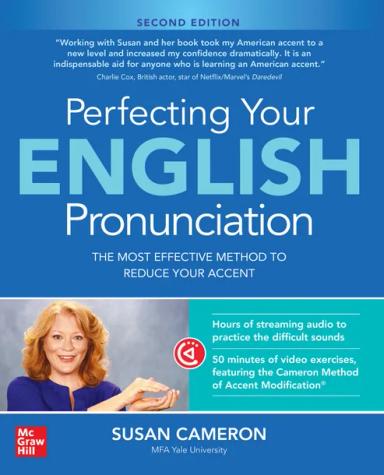
Perfecting Your English Pronunciation
Susan Cameron