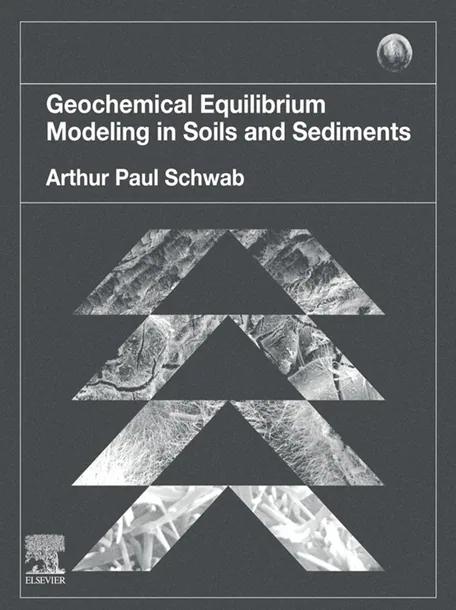
Geochemical Equilibrium Modeling in Soils and Sediments
by Arthur Paul Schwab
1st Edition
Publisher: Elsevier
Book Details
| Print ISBN | 9780443266515 |
| eText ISBN | 9780443266522 |
| Publisher | Elsevier |
| Publishing Year | 2026 |
| Edition | 1st Edition |
| Language | English |
Geochemical Equilibrium Modeling in Soils and Sediments, 1st Edition, written by Arthur Paul Schwab, is an academic textbook that applies thermodynamic principles to the chemical behavior of elements across soil and sediment systems. The text establishes quantitative theoretical methods for evaluating how chemical elements partition within natural aquatic and terrestrial matrices.
Specific thematic sections examine solid phase transitions, dissolution reactions, volatilization, and aqueous speciation in detail. The text focuses heavily on reactions occurring at the interface between solid and solution phases, while addressing solubility control predictions across various mineral types. Aluminum solubility, silica forms, silicate stability, aluminosilicate mineral stability, and carbonate equilibria represent primary topics within these thermodynamic evaluations.
Additionally, the text explains overarching trends in mineral and aqueous transformations alongside contaminant retention in soils. By connecting fundamental thermodynamics with specific elemental interactions, this textbook supports upper-level academic instruction for soil scientists and sediment geochemists analyzing complex environmental chemistry.
Table of Contents
Chapter 1: Introduction
- • a. The dynamic nature of sediments and soils
- • b. A brief history of applying equilibrium concepts to soils
- • c. Overview of geochemical modeling
- • d. The structure of this textbook
- • e. Average elemental composition of soils and sediments
- • f. Problems
- • g. References
Chapter 2: Theoretical development of chemical equilibrium concepts
- • a. Thermodynamic development
- • b. The equilibrium constant
- • c. Ionic strength and activity coefficients
- • d. Oxidation/reduction reactions
- • e. Measurement of pH and Eh
- • f. Problems
- • g. References
Chapter 3: Geochemical models and modeling
- • a. Overview of types of models available
- • b. Model components needed for application to soils and sediments
- • c. Structure of the model
- • d. Input requirements
- • e. Output structure
- • f. Limitations of equilibrium modeling
- • i. Primary vs secondary minerals
- • ii. The importance of dissolution/precipitation kinetics
- • iii. Non-equilibrium
- • 1. Oxy-anions
- • 2. Some redox transitions
- • g. Visual MINTEQ: brief tutorial
- • h. Problems
- • i. References
Chapter 4: Aluminum
- • a. Table of equilibrium constants: solids, solution species
- • b. Solubility of aluminum oxides, hydroxides, sulfates
- • i. Primary minerals: theoretical but unattainable equilibrium
- • c. Solution complexes of Al3+: hydrolysis, fluorides, sulfates, chlorides, others
- • d. Estimating Al3+ activity from solubility data
- • i. Hand calculations
- • ii. MINTEQ modeling
- • e. Published examples
- • f. Redox reactions of Al in soil and sediments
- • g. Problems
- • h. References
Chapter 5: Silica
- • a. Table of equilibrium constants: solids, solution species
- • b. Forms of silica in soils and sediments: crystalline, amorphous, nanocrystalline
- • c. Solubility of silicon oxides
- • d. Stability diagrams for silicates
- • e. Solution species of Si
- • f. Published examples
- • g. Problems
- • h. References
Chapter 6: Aluminosilicate minerals
- • a. Table of equilibrium constants: solids, solution species
- • b. Primary vs secondary minerals; dissolution/precipitation kinetics
- • c. Brief summary of types of aluminosilicate minerals
- • i. Conventions in writing unit cell formulae
- • d. Stability diagrams for aluminosilicates
- • e. Unique issues and challenges for chemical equilibria of aluminosilicates
- • f. Published examples
- • g. Problems
- • h. References
Chapter 7: Carbon dioxide and carbonate equilibria
- • a. CO2 and carbonate equilibria in pure aqueous systems
- • b. Carbonates in soils and sediments
- • c. Published examples
- • d. Problems
- • e. References
Chapter 8: Calcium
- • a. Table of equilibrium constants: solids, solution species
- • b. Calcium silicates and aluminosilicates
- • c. Carbonates, sulfates, others
- • d. Stability diagrams for calcium minerals
- • e. Solution complexes
- • f. The phase rule
- • i. CO2-H2O pure system equilibria
- • ii. CaO-CO2-H2O pure system equilibria
- • iii. H2SO4-CaO-CO2-H2O pure system equilibria
- • g. Published examples; apparent calcite nonequilibrium
- • h. Problems
- • i. References
Chapter 9: Magnesium
- • a. Table of equilibrium constants: solids, solution species
- • b. Magnesium silicates and aluminosilicates
- • c. Carbonates, sulfates, others
- • d. Stability diagrams for magnesium minerals
- • e. Solution complexes
- • f. Published examples
- • g. Problems
- • h. References
Chapter 10: Sodium and Potassium
- • a. Table of equilibrium constants: solids, solution species
- • b. Sodium and potassium solid phases
- • c. Stability diagrams for Na and K minerals
- • d. Solution complexes
- • e. Published examples
- • f. Problems
- • g. References
Chapter 11: Iron
- • a. Table of equilibrium constants: solids, solution species, redox species
- • b. The critical role of oxidation reduction potentials in Fe chemistry in soils, sediments, and water
- • c. Ferric, ferrous, and mixed solid phases
- • d. Stability diagrams for Fe(III), Fe(II), and mixed oxide minerals
- • e. Solution complexes
- • f. Published examples; the complex world of Fe in the environment
- • g. Problems
- • h. References
Chapter 12: Manganese
- • a. Table of equilibrium constants: solids, solution species, redox species
- • b. The critical role of oxidation reduction potentials in Mn chemistry in soils, sediments, and water
- • c. Manganic, manganous, and mixed solid phases
- • d. Stability diagrams for manganese minerals
- • e. Solution complexes
- • f. Published examples; the unique chemistry of Mn in natural systems
- • g. Problems
- • h. References
Chapter 13: Phosphate
- • a. Table of equilibrium constants: solids, solution species
- • b. Solution chemistry of orthophosphate
- • c. Solubility of Fe phosphates
- • d. Solubility of Al phosphates
- • e. Effect of redox on the solubility of Fe phosphates
- • f. Solubility of Ca phosphates
- • g. Solubility of Mn phosphates
- • h. Stability diagrams for phosphates
- • i. Published examples
- • i. Evidence for amorphous Al phosphate
- • ii. Evidence for the presence of Mn(II)phosphate and its amorphous analog
- • iii. Ca phosphate solubility
- • j. Problems
- • k. References
Chapter 14: Zinc
- • a. Table of equilibrium constants: solids, solution species
- • b. Zinc solid phases
- • c. Stability diagrams for zinc minerals
- • d. Solution complexes
- • e. Published examples; “soil-Zn”
- • f. Problems
- • g. References
Chapter 15: Copper
- • a. Table of equilibrium constants: solids, solution species
- • b. Copper solid phases
- • c. Stability diagrams for copper minerals
- • d. Solution complexes
- • e. Published examples; criteria for possible formation of solid phases
- • f. Problems
- • g. References
Chapter 16: Nitrogen
- • a. Table of equilibrium constants: solids, solution species
- • b. Oxidation states of nitrogen
- • c. Challenges in applying equilibrium to gaseous nitrogen compounds
- • i. Theoretical equilibrium between atmospheric N2 and O2
- • d. Redox equilibria for gaseous nitrogen species
- • e. Redox equilibria for soluble nitrogen species
- • f. Stability diagrams for nitrogen species
- • g. Published examples; nitrogen transformations in soil, water, atmosphere
- • h. Problems
- • i. References
Chapter 17: Sulfur
- • a. Table of equilibrium constants: solids, solution species
- • b. Overview of the complexity of sulfur in solid phase and solution
- • c. Effect of redox on sulfur solution species
- • d. Sulfate solids
- • e. Sulfide solid phases
- • f. Effect of redox on solubilities
- • i. Sulfide solids
- • ii. Metal solubilities
- • g. Stability diagrams for sulfur-based minerals
- • h. Solution species, complexes
- • i. Published examples; sulfur transformations in soil, water, atmosphere
- • j. Problems
- • k. References
Chapter 18: Lead
- • a. Table of equilibrium constants: solids, solution species
- • b. Lead solid phases
- • c. Stability diagrams for Pb minerals
- • d. Solution complexes
- • e. Published examples; the immobility of Pb
- • f. Problems
- • g. References
Chapter 19: Cadmium
- • a. Table of equilibrium constants: solids, solution species
- • b. Cadmium solid phases
- • c. Stability diagrams for Cd minerals
- • d. Solution complexes
- • e. Published examples; the challenges of traces metals
- • f. Problems
- • g. References
Chapter 20: Arsenic
- • a. Table of equilibrium constants: solids, solution species
- • b. Arsenic solid phases
- • c. Role of redox in As transitions
- • d. Stability diagrams for As minerals
- • e. Solution complexes
- • f. Published examples; interactions between As and phosphate
- • g. Problems
- • h. References
Chapter 21: Strontium
- • a. Table of equilibrium constants: solids, solution species
- • b. Strontium solid phases
- • c. Stability diagrams for Sr minerals
- • d. Solution complexes
- • e. Published examples; environmental significance of Sr
- • f. Problems
- • g. References
Chapter 22: Plutonium
- • a. Table of equilibrium constants: solids, solution species
- • b. Plutonium solid phases
- • c. Pu redox reactions
- • d. Stability diagrams for Pu minerals
- • e. Solution complexes
- • f. Published examples; Pu and other radionuclides
- • g. Problems
- • h. References
Chapter 23: Natural Organic ligands
- • a. Background
- • b. Occurrence
- • c. Table of equilibrium constants: acidity, complexation
- • d. Acid/base chemistry
- • e. Redox relationships
- • f. Ligand complexation
- • g. Problems
- • h. References
Chapter 24: Chelate equilibria
- • a. Occurrence of chelates in soils
- • i. Natural
- • ii. Synthetic
- • b. Potential importance of chelates in the chemistry of soils and sediments
- • c. Table of selected equilibrium constants for selected metals
- • d. Applications of geochemical modeling of chelate equilibria
- • e. Published examples
- • f. Problems
- • g. References
Customer Reviews
0.0
0 reviews
No reviews yet. Be the first to review this book!
Write a Review
Reviewed by GradeFocus Editorial Team
▶Research Sources (13)
- Geochemical Equilibrium Modeling in Soils and Sediments, eBook ...
- [PDF] Geochemical Equilibrium Modeling in Soils and Sediments by ...
- Geochemical Equilibrium Modeling in Soils and Sediments - Porrúa
- Geochemical Equilibrium Modeling in Soils and Sediments - Arthur ...
- Geochemical Equilibrium Modeling in Soils and Sediments : start ...
- Parentheses
- Geochemical Equilibrium Modeling in Soils and Sediments - Elsevier Shop
- Sign In - MyLibrary | Hal Leonard Online
- Books - Old Soul Supply Co.
- Geochemical Equilibrium Modeling in Soils and Sediments
- Geochemical Equilibrium Modeling in Soils and Sediments.
- Equilibrium Models in Hydro- and Geochemistry
- Geochemical Equilibrium Modeling in Soils and Sediments