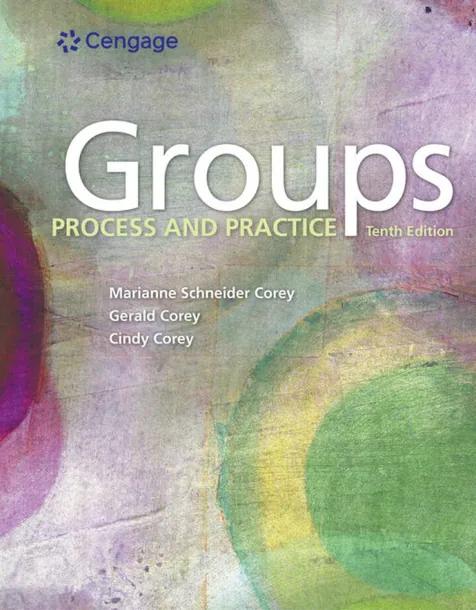
Groups: Process and Practice
by Marianne Schneider Corey, Gerald Corey, Cindy Corey
10th Edition
Publisher: Cengage Learning
Book Details
| Print ISBN | 9781305865709 |
| eText ISBN | 9798214344812 |
| Publisher | Cengage Learning |
| Publishing Year | 2018 |
| Edition | 10th Edition |
| Language | English |
| Pages | 576 |
Groups: Process and Practice, 10th Edition, published by Cengage Learning, is a textbook designed for students, instructors, counselors, and group practitioners. Written by Marianne Schneider Corey, Gerald Corey, and Cindy Corey, the text offers a structured method for connecting theoretical principles with practical application in group work. It establishes essential knowledge needed to understand leadership roles and participant interactions in therapeutic and educational settings.
The volume highlights the progression of group life by examining specific stages of group development. Core topics include ethical, legal, and multicultural considerations in group counseling, alongside social justice perspectives. These thematic arcs help leaders navigate structural challenges, group dynamics, and member communication across various group phases.
By linking conceptual models to practical methods, the textbook equips group facilitators to handle real-world challenges. It provides functional value for counseling students preparing for practice and established practitioners seeking a grounded reference for group leadership.
Table of Contents
Chapter 1: Introduction to Group Work: A Multicultural Perspective
- • An Overview of Various Types of Groups
- • Psychoeducational Groups
- • Counseling Groups
- • Psychotherapy Groups
- • Brief Groups
- • A Multicultural Perspective on Group Work
- • Becoming a Culturally Skilled Group Counselor
- • A Starting Place: Understanding Your Own Culture
- • A Personal Perspective on Understanding Differences
- • Multicultural and Social Justice Counseling Competencies
- • Inviting Conversations About Culture With Group Members
- • Introduction to Group Work: A Multicultural Perspective
- • Guide to Groups in Action: Evolution and Challenges DVD and Workbook
Chapter 2: The Group Counselor
- • The Group Counselor as a Person
- • Problems and Issues Facing Beginning Group Leaders
- • Personal Characteristics of the Effective Group Leader
- • Overview of Group Leadership Skills
- • An Integrated View of Leadership Skills
- • The Basis of Coleadership
- • Advantages of the Coleadership Model
- • Disadvantages of the Coleadership Model
- • Developing a Research Orientation to Practice
- • Research on Common Factors
- • How Research Can Enhance Your Group Practice
- • The Challenge of Combining Research and Practice
- • Attitude Questionnaire on Group Leadership
- • Questions for Discussion
Chapter 3: Ethical and Legal Issues in Group Counseling
- • Introduction
- • Informed Consent
- • Involuntary Membership
- • Freedom to Withdraw From a Group
- • Psychological Risks for Members
- • Confidentiality
- • Ethical and Legal Dimensions of Confidentiality
- • Multicultural Dimensions of Confidentiality
- • Confidentiality of Minors in Groups
- • The Role of the Leader’s Values in the Group
- • Dealing With Conflicts of Values
- • The Ethical Imperative of Addressing Diversity in Group Counseling
- • Values and Working With Diversity
- • Ethics and Standards of Preparation and Practice
- • Social Justice Approach to Group Counseling
- • Special Issues Pertaining to Sexual Orientation
- • Ethical Concerns in Using Group Techniques
- • Competence as an Ongoing Developmental Process
- • Professional Training Standards for Group Counselors
- • Adjuncts to a Training Program
- • Ethical Issues in Training Group Counselors
- • Legal Liability and Malpractice
- • Legal Safeguards for Group Practitioners
- • Ethical and Legal Issues in Group Counseling
- • In-Class Activities
- • Questions for Discussion
Chapter 4: Theories and Techniques of Group Counseling
- • Introduction
- • Our Theoretical Orientation
- • Developing Your Own Theory of Group Practice
- • Using Group Techniques Effectively
- • Rationale for Use of Techniques
- • Viewing a Group Through a Multicultural Lens
- • Psychodynamic Approaches
- • Psychoanalytic Approach
- • The Adlerian Approach
- • Experiential and Relationship-Oriented Approaches
- • The Existential Approach
- • The Person-Centered Approach
- • Gestalt Therapy
- • Psychodrama
- • Cognitive Behavioral Approaches
- • Behavior Therapy
- • Cognitive Therapy
- • Rational Emotive Behavior Therapy
- • Choice Theory/Reality Therapy
- • Postmodern Approaches
- • Solution-Focused Brief Therapy
- • Narrative Therapy
- • Motivational Interviewing
- • Feminist Therapy
- • An Integrative Approach
- • Theories and Techniques of Group Counseling
- • Guide to Groups in Action: Evolution and Challenges DVD and Workbook
Chapter 5: Forming a Group
- • Introduction
- • Developing a Proposal for a Group
- • Working Within the System
- • Guidelines for Announcing a Group and Recruiting Group Members
- • Screening and Selection Procedures
- • Group Composition
- • Frequency and Duration of Meetings
- • Open Versus Closed Groups
- • Orientation and Preparation of Members at a Pregroup Meeting
- • Clarifying Leader and Member Expectations
- • Establishing Basic Ground Rules
- • Building Evaluation Into Group Work
- • Coleader Issues on Forming a Group
- • Leader Functions
- • Interviewing
- • Guide to Groups in Action: Evolution and Challenges DVD and Workbook
Chapter 6: Initial Stage of a Group
- • Some Early Concerns
- • Initial Hesitation and Cultural Considerations
- • Identifying and Exploring Common Fears of Group Members
- • Hidden Agendas
- • Address Conflict Early
- • Self-Focus Versus Focus on Others
- • Here-and-Now Focus Versus There-and-Then Focus
- • Trust Versus Mistrust
- • The Importance of Modeling
- • Attitudes and Actions Leading to Trust
- • Identifying and Clarifying Goals
- • General Goals for Group Members
- • Helping Members Define Personal Goals
- • Group Norms
- • Group Cohesion
- • Support Versus Confrontation
- • Guidelines for Creating Therapeutic Relationships With Members
- • Helping Members Get the Most From a Group Experience
- • Leader Guidelines for Members
- • Avoid Too Much Structuring and Teaching
- • Journal Writing as an Adjunct to Group Sessions
- • Leader Issues at the Initial Stage
- • Division of Responsibility
- • Degree of Structuring
- • Opening and Closing Group Sessions
- • Member Functions
- • Facilitation of Initial Stage of a Group
- • Guide to Groups in Action: Evolution and Challenges DVD and Workbook
Chapter 7: Transition Stage of a Group
- • Introduction
- • Establishing Trust
- • Defensiveness and Reluctant Behavior
- • A Critique of the Notion of Resistance
- • Common Fears and Anxieties Experienced by Members
- • Conflict
- • Confrontation
- • Challenges to the Group Leader
- • The Leader’s Reactions to Defensive Behaviors
- • Group Members Who Pose a Challenge for Leaders
- • Silence and Lack of Participation
- • Monopolistic Behavior
- • Storytelling
- • Questioning
- • Giving Advice
- • Dependency
- • Hostile Behavior
- • Acting Superior
- • Socializing
- • Intellectualizing
- • Dealing With Defensive Behavior Therapeutically
- • Dealing With Avoidance by the Whole Group
- • Dealing With Transference and Countertransference
- • Coleader Issues at the Transition Stage
- • Member Functions
- • Self-Assessment Scale for Group Members
- • Scenarios for Exploration
- • Challenges Facing Group Leaders
Chapter 8: Working Stage of a Group
- • Introduction
- • Progressing to the Working Stage
- • Interventions at the Initial Stage
- • Interventions at the Transition Stage
- • Interventions at the Working Stage
- • Group Norms and Behavior
- • Contrasts Between a Working Group and a Nonworking Group
- • Deepening Trust During the Working Stage
- • Choices to Be Made During the Working Stage
- • Therapeutic Factors That Operate in a Group
- • Self-Disclosure and the Group Member
- • Self-Disclosure and the Group Leader
- • Feedback
- • Confrontation
- • Cohesion and Universality
- • Willingness to Risk and to Trust
- • Caring and Acceptance
- • Catharsis
- • The Cognitive Component
- • Commitment to Change
- • Humor
- • Coleader Issues During the Working Stage
- • Topics for Coleader Meetings
- • Working Stage Characteristics
- • Leader Functions
- • Member’s Weekly Evaluation of a Group
- • Guide to Groups in Action: Evolution and Challenges DVD and Workbook
Chapter 9: Final Stage of a Group
- • Introduction
- • Tasks of the Final Stage of a Group: Consolidation of Learning
- • Termination of the Group Experience
- • Group Proposals Illustrate Ending of a Group
- • Dealing With Feelings of Separation
- • Comparing Early and Later Perceptions in the Group
- • Personal Gestures in Expressing the Meaning of a Group Experience
- • Reviewing the Group Experience
- • Carrying Learning Further
- • Giving and Receiving Feedback
- • Use of a Contract and Homework
- • Dealing With Setbacks
- • Guidelines for Applying Group Learning to Life
- • Evaluation of the Group Experience
- • Coleader Issues as the Group Ends
- • Postgroup Sessions
- • Member Functions
- • Final Stage of a Group
- • Questions for Discussion
- • Guide to Groups in Action: Evolution and Challenges DVD and Workbook
Chapter 10: Groups in School Settings
- • Group Counseling in the School Setting
- • Legal Considerations
- • Practical Considerations
- • Strategies in the Group
- • Personal and Professional Qualifications
- • Play Therapy in Group Work With Children and Adolescents
- • Group Proposals: A School Counseling Group for 6- to 11-Year-Olds
- • Group Proposals: A Group for Elementary School Children of Divorce and Changing Families
- • Group Proposals: A Group for Children Who Have Been Abused
- • Developmental Themes of Adolescence
- • Developmental Group Counseling With Adolescents
- • Establishing Trust
- • Know Your Comfort Zone With Self-Disclosure
- • Group Proposal: Teens Making a Change (T-MAC): A Group for Preventing Teen Delinquency
- • Helping Adolescents Deal With Anger and Conflict
- • Group Proposal: A High School Anger Management Group
- • Common Topics in College Groups
- • Some Groups for College Students
- • Groups Designed for School Settings
- • In-Class Activities
Chapter 11: Groups in Community Settings
- • Group Work With Women
- • Group Proposal: A Women’s Support Group for Survivors of Incest
- • Group Work With Men
- • Group Proposal: A Men’s Group in a Community Agency
- • Group Treatment of Domestic Violence Offenders
- • Group Proposal: An Involuntary Domestic Violence Group
- • Group Treatment for People With Substance Use Disorders
- • Group Proposal: A Substance Use Disorder Treatment Group Using the Payoff Matrix
- • Attitudes, Knowledge, and Skills of Leaders
- • Preparing Yourself to Work With Older Adults
- • Guidelines for the Group Process
- • Group Proposal: A Successful Aging Group
- • The Therapeutic Value of Grief Work in Groups
- • Group Proposal: An Older Adult Bereavement Group
- • Group Proposal: A Group Treatment Program for Institutionalized Older Adults
- • In-Class Activities
Customer Reviews
0.0
0 reviews
No reviews yet. Be the first to review this book!
Write a Review
Reviewed by GradeFocus Editorial Team
▶Research Sources (12)
- Groups: Process and Practice, 10th Edition - 9781305865709
- Groups: Process and Practice - ISBN 9798214344812
- Groups: Process and Practice [10th ed.]
- Groups Process and Practice | Rent | 9781305865709
- ISBN 9781305865709 - Groups: Process and Practice 10th Edition ...
- Group skills recommended books by Gerald Corey
- Groups : Process and Practice
- Groups : process and practice : Corey, Marianne Schneider, 1942- author
- Groups: Process and Practice (10th edition)
- Groups : process and practice : Corey, Marianne Schneider, 1942
- Marianne Schneider Corey, Gerald Corey, and Cindy Corey; Groups
- Groups Process and Practice 9th Edition by Marianne Corey ,Gerald ...