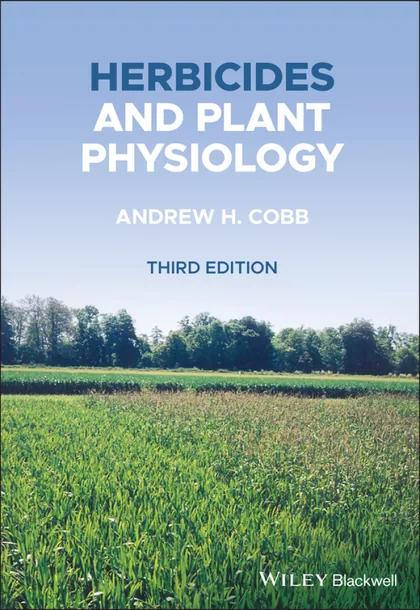
Herbicides and Plant Physiology
by Andrew H. Cobb
3rd Edition
Publisher: Wiley-Blackwell
Book Details
| Print ISBN | 9781119157694 |
| eText ISBN | 9781119157700 |
| Publisher | Wiley-Blackwell |
| Publishing Year | 2022 |
| Edition | 3rd Edition |
| Language | English |
| Pages | 400 |
Herbicides and Plant Physiology, 3rd Edition, is a textbook by Andrew H. Cobb that examines the interactions between chemical weed control agents and plant physiology.
The volume introduces weed biology and surveys the commercial plant protection industry, explaining how herbicides are discovered and developed. It explores how compounds enter plant tissues, translocate to active sites, and achieve selectivity, alongside physiological effects such as the inhibition of photosynthesis.
Incorporating plant research that utilizes data from the Arabidopsis genome and gene editing techniques, this edition is designed for plant biologists and agricultural scientists.
Table of Contents
Chapter 1: An Introduction to Weed Biology
- • 1.1 Introduction
- • 1.2 Distribution
- • 1.3 The importance of weeds
- • 1.4 Problems caused by weeds
- • 1.5 Biology of weeds
- • 1.6 A few examples of problem weeds
- • 1.7 Positive attributes of weeds
- • 1.8 The ever-changing weed spectrum
- • 1.9 Weed Control
- • References
Chapter 2: Herbicide Discovery and Development
- • 2.1 Introduction
- • 2.2 Markets
- • 2.3 Prospects
- • 2.4 Environmental impact and relative toxicology
- • 2.5 Chemophobia
- • 2.6 The search for novel active ingredients
- • 2.7 The search for novel target sites
- • 2.8 Mode of action studies
- • 2.9 The role of natural chemistry
- • 2.10 Recent developments
- • 2.11 A lower limit for rates of herbicide application
- • References
Chapter 3: Herbicide Uptake and Movement
- • 3.1 Introduction
- • 3.2 The cuticle as a barrier to foliar uptake
- • 3.3 Physico-chemical aspects of foliar uptake
- • 3.4 Herbicide formulation
- • 3.5 Uptake by roots from soil
- • 3.6 Herbicide translocation from roots to shoots
- • 3.7 A case study: The formulation of acids
- • 3.8 The formulation of glyphosate
- • 3.9 Further developments
- • References
Chapter 4: Herbicide Selectivity and Metabolism
- • 4.1 Introduction
- • 4.2 General principles
- • 4.3 Herbicide safeners and synergists
- • References
Chapter 5: Herbicides That Inhibit Photosynthesis
- • 5.1 Introduction
- • 5.2 Photosystems
- • 5.3 Inhibition at Photosystem II
- • 5.4 Photodamage and repair of Photosystem II
- • 5.5 Structures and uses of Photosystem II inhibitors
- • 5.6 Interference with electron flow at Photosystem I
- • 5.7 RuBisCO activase
- • 5.8 How treated plants die
- • 5.9 Chlorophyll fluorescence
- • 5.10 Inhibition of photosynthetic carbon reduction in C4 plants
- • References
Chapter 6: Inhibition of Pigment Biosynthesis
- • 6.1 Introduction: Structures and functions of photosynthetic pigments
- • 6.2 Inhibition of chlorophyll biosynthesis
- • 6.3 Inhibition of carotenoid biosynthesis
- • 6.4 Inhibition of plastoquinone biosynthesis
- • 6.5 How treated plants die
- • 6.6 Selectivity and metabolism
- • 6.7 Summary
- • References
Chapter 7: Auxin-Type Herbicides
- • 7.1 Introduction
- • 7.2 Structure and uses of auxin-type herbicides
- • 7.3 Auxin, a natural plant growth regulator
- • 7.4 Biosynthesis and metabolism of auxins
- • 7.5 Auxin receptors, gene expression and herbicides
- • 7.6 Signal transduction
- • 7.7 Auxin transport
- • 7.8 Resistance to auxin-type herbicides
- • 7.9 An “auxin overdose”
- • 7.10 How treated plants die
- • 7.11 Selectivity and metabolism
- • References
Chapter 8: Inhibitors of Lipid Biosynthesis
- • 8.1 Introduction
- • 8.2 Structures and uses of graminicides
- • 8.3 Inhibition of lipid biosynthesis
- • 8.4 Activity of graminicides in mixtures
- • 8.5 How treated plants die
- • 8.6 Plant oxylipins: Lipids with key roles in plant defence and development
- • 8.7 Selectivity
- • References
Chapter 9: Inhibition of Amino Acid Biosynthesis
- • 9.1 Introduction
- • 9.2 Overview of amino acid biosynthesis in plants
- • 9.3 Inhibition of glutamine synthetase
- • 9.4 Inhibition of aromatic amino acid biosynthesis
- • 9.5 Inhibition of branch-chain amino acid biosynthesis
- • 9.6 Inhibition of histidine biosynthesis
- • References
Chapter 10: Disruption of the Plant Cell Cycle
- • 10.1 Introduction
- • 10.2 The plant cell cycle
- • 10.3 Control of the plant cell cycle
- • 10.4 Microtubule structure and function
- • 10.5 Herbicidal interference with microtubules
- • 10.6 Selectivity
- • References
Chapter 11: The Inhibition of Cellulose Biosynthesis
- • 11.1 Introduction
- • 11.2 Cellulose biosynthesis
- • 11.3 Cellulose biosynthesis inhibitors
- • 11.4 How treated plants die
- • 11.5 Selectivity
- • References
Chapter 12: Plant kinases, phosphatases and Stress Signalling
- • 12.1 Introduction
- • 12.2 Plant kinases
- • 12.3 Plant phosphatases
- • 12.4 Cyclin-dependent kinases and plant stress
- • 12.5 Post-translational modification of proteins
- • References
Chapter 13: Herbicide Resistance
- • 13.1 Introduction
- • 13.2 Definition of herbicide resistance
- • 13.3 How herbicide resistance occurs
- • 13.4 A chronology of herbicide resistance
- • 13.5 Mechanisms of resistance
- • 13.6 Case Study: Blackgrass (_Alopecurus myosuroides_ Huds)
- • 13.7 Strategies for the control of herbicide-resistant weeds
- • 13.8 The future development of herbicide-resistance
- • References
Chapter 14: Herbicide-Tolerant Crops
- • 14.1 Introduction
- • 14.2 History of genetically-modified, herbicide-tolerant crops
- • 14.3 How genetically-modified crops are produced
- • 14.4 Genetically engineered herbicide-tolerance to glyphosate
- • 14.5 Genetically-modified herbicide-tolerance to glufosinate
- • 14.6 Genetically-modified herbicide-tolerance to bromoxynil
- • 14.7 Genetically-modified herbicide-tolerance to sulphonylureas
- • 14.8 Genetically-modified herbicide-tolerance to 2,4-D
- • 14.9 Genetically-modified herbicide-tolerance to fops and dims
- • 14.10 Genetically-modified herbicide -tolerance to phytoene desaturase inhibitors
- • 14.11 Herbicide-tolerance due to engineering of enhanced metabolism
- • 14.12 Herbicide-tolerance through means other than genetic modification
- • 14.13 Gene editing
- • 14.14 Economic, environmental and human health benefits from the adoption of GM technology
- • 14.15 Gene stacking
- • 14.16 Will the rise of glyphosate be inevitably followed by a fall?
- • 14.17 Why is there so much opposition to GM technology?
- • 14.18 Future prospects
- • References
Chapter 15: Further Targets For Herbicide Development
- • 15.1 Introduction
- • 15.2 Protein turnover
- • 15.3 The promotion of ageing in weeds?
- • 15.4 Herbicide leads at the apicoplast
- • 15.5 Control of seed germination and dormancy
- • 15.6 Natural products as leads for new herbicides
- • References
Customer Reviews
0.0
0 reviews
No reviews yet. Be the first to review this book!
Write a Review
Reviewed by GradeFocus Editorial Team