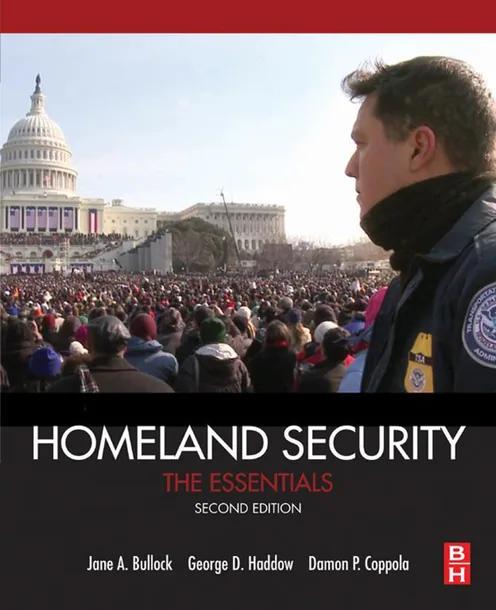
Homeland Security
The Essentials
by George Haddow, Jane Bullock, Damon P. Coppola
2nd Edition
Publisher: Elsevier Butterworth Heinemann
Book Details
| Print ISBN | 9780128044650 |
| eText ISBN | 9780128045107 |
| Publisher | Elsevier Butterworth Heinemann |
| Publishing Year | 2018 |
| Edition | 2nd Edition |
| Language | English |
Homeland Security: The Essentials, 2nd Edition, outlines the major risks confronting the United States and the organizational structures created to address them. Expanding on key material from Introduction to Homeland Security, the textbook presents core principles for preparing for, mitigating, managing, and recovering from emergencies and disasters.
The volume examines an all-hazards framework that encompasses natural disasters, intentional bombings, and cyberwarfare. It explores how Department of Homeland Security responsibilities align with the work of private-sector partners across national security priorities.
Designed for students in homeland security, government, and modern history programs, this text also provides reference material for policy-makers, private security professionals, and emergency management personnel.
Table of Contents
Chapter 1: Homeland Security: The Concept, The Organization
- • Abstract
- • Introduction
- • A New Concept of Homeland Security
- • Department of Homeland Security’s Missing Mission
- • The Department of Homeland Security
- • Conclusion
- • Key Terms
- • Review Questions
- • References
Chapter 2: Historic Overview of the Terrorist Threat
- • Abstract
- • Introduction
- • Before It Was Called Homeland Security: From the 1800s to the Creation of Federal Emergency Management Agency
- • World Trade Center Bombing
- • Murrah Federal Building Bombing
- • Khobar Towers Bombing, Saudi Arabia
- • General Accounting Office Findings on Terrorism
- • USS Cole Bombing, Yemen
- • September 11 Attacks on the World Trade Center and the Pentagon
- • The Creation of the Department of Homeland Security: 2001–04
- • The 9/11 Commission
- • Homeland Security Focus on Terrorism Results in a Disaster: Hurricane Katrina and Its Aftermath
- • Obama Administration
- • Conclusion
- • Key Terms
- • Review Questions
- • References
Chapter 3: Hazards
- • Abstract
- • Introduction
- • The Hazards
- • Conclusion
- • Key Terms
- • Review Questions
- • References
Chapter 4: Governmental Homeland Security Structures
- • Abstract
- • Introduction
- • Department of Homeland Security Organization
- • New Offices and Directorates
- • Agency Reorganization
- • DHS Budget
- • Other Agencies Participating in Community-Level Funding
- • Activities by State and Local Organizations
- • Homeland Security Activity of State and Tribal Governments
- • Local Government Homeland Security Activities
- • Role of Private Sector in Homeland Security and Changes in Business Continuity and Contingency Planning
- • Other Homeland Security Structures
- • Conclusion
- • Key Terms
- • Review Questions
- • References
Chapter 5: Intelligence and Counterterrorism
- • Abstract
- • Introduction
- • The Intelligence Community
- • Office of the Director of National Intelligence
- • Central Intelligence Agency
- • Defense Intelligence Agency
- • The Federal Bureau of Investigation (Department of Justice)
- • National Geospatial-Intelligence Agency
- • National Reconnaissance Office
- • National Security Agency
- • Department of Homeland Security Office of Intelligence and Analysis
- • Department of State Bureau of Intelligence and Research
- • Debate Over the Reach of Intelligence Activities
- • Conclusion
- • Key Terms
- • Review Questions
- • References
Chapter 6: Border Security, Immigration, and Customs Enforcement
- • Abstract
- • Introduction
- • Border Security
- • Immigration
- • Customs Enforcement
- • Border Security, Immigration, and Customs in the DHS
- • US Customs and Border Protection
- • US Immigration and Customs Enforcement
- • The US Coast Guard
- • US Citizenship and Immigration Services
- • State and Local Role in Customs and Immigration Enforcement
- • Conclusion
- • Key Terms
- • Review Questions
- • References
Chapter 7: Transportation Safety and Security
- • Abstract
- • Introduction
- • The Transportation Network
- • The Transportation Security Administration
- • Transportation Security Administration Components
- • Trucking Security
- • Bus Transportation Security
- • Railway Transportation Security
- • Conclusion
- • Key Terms
- • Review Questions
- • References
Chapter 8: Cybersecurity and Critical Infrastructure Protection
- • Abstract
- • Introduction
- • Cyberwarfare and Cyberterrorism
- • Cybercrime
- • Cyber Threats
- • The Threat of Rogue Insiders
- • Using the Cyber Network as a Security Tool
- • Executive Order 13636: Improving Critical Infrastructure Cybersecurity
- • The Cybersecurity Framework
- • DHS Cybersecurity Efforts
- • National Cyber Incident Response Plan
- • Cybersecurity Within the Department of Homeland Security
- • Cybersecurity Role of Other Federal Agencies
- • Private-Sector Cybersecurity
- • Critical Infrastructure Protection
- • Sources of Infrastructure Risk and Vulnerability
- • The National Infrastructure Protection Plan
- • DHS Office of Infrastructure Protection
- • State and Local Governments
- • Private Sector
- • International
- • Conclusion
- • Key Terms
- • Review Questions
- • Further Reading
Chapter 9: All-Hazards Emergency Response and Recovery
- • Abstract
- • Introduction
- • Response Processes
- • Legislative Actions Supporting Response
- • Budget
- • Local Response
- • State Response
- • Volunteer Group Response
- • Department of Homeland Security Response Agencies
- • Other Response Agencies
- • National Incident Management System
- • Federal Response
- • National Response Framework
- • Recovery
- • Conclusion
- • Key Terms
- • Review Questions
- • References
Chapter 10: Mitigation, Prevention, and Preparedness
- • Abstract
- • Introduction
- • National Frameworks
- • Mitigation Plans, Actions, and Programs
- • Prevention Actions and Programs
- • Warning
- • Preparedness Actions and Programs
- • Preparedness Against Biological and Chemical Attacks and Accidents
- • Nuclear and Radiological Preparedness
- • Terrorism Preparedness and Mitigation: Community Issues
- • Preparing for Ebola
- • The Role of the Private Sector in Mitigation and Preparedness Activities
- • Exercises to Foster Preparedness
- • Conclusion
- • Key Terms
- • Review Questions
- • References
Chapter 11: Communications
- • Abstract
- • Mission
- • Assumptions
- • Terrorism Application
- • The Changing Media World
- • What Are Social Media Outlets
- • Social Media and Disasters
- • The Emergence of Social Media as a Disaster Communications Tool
- • The Use of Digital Media During Disasters Will Continue to Skyrocket
- • Conclusion
- • CASE STUDY
- • How Social Media Was Used During the Boston Marathon Bombings
- • Breaking News/Real Time Updates
- • Situational Awareness
- • Help Identify the Suspects and Capture the Surviving Suspect
- • Keep People and Law Enforcement Officials Safe
- • Correct Misinformation
- • Offer Community Support, Resources, and Sympathy
- • Key Terms
- • Review Questions
- • References
Chapter 12: Science and Technology
- • Abstract
- • Introduction
- • Department of Homeland Security
- • R&D Efforts Focused on Weapons of Mass Destruction
- • Efforts Aimed at Information and Infrastructure
- • Laboratories and Research Facilities
- • R&D Efforts External to the Department of Homeland Security
- • Conclusion
- • Key Terms
- • Review Questions
- • References
Chapter 13: The Future of Homeland Security
- • Abstract
- • Introduction
- • The Federal Emergency Management Agency History Lesson
- • Lessons for Homeland Security from the FEMA Experience
- • The Future of Emergency Management in Homeland Security
- • Conclusion
- • Reference
Customer Reviews
0.0
0 reviews
No reviews yet. Be the first to review this book!
Write a Review
Reviewed by GradeFocus Editorial Team