Book Details
| Print ISBN | 9781119772439 |
| eText ISBN | 9781119772453 |
| Publisher | John Wiley & Sons |
| Publishing Year | 2020 |
| Language | English |
| Pages | 5760 |
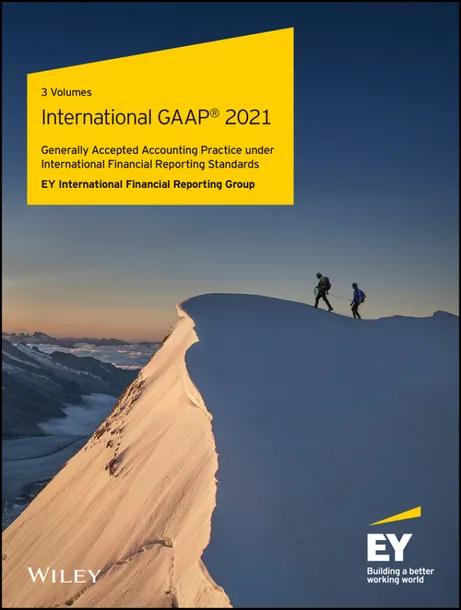
International GAAP 2021 is a three-volume reference publication prepared by Ernst & Young LLP to help professionals interpret and implement International Financial Reporting Standards. Written by financial reporting specialists from across the globe, the guide sets technical accounting rules within a relevant commercial context.
Coverage addresses foundational requirements, including the IASB Conceptual Framework, financial statement presentation, and consolidated reporting. The work also examines practical standards governing business combinations, leases, revenue recognition, and financial instruments.
To clarify technical problems, the guide pairs explanatory commentary with worked examples and practical illustrations drawn from published financial statements of global listed corporations. It serves as a working resource for anyone applying, auditing, regulating, studying, or teaching IFRS.
Table of Contents
Chapter 1: International GAAP
Chapter 2: The IASB’s Conceptual Framework
Chapter 3: Presentation of financial statements and accounting policies
Chapter 4: Non-current assets held for sale and discontinued operations
Chapter 5: First-time adoption
Chapter 6: Consolidated financial statements
Chapter 7: Consolidation procedures and non-controlling interests
Chapter 8: Separate and individual financial statements
Chapter 9: Business combinations
Chapter 10: Business combinations under common control
Chapter 11: Investments in associates and joint ventures
Chapter 12: Joint arrangements
Chapter 13: Disclosure of interests in other entities
Chapter 14: Fair value measurement
Chapter 15: Foreign exchange
Chapter 16: Hyperinflation
Chapter 17: Intangible assets
Chapter 18: Property, plant and equipment
Chapter 19: Investment property
Chapter 20: Impairment of fixed assets and goodwill
Chapter 21: Capitalisation of borrowing costs
Chapter 22: Inventories
Chapter 23: Leases
Chapter 24: Government grants
Chapter 25: Service concession arrangements
Chapter 26: Provisions, contingent liabilities and contingent assets
Chapter 27: Revenue: Introduction and scope
Chapter 28: Revenue: Identify the contract and performance obligations
Chapter 29: Revenue: Determine and allocate the transaction price
Chapter 30: Revenue: Recognition
Chapter 31: Revenue: Licences, warranties and contract costs
Chapter 32: Revenue: Presentation and disclosure
Chapter 33: Income taxes
Chapter 34: Share-based payment
Chapter 35: Employee benefits
Chapter 36: Operating segments
Chapter 37: Earnings per share
Chapter 38: Events after the reporting period
Chapter 39: Related party disclosures
Chapter 40: Statement of cash flows
Chapter 41: Interim financial reporting
Chapter 42: Agriculture
Chapter 43: Extractive industries
Chapter 44: Financial instruments: Introduction
Chapter 45: Financial instruments: Definitions and scope
Chapter 46: Financial instruments: Derivatives and embedded derivatives
Chapter 47: Financial instruments: Financial liabilities and equity
Chapter 48: Financial instruments: Classification
Chapter 49: Financial instruments: Recognition and initial measurement
Chapter 50: Financial instruments: Subsequent measurement
Chapter 51: Financial instruments: Impairment
Chapter 52: Financial instruments: Derecognition
Chapter 53: Financial instruments: Hedge accounting
Chapter 54: Financial instruments: Presentation and disclosure
Chapter 55: Insurance contracts (IFRS 4)
Chapter 56: Insurance contracts (IFRS 17)
Customer Reviews
0.0
0 reviews
No reviews yet. Be the first to review this book!
Write a Review
Reviewed by GradeFocus Editorial Team