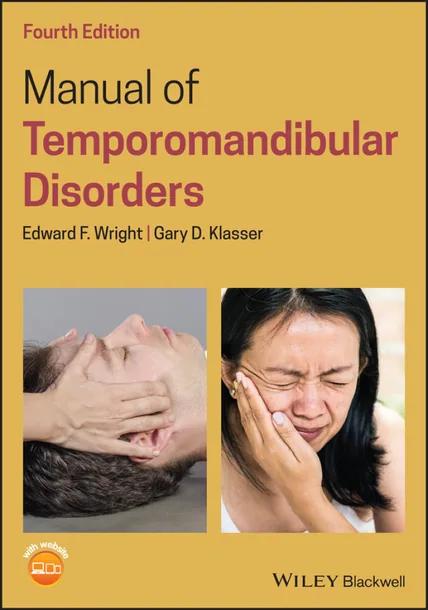
Manual of Temporomandibular Disorders
by Edward F. Wright, Gary D. Klasser
4th Edition
Publisher: Wiley-Blackwell
Book Details
| Print ISBN | 9781119548843 |
| eText ISBN | 9781119548812 |
| Publisher | Wiley-Blackwell |
| Publishing Year | 2019 |
| Edition | 4th Edition |
| Language | English |
| Pages | 416 |
Manual of Temporomandibular Disorders, 4th Edition, provides evidence-based guidance for diagnosing and managing conditions affecting the temporomandibular joint, masticatory muscles, and contiguous structures.
Practical coverage outlines initial clinical evaluation, acute presentations such as disc displacement and joint luxation, and occlusal appliance therapy. The manual also details multidisciplinary care pathways, including physical medicine modalities, pharmacological therapies, and cognitive-behavioral interventions.
Designed for general dentists, dental students, and residents, the text features clinical case scenarios, callout boxes, and a companion website providing patient handouts and practical examples.
Table of Contents
Chapter Preface: Preface
Chapter About the Companion Website: About the Companion Website
Chapter Introduction: Introduction
Part I: Initial Evaluation
Chapter 1: Patient Interview
Chapter 2: Review of the "Initial Patient Questionnaire"
Chapter 3: Clinical Examination
- • 3.1 Range of Motion
- • 3.2 TMJ Noise
- • 3.3 TMD Palpations
- • 3.4 Intraoral Examination
- • 3.5 Additional Evaluations
Chapter 4: Imaging
- • 4.1 Plain Radiographs
- • 4.2 Panoramic Radiograph
- • 4.3 Axially Corrected Sagittal Tomography
- • 4.4 CT
- • 4.5 CBCT
- • 4.6 MRI
- • 4.7 Arthrography
- • 4.8 Ultrasound
- • 4.9 Imaging Strategies
- • 4.10 Imaging Recommendations
Chapter 5: TMD Diagnostic Categories
- • 5.1 TMJ Disorders
- • 5.2 Masticatory Muscle Disorders
- • 5.3 Headache Disorders
- • 5.4 Associated Structures
Chapter 6: Contributing Factors
Part II: Common Acute TMD Conditions and Therapies
Chapter 7: TMD Secondary to Trauma
Chapter 8: TMD Secondary to Dental Treatment
- • 8.1 Preventing Aggravation from Dental Treatment
- • 8.2 Medial Pterygoid Muscle Pain
- • 8.3 Inability to Close into MI
- • 8.4 Occlusal Interference Sequelae
- • 8.5 OSA Appliances
Chapter 9: Lateral Pterygoid Spasm
Chapter 10: Intermittent and Continuous Forms of TMJ Disc Displacement Without Reduction with Limited Opening
- • 10.1 Intermittent Disorder (Disc Displacement with Reduction with Intermittent Locking)
- • 10.2 Continuous Disorder (Disc Displacement Without Reduction with Limited Opening, Also Known as Closed Lock)
Chapter 11: TMJ Subluxation and Luxation
Part III: Occlusal Appliance Therapy
Chapter 12: Stabilization Appliance
- • 12.1 Mandibular Positions and Interocclusal Record
- • 12.2 Physical Variables
- • 12.3 Appliance Adjustments
- • 12.4 Appliance Examples
- • 12.5 Appliance Management
Chapter 13: Anterior Positioning Appliance
- • 13.1 Mandibular Position and Interocclusal Record
- • 13.2 Design and Adjustments
- • 13.3 Appliance Management
Part IV: Multidisciplinary Management Approach
Chapter 14: Self-Management Therapy
- • 14.1 Self-Management Instructions
- • 14.2 Closure Muscle-Stretching Exercise
- • 14.3 Lateral Pterygoid Muscle-Stretching Exercise
- • 14.4 Posture Exercises
- • 14.5 Controlling Awake Behaviors
Chapter 15: Physical Medicine
- • 15.1 Muscle Massage
- • 15.2 Yoga
- • 15.3 Trigger-Point Compression
- • 15.4 Trigger-Point Injection
- • 15.5 Botulinum Toxin Injections
- • 15.6 Physical Therapy
- • 15.7 Acupuncture
- • 15.8 Chiropractics
Chapter 16: Cognitive-Behavioral Intervention
- • 16.1 Controlling Awake Behaviors
- • 16.2 Relaxation
- • 16.3 Hypnotherapy (Hypnosis)
- • 16.4 Biofeedback-Assisted Relaxation
- • 16.5 Stress Management
Chapter 17: Pharmacological Management
- • 17.1 Analgesics
- • 17.2 Anti-inflammatory Medications
- • 17.3 Muscle Relaxants
- • 17.4 Anticonvulsant
- • 17.5 Tricyclic Antidepressants
- • 17.6 Topical Medications
- • 17.7 Nutritional Supplements
Chapter 18: Other Dental Procedures
- • 18.1 Occlusal Equilibration
- • 18.2 Orthodontic–Orthognathic Therapy
- • 18.3 Prosthodontic Therapy
- • 18.4 TMJ Surgery and Implants
Chapter 19: Integrating Multidisciplinary Therapies
- • 19.1 Management Summaries and Clinical Implications
- • 19.2 Integrating Conservative Therapies
- • 19.3 TMD Refractory to Initial Therapy
- • 19.4 Long-Term Management
Part V: Case Scenarios
- • V.1 Case 1: Symptomatic Irreversible Pulpitis Mimicking TMD Symptoms
- • V.2 Case 2: Tooth Pain: No TMD Pain
- • V.3 Case 3: Chronic Sinusitis
- • V.4 Case 4: Chronic Forehead Pain Referred from the Neck
- • V.5 Case 5: Myalgia Secondary to Sleep Parafunctional Behaviors
- • V.6 Case 6: Tooth Attrition: No Pain
- • V.7 Case 7: Myalgia Secondary to Awake Parafunctional Behaviors
- • V.8 Case 8: Medial Pterygoid Spasm
- • V.9 Case 9: Personal Stressors and Sleep Disturbances as Contributing Factors
- • V.10 Case 10: Fibromyalgia as a Contributing Factor
- • V.11 Case 11: TMJ Disc–Condyle Complex Disorders and When to Provide Therapy: no Pain
- • V.12 Case 12: TMJ Arthralgia
- • V.13 Case 13: TMJ Disc Displacement with Reduction with Intermittent Locking
- • V.14 Case 14: TMJ Disc Displacement Without Reduction with Limited Opening: Unlocked
- • V.15 Case 15: TMJ Disc Displacement Without Reduction with Limited Opening: Not Unlocked
- • V.16 Case 16: Osteitis Causing Inability to Open Wide
- • V.17 Case 17: Lateral Pterygoid Spasm
- • V.18 Case 18: Acute Exacerbation of TMD
- • V.19 Case 19: Multiple Forms of Head and Neck Pain After Crown Insertion
- • V.20 Case 20: Appliance That Positioned Condyles into Their "Proper Position"
Part VI: Fundamentals of Clinical Studies
- • VI.1 Prominent Clinical Study Designs
- • VI.2 Other Types of Publications
- • VI.3 Considerations in Assessing Clinical Trials
- • VI.4 Conclusions
Chapter References: References
Chapter Glossary: Glossary
Customer Reviews
0.0
0 reviews
No reviews yet. Be the first to review this book!
Write a Review
Reviewed by GradeFocus Editorial Team