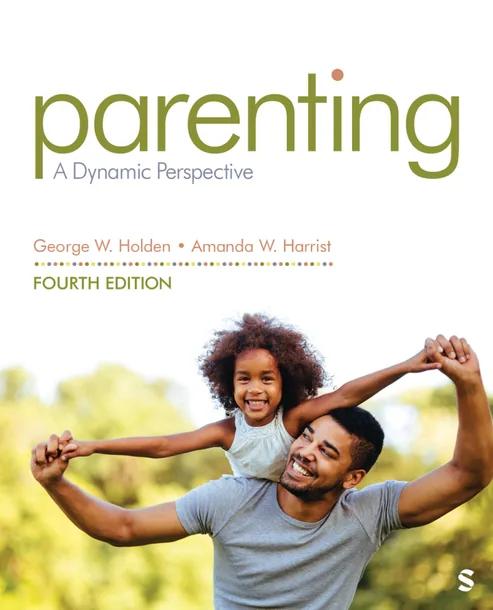
Parenting
A Dynamic Perspective
by George W. Holden, Amanda W. Harrist
4th Edition
Publisher: SAGE Publications, Inc.
Book Details
| Print ISBN | 9781071908778 |
| eText ISBN | 9781071908808 |
| Publisher | SAGE Publications, Inc. |
| Publishing Year | 2025 |
| Edition | 4th Edition |
| Language | English |
| Pages | 644 |
Parenting: A Dynamic Perspective (4th Edition) is an academic textbook designed for students and educators analyzing family systems. Authors George W. Holden and Amanda W. Harrist inspect parent-child interactions through a life course perspective combined with an ecological lens, establishing a grounded framework for evaluating child-rearing practices.
The text organizes its primary content across major developmental milestones. It outlines child-rearing dynamics starting with infants and toddlers, progressing through the preschool years, middle childhood, and adolescence, and extending to relationships with adult children. This structured sequence demonstrates how caregiving expectations, guidance methods, and relational dynamics shift over time.
The volume further investigates environmental, cultural, and institutional influences that shape caregiving environments. Dedicated chapters address parenting across global cultures, cultural diversity among U.S. parents, parents at risk, child maltreatment, and public social policy. This comprehensive structure equips students and educators with tools to evaluate family functioning across varied social contexts.
Table of Contents
Chapter 1: Introduction: From Beliefs to Scientific Evidence
- • Parenting Beliefs Throughout History
- • Parenting by Our Ancients
- • Authorities’ Parenting Beliefs Throughout History
- • Religious Leaders
- • Philosophers
- • Physicians
- • Psychologists
- • Other Sources of Parenting Beliefs
- • Social and Political Forces
- • Modern Media
- • Children’s Rights
- • Using Research to Understand Parenting
- • Research Beginnings
- • Research and Expert Advice
- • Contemporary Research Trajectories
- • Chapter Conclusions
- • Thought Questions
Chapter 2: Theoretical Perspectives on Parenting
- • Introduction to Theory
- • Lay Beliefs and Parental Behavior
- • Scientific Theories Addressing Parenting
- • Classical Theories
- • Attachment Theory
- • Behavioral Theory
- • Biological, Genetic, and Environmental Influences
- • Evolutionary Developmental Psychology
- • Human Behavioral Genetics Theory
- • Lifespan Developmental Psychology Perspective
- • Theories Focused on Social Interaction and Social Cognition
- • Social Learning Theory, Social Cognitive Theory
- • Social Relational Theory
- • Parental Emphasis: Parenting Style Typology
- • Parental Emphases: Parental Role Theory
- • Parental Emphases: Vygotsky’s Theory
- • Child Emphases: Self-Determination Theory
- • Systemic Theories
- • Ecological Systems Theory
- • Family Systems Theory
- • Developmental Stage Theories
- • Piaget’s Theory of Cognitive Development
- • Erikson’s Psychosocial Theory
- • Stages of Parenting Theory
- • Mid-Range Theories
- • Coercion Theory
- • Emotional Security Hypothesis
- • Biological Sensitivity to Context Model
- • Parental Guidance of Children’s Trajectories
- • Mediating Trajectories
- • Modifying the Speed
- • Chapter Conclusions
- • Thought Questions
Chapter 3: Determinants of Parenting
- • Categories of Determinants
- • A Mid-Level Model
- • Cultural and Distal Determinants
- • Culture
- • Socioeconomic Status
- • Religion
- • Contextual Determinants
- • Parental Employment
- • Stress
- • Social Support
- • Neighborhood
- • Stable Characteristics Determinants
- • Stable Parent Characteristics
- • Gender
- • Prior Experiences
- • Social Cognitions
- • Personality
- • Other Parenting Characteristics
- • Stable Child Characteristics
- • Child’s Age
- • Child’s Gender
- • Child’s Temperament
- • Child’s Birth Order
- • Stable Family Characteristics
- • Family Structure
- • Marital Relations
- • Situational Determinants
- • Context
- • Transient Parent Characteristics
- • Transient Child Characteristics
- • Interrelations Among Determinants
- • Chapter Conclusions
- • Thought Questions
Chapter 4: Becoming a Parent
- • Getting Pregnant, Staying Pregnant, and Encountering Problems
- • Infertility and Its Treatment
- • Genetic Defects
- • Maternal Problems During Pregnancy
- • Labor and Childbirth
- • The Preterm Baby
- • Transitioning to Parenthood
- • Parenting the Newborn
- • Parental Sensitivity
- • Breastfeeding
- • Coparenting
- • Postpartum Depression
- • The Problem of Infant Mortality
- • Preventable Illnesses
- • Ethical Issues
- • Genetic Testing
- • Designer Babies
- • Cloning
- • Prenatal Screening
- • Age Discrimination
- • Chapter Conclusions
- • Thought Questions
Chapter 5: Parenting Infants and Toddlers
- • Parenting Infants
- • Daily Routines and Infant Crying
- • Brain Development
- • Promoting Healthy Brain and Cognitive Development
- • Forming Attachments
- • Infant Temperament and Infant Effects
- • Role Sharing and Working Parents
- • Maternal Employment and Infant Well-Being
- • Infant Care
- • Parenting Toddlers
- • Intentional Socialization
- • Discipline
- • Providing Structure
- • Emotional Regulation
- • Promoting Cognitive Development
- • Chapter Conclusions
- • Thought Questions
Chapter 6: Parenting Preschoolers
- • Developmental Issues With Preschoolers
- • Gender Identity
- • Autonomy
- • Emotion Regulation and Self-Control
- • Prosocial Development
- • Promoting Healthy Physical Development
- • Discipline and Preschoolers
- • Corporal Punishment
- • Positive Parenting
- • Contemporary Issues
- • Preschoolers With ADHD
- • Child Care and School Readiness
- • Screen Time
- • Childhood Obesity
- • Adverse Childhood Experience and Child Behavior Problems
- • Chapter Conclusions
- • Thought Questions
Chapter 7: Parenting During the Middle Childhood Years
- • Introduction to Parent-Child Relations During Middle Childhood
- • Parents and Within-Family Interactions
- • Birth Order and Siblings
- • Fathers’ Involvement and Influence
- • Discipline and Problem Behavior
- • Children’s Behavior Problems
- • Marital Conflict
- • Marital Dissolution and Its Aftermath
- • Parents and External Influences
- • Peers
- • Aggression and Bullying
- • School
- • Electronic Media
- • Sports
- • Chapter Conclusions
- • Thought Questions
Chapter 8: Parenting Adolescents
- • Developmental Changes in Adolescence
- • Physical and Hormonal Changes
- • Neurological and Cognitive Changes
- • Social Changes
- • A Theory About Peer Influence
- • Problems for Adolescents and Their Parents
- • Automobile Accidents
- • Sexual-Initiation, Contraception Use, and Pregnancy
- • Electronic Media Problems
- • Eating Problems and Body Dissatisfaction
- • School Dropouts
- • Substance Use and Abuse
- • Mental Health Problems
- • Youth Violence and Delinquency
- • How Parents Help Teens Navigate Adolescence
- • Staying Connected via Positive, Warm Relationships
- • Open Communication
- • Monitoring/Knowledge
- • Appropriate Limits
- • Other Ways Parents Influence Their Teenagers
- • Limits of Parental Influence on Teens
- • Chapter Conclusions
- • Thought Questions
Chapter 9: Parenting Adult Children
- • Roles and Relationships
- • Role Expectations for Parents and Adult Children
- • Relationships Between Parents and Adult Children
- • Role Expectations and Relationships in the Context of Child Age
- • Parenting Children in Emerging Adulthood
- • Role Expectations
- • Parent-Child Relationships
- • Parenting Middle-Age Children
- • Adult Children and Their Aging Parents
- • Role Expectations and Parent-Adult Child Relationships in Cultural Context
- • Chapter Conclusions
- • Thought Questions
Chapter 10: Parenting in Its Contemporary Forms
- • Diverse Family Structures
- • Single Parents
- • Divorced Parents, Parental Conflict, and Coparenting
- • Blended and Stepfamilies
- • Nontraditional Parent Characteristics
- • Adolescent Mothers
- • LGBTQI+ Parents
- • Medically Assisted Families
- • Grandparent-Led Families
- • Families With an Adopted Child
- • Diverse Parental Roles or Occupations
- • Stay-at-Home Fathers
- • Commuter Families
- • Military Families
- • Chapter Conclusions
- • Thought Questions
Chapter 11: Parents at Risk
- • Parent Characteristics
- • Parents Living in Poverty
- • Parents With High Incomes
- • Parents With Adverse Childhood Histories
- • Parents With Serious Mental Illness or Substance Abuse Problems
- • Child Characteristics
- • Parents of Children With Special Needs
- • Parent Context
- • Parents in Violent Intimate Partner Relationships
- • When a Parent Is Incarcerated
- • Parenting After Wars or Natural Disasters
- • Support for and Resilience in At-Risk Parents
- • Chapter Conclusions
- • Thought Questions
Chapter 12: Parenting Across Cultures
- • Child-Rearing Across Cultures
- • Cross-Cultural Comparisons of Parenting
- • Attachment and Warmth
- • Values
- • Control and Discipline
- • Parenting Styles
- • Other Examples of Cross-Cultural Child-Rearing Variables
- • Chapter Conclusions
- • Thought Questions
Chapter 13: Cultural Diversity in U.S. Parents
- • Cultural Diversity Among U.S. Parents
- • Minority Groups
- • Latinx Americans
- • African Americans
- • Asian Americans
- • Native Americans
- • Multiracial American Parents
- • Immigrants
- • Religion and Parenting
- • Chapter Conclusions
- • Thought Questions
Chapter 14: Child Maltreatment: When Parenting Goes Awry
- • Child Maltreatment Throughout History
- • The Many Faces of Child Maltreatment
- • Physical Abuse
- • Neglect
- • Child Sexual Abuse
- • Psychological Maltreatment
- • Co-Occurring Maltreatment
- • Maltreatment Across Studies, Time, and Countries
- • Protecting Maltreated Children: Foster Parents
- • Best Practices for Addressing Child Sexual Abuse Cases
- • The Costs of Child Maltreatment
- • Chapter Conclusions
- • Thought Questions
Chapter 15: Parents and Social Policy
- • The Changing American Family
- • The Societal Costs of Family Problems
- • Teen Pregnancy
- • Underachievement and School Dropouts
- • Disconnected Youth and Crime
- • Child Maltreatment
- • Social Policy Responses
- • Early Programs and Bills in the United States
- • Advocating Children’s and Families’ Rights
- • Contemporary Programs to Help Families
- • Parenting Education and Intervention
- • Community Learning Centers
- • Controversial Social Policy Ideas
- • Banning Corporal Punishment
- • Parent Responsibility Laws
- • Licensing Parents
- • Chapter Conclusions
- • Thought Questions
Customer Reviews
0.0
0 reviews
No reviews yet. Be the first to review this book!
Write a Review
Reviewed by GradeFocus Editorial Team
▶Research Sources (13)
- Parenting
- Parenting: A Dynamic Perspective 4e (180 day access)
- Parenting: A Dynamic Perspective
- Parenting, eBook by George W. Holden | A Dynamic ...
- [PDF] Parenting by George W. Holden, 4th edition
- Parenting (4th ed.) by George W. Holden (ebook)
- Parenting: A Dynamic Perspective | Rent | 9781071908778
- Parenting A Dynamic Perspective Fourth Edition - DOKUMEN.PUB
- Parenting: A Dynamic Perspective - BooksRun
- 9781071908778 | Parenting: A Dynamic Perspective - Knetbooks
- Parenting by George W. Holden: 9781071908778 | Bookstores.com
- Parenting: A Dynamic Perspective | BiggerBooks
- Parenting A Dynamic Perspective 3nbsped 1506350429 ... - Scribd