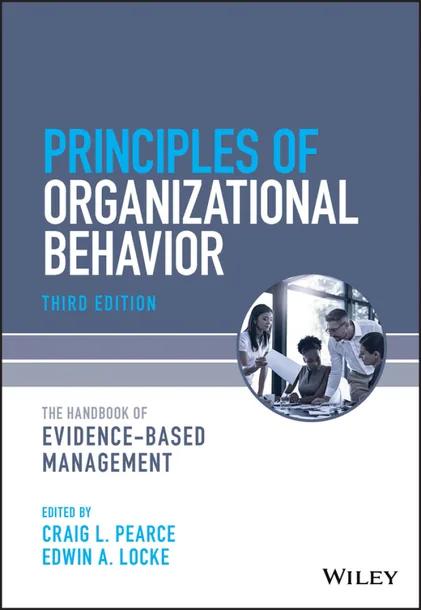
Principles of Organizational Behavior
The Handbook of Evidence-Based Management
by Craig L. Pearce, Edwin A. Locke
3rd Edition
Publisher: John Wiley & Sons P&T
Book Details
| Print ISBN | 9781119828549 |
| eText ISBN | 9781119828600 |
| Publisher | John Wiley & Sons P&T |
| Publishing Year | 2023 |
| Edition | 3rd Edition |
| Language | English |
| Pages | 672 |
Principles of Organizational Behavior: The Handbook of Evidence-Based Management, 3rd Edition, synthesizes management principles grounded in organizational and industrial psychology research. This reference volume presents empirical evidence to inform managerial decision-making and operational strategy across organizations.
The handbook focuses on three broad domains of workplace administration: personnel selection, staff motivation, and team leadership. Within these areas, the text explores practical applications, such as using structured interviews to evaluate candidates.
Designed for academic study and professional practice, the volume serves students of organizational behavior, human resources, and public administration alongside active managers. Readers can also access complimentary, downloadable video resources linked directly to each chapter to support learning.
Table of Contents
Chapter 1: Select on Intelligence
Chapter 2: Select on Conscientiousness and Emotional Stability
Chapter 3: Structure Interviews to Recruit and Hire the Best People
Chapter 4: Attain Emotional Control by Understanding What Emotions Are
Chapter 5: Motivate Employee Performance Through Goal Setting
Chapter 6: Cultivate Self-Efficacy for Personal and Organizational Effectiveness
Chapter 7: Pay for Performance
Chapter 8: Promote Job Satisfaction Through Mental Challenge
Chapter 9: Follow the Science to Make Training Work
Chapter 10: Embed Performance Appraisals into Broader Performance or Management Systems
Chapter 11: Use Participation to Share Information and Distribute Knowledge
Chapter 12: Recognizing Employees
Chapter 13: Sustain Organizational Performance Through Continuous Learning, Change, and Realignment
Chapter 14: Empowerment's Pivotal Role in Enhancing Effective Self- and Shared Leadership
Chapter 15: Effective Use of Power and Influence Tactics in Organizations
Chapter 16: Engage in Visionary Leadership
Chapter 17: Foster Trust Through Ability, Benevolence, and Integrity
Chapter 18: Teamwork in Organizations: The Best Teams Learn, Adapt, and Are Resilient
Chapter 19: Compose Teams to Ensure Successful External Activity
Chapter 20: Manage Intrateam Conflict Through Collaboration
Chapter 21: Clarity, Conciseness, and Consistency Are the Keys to Effective Communication
Chapter 22: Stimulate Creativity by Fueling Passion
Chapter 23: Manage Stress at Work Through Preventive and Proactive Coping
Chapter 24: Conflict Resolution Through negotiation and Mediation
Chapter 25: Achieve Entrepreneurial Growth Through Swiftness and Experimentation
Chapter 26: Achieve Work-Family Balance Through Individual and Organizational Strategies
Chapter 27: Use Advanced Information Technology to Transform Organizations
Chapter 28: Make Management Practice Fit national Cultures and the Global Culture
Chapter 29: Strategy and Structure for Effectiveness
Customer Reviews
0.0
0 reviews
No reviews yet. Be the first to review this book!
Write a Review
Reviewed by GradeFocus Editorial Team