Renewable Energy and Climate Change
by Volker V. Quaschning
2nd Edition
Publisher: Wiley-Blackwell
Book Details
| Print ISBN | 9781119514862 |
| eText ISBN | 9781119514879 |
| Publisher | Wiley-Blackwell |
| Publishing Year | 2019 |
| Edition | 2nd Edition |
| Language | English |
| Pages | 352 |
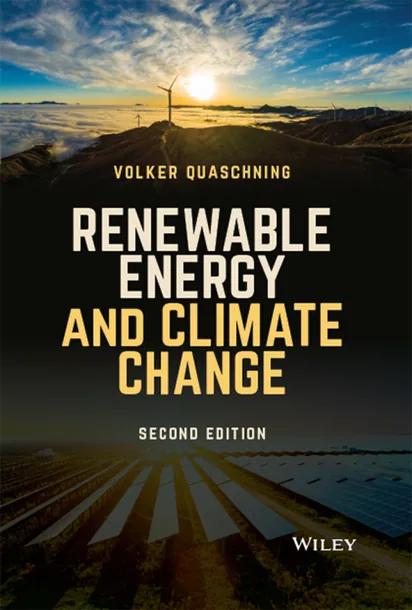
Renewable Energy and Climate Change, 2nd Edition, introduces renewable energy technologies and examines practical approaches to climate protection. Translated into English by Herbert Eppel, the textbook demonstrates the connections between energy consumption, energy pricing, and climate change.
The volume evaluates development potentials across major renewable sources, including wind, solar, hydropower, geothermal, and biomass energy. It also discusses practical measures for reducing personal energy waste and looks at future sustainable energy models.
Designed as both an introductory textbook for sustainability courses and a manual for system planning, the book features full-color photographs, diagrams, and highlighted text boxes to support learning.
Table of Contents
Chapter 1: Our Hunger for Energy
- • 1.1 Energy Supply – Yesterday and Today
- • 1.2 Energy Needs – Who Needs What, Where, and How Much?
- • 1.3 ‘Anyway’ Energy
- • 1.4 Energy Reserves –Wealth for a Time
- • 1.5 High Energy Prices – the Key to Climate Protection
Chapter 2: The Climate Before the Collapse
- • 2.1 It Is Getting Warm – Climate Changes Today
- • 2.2 The Guilty Parties – Causes of Climate Change
- • 2.3 Outlook and Recommendations –What Lies Ahead?
- • 2.4 A Difficult Birth – Politics and Climate Change
- • 2.5 Self-Help Climate Protection
Chapter 3: From Wasting Energy to Saving Energy and Reducing Carbon Dioxide
- • 3.1 Inefficiency
- • 3.2 Personal Energy Needs – Savings at Home
- • 3.3 Industry and Commerce – Everyone Else is to Blame
- • 3.4 Your Personal Carbon Dioxide Balance
- • 3.5 The Sale of Ecological Indulgences
Chapter 4: ‘Energiewende’ (Energy Transition) – The Way to a Better Future?
- • 4.1 Coal and Nuclear Power Plants – Crutch Instead of Bridge
- • 4.2 Efficiency and CHP – A Good Double for Starters
- • 4.3 Renewables – Energy Without End
- • 4.4 Germany Is Becoming Renewable
- • 4.5 Not So Expensive – The Myth of Unaffordability
- • 4.6 Energy Revolution Instead of Half-Hearted Energy Transition
Chapter 5: Photovoltaics – Energy from Sand
- • 5.1 Structure and Function
- • 5.2 Production of Solar Cells – From Sand to Cell
- • 5.3 PV Systems – Grids and Islands
- • 5.4 Planning and Design
- • 5.5 Economics
- • 5.6 Ecology
- • 5.7 PV Markets
- • 5.8 Outlook and Development Potential
Chapter 6: Solar Thermal Systems – Year-Round Heating from the Sun
- • 6.1 Structure and Functionality
- • 6.2 Solar Collectors – Collecting the Sun
- • 6.3 Solar Thermal Systems
- • 6.4 Planning and Design
- • 6.5 Economics
- • 6.6 Ecology
- • 6.7 Solar Thermal Markets
- • 6.8 Outlook and Development Potential
Chapter 7: Solar Power Plants – Even More Power from the Sun
- • 7.1 Focusing on the Sun
- • 7.2 Solar Power Plants
- • 7.3 Planning and Design
- • 7.4 Economics
- • 7.5 Ecology
- • 7.6 Solar Power Plant Markets
- • 7.7 Outlook and Development Potential
Chapter 8: Wind Power Systems – Electricity from Thin Air
- • 8.1 Gone with the Wind –Where the Wind Comes From
- • 8.2 Utilizing Wind
- • 8.3 Wind Turbines and Windfarms
- • 8.4 Planning and Design
- • 8.5 Economics
- • 8.6 Ecology
- • 8.7 Wind Power Markets
- • 8.8 Outlook and Development Potential
Chapter 9: Hydropower Plants –Wet Electricity
- • 9.1 Tapping into the Water Cycle
- • 9.2 Water Turbines
- • 9.3 Hydropower Plants
- • 9.4 Planning and Design
- • 9.5 Economics
- • 9.6 Ecology
- • 9.7 Hydropower Markets
- • 9.8 Outlook and Development Potential
Chapter 10: Geothermal Energy – Power from the Deep
- • 10.1 Tapping into the Earth’s Heat
- • 10.2 Geothermal Heat and Power Plants
- • 10.3 Planning and Design
- • 10.4 Economics
- • 10.5 Ecology
- • 10.6 Geothermal Markets
- • 10.7 Outlook and Development Potential
Chapter 11: Heat Pumps – From Cold to Hot
- • 11.1 Heat Sources for Low-Temperature Heat
- • 11.2 Operating Principle of Heat Pumps
- • 11.3 Planning and Design
- • 11.4 Economics
- • 11.5 Ecology
- • 11.6 Heat Pump Markets
- • 11.7 Outlook and Development Potential
Chapter 12: Biomass – Energy from Nature
- • 12.1 Origins and Use of Biomass
- • 12.2 Biomass Heating
- • 12.3 Biomass Heat and Power Plants
- • 12.4 Biofuels
- • 12.5 Planning and Design
- • 12.6 Economics
- • 12.7 Ecology
- • 12.8 Biomass Markets
- • 12.9 Outlook and Development Potential
Chapter 13: Renewable Gas and Fuel Cells
- • 13.1 Hydrogen as an Energy Source
- • 13.2 Methanation
- • 13.3 Transport and Storage of Renewable Gas
- • 13.4 Fuel Cells: Bearers of Hope
- • 13.5 Economics
- • 13.6 Ecology
- • 13.7 Markets, Outlook, and Development Potential
Chapter 14: Sunny Prospects – Examples of Sustainable Energy Supply
- • 14.1 Climate-Compatible Living
- • 14.2 Working and Producing in a Climate-friendly Manner
- • 14.3 Climate-Compatible Driving
- • 14.4 Climate-Compatible Travel by Water or Air
- • 14.5 Everything Becomes Renewable
- • 14.6 Everything will Turn Out Fine
Chapter A: Appendix
- • A.1 Energy Units and Prefixes
- • A.2 Geographic Coordinates of Power Plants
- • A.3 Further Reading
Customer Reviews
0.0
0 reviews
No reviews yet. Be the first to review this book!
Write a Review
Reviewed by GradeFocus Editorial Team