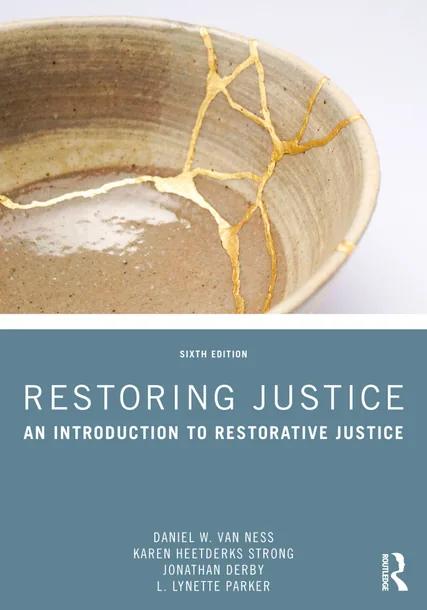
Restoring Justice
An Introduction to Restorative Justice
by Daniel W. Van Ness, Karen Heetderks Strong, Jonathan Derby
6th Edition
Publisher: Routledge
Book Details
| Print ISBN | 9780367748333 |
| eText ISBN | 9781000567489 |
| Publisher | Routledge |
| Publishing Year | 2022 |
| Edition | 6th Edition |
| Language | English |
| Pages | 240 |
Restoring Justice: An Introduction to Restorative Justice, 6th Edition, is a textbook that introduces the foundations and practices of restorative justice. Published by Routledge in 2022, the volume examines how restorative frameworks interact with criminal justice proceedings.
The text outlines the historical development of relational justice and organizes its framework around four core concepts: inclusion, encounter, repair, and cohesion. It also explores systemic integration and strategic steps for moving toward a restorative paradigm.
Written for academic study, this 240-page edition contains five color illustrations. Learning features include chapter key concepts, review questions, endnotes, and an appendix featuring the RJ City® case study.
Table of Contents
Chapter 1: How Patterns of Thinking Can Obstruct Justice
- • Key Concepts
- • Patterns of Thinking
- • An Ancient Pattern: Justice is Relational
- • A Brief History Lesson
- • The People Who Are Harmed
- • Private and Public Prosecution
- • Prisons
- • Juries
- • Current Pattern of Thinking: Justice is Impartial and Impersonal
- • Mass Incarceration
- • War on Drugs and Its Consequences
- • Consider an Alternative
- • Conclusion
- • Review Questions
- • Endnotes
Chapter 2: The Development of a New Pattern of Thinking
- • Key Concepts
- • The Term Restorative Justice
- • Attempts to Reform Contemporary Criminal Justice
- • A Response to Crime That Meets the Needs of People Harmed
- • Reform efforts focused on increasing access to services
- • Reform efforts focused on ensuring restitution or compensation
- • Reform efforts focused on procedural rights
- • A Response to Crime that Includes the Community
- • A Response to Crime that Reduces Incarceration
- • Indigenous Justice Approaches
- • Early Explorers of Restorative Justice Theory
- • Conclusion
- • Review Questions
- • Endnotes
Chapter 3: Justice That Promotes Healing
- • Key Concepts
- • Three Conceptions of Restorative Justice: Encounter, Reparative, and Transformative
- • Restorative Justice Definitions
- • Our Definition
- • Restorative Justice Principles
- • Principle 1 Justice Heals
- • Principle 2 Justice Includes
- • Principle 3 Justice Shares
- • Restorative Justice: A Visual Model
- • Restorative Justice Values
- • Inclusion
- • Encounter
- • Repair
- • Cohesion
- • Restorative Practices and Restorative Justice
- • Restorative Justice as Opposed to What?
- • Does Restorative Justice Work?
- • Outcomes for Those Causing Harm
- • Outcomes for Those Harmed
- • System Outcomes
- • Conclusion
- • Review Questions
- • Endnotes
Chapter 4: Inclusion
- • Key Concepts
- • Restorative Justice and Inclusion
- • Increasing Opportunities for the Parties to Speak in Contemporary Criminal Justice
- • Allowing Those Harmed by Crime to Speak
- • Allowing Those Who Caused Harm to Speak
- • Giving the Person Harmed Legal Standing to Pursue Reparation
- • Participation of the People Harmed at Various Stages of Criminal Proceedings
- • Charging the Defendant and Plea Bargaining
- • Bail
- • Sentencing
- • The Person Harmed as Civil Claimant in Criminal Cases
- • Conclusion
- • Review Questions
- • Endnotes
Chapter 5: Encounter
- • Key Concepts
- • Restorative Processes
- • Elements of Restorative Encounters
- • Risks for Encounter Participants
- • Power Dynamics
- • Due Process Violations
- • Trauma
- • Safeguards
- • Program Policies
- • Facilitator Training
- • A Safe Environment
- • Empowering Participants and Repairing Harm
- • Truth telling
- • Responsibility and Vindication
- • Opportunity to Apologize
- • Addressing Trauma
- • Connection vs. Disconnection
- • Conclusion
- • Review Questions
- • Endnotes
Chapter 6: Repair
- • Key Concepts
- • Needs of People Who Have Been Harmed by Crime
- • To Be Safe
- • Vindication
- • Relief from Stigma
- • Practical Support
- • Trauma-Informed Support and Assistance
- • Amends-Focused
- • Remorse
- • Apology
- • Changed Behavior
- • Active vs. Passive Responsibility
- • Restitution
- • What About Harm to Society?
- • Who Should Receive Restitution?
- • What About Community Service?
- • Should Restitution Reflect the Seriousness of the Offense or of the Injury?
- • Generosity as a Form of Amends
- • Justice-Informed
- • Poverty, Fees, Fines, and Restitution
- • Day Fines
- • Conclusion
- • Review Questions
- • Endnotes
Chapter 7: Cohesion
- • Key Concepts
- • Relationships
- • Respect
- • Showing Respect for People Returning from Prison
- • Families and Friends
- • Circles of Support and Accountability
- • Alcoholics Anonymous and Other Assistance Groups
- • Faith Communities
- • Resilience
- • Trauma
- • Trauma-Informed Community Building
- • Conclusion
- • Review Questions
- • Endnotes
Chapter 8: Toward a Restorative System
- • Key Concepts
- • Five System Models Incorporating Restorative Justice
- • Augmentation Model
- • Safety Net Model
- • Dual Track Model
- • Hybrid Model
- • Unitary Model
- • Restorative Justice in Contemporary Criminal Justice Proceedings
- • Before Responsibility Has Been Determined
- • Determination of Responsibility
- • Sentencing
- • Incarceration
- • Probation and Parole
- • Reentry
- • Considering the "Restorativeness" of a System or Program
- • Inclusion
- • Encounter
- • Repair
- • Cohesion
- • Scale
- • Conclusion
- • Review Questions
- • Endnotes
Chapter 9: Shifting to a Restorative Paradigm
- • Key Concepts
- • Six Strategic Objectives to Expand the Use of Restorative Justice
- • 1. Make Restorative Justice Processes the Default Option, Even in Serious Cases
- • 2. Develop a Reparative System as Back-up When More Restorative Measures are Not Options
- • 3. Develop a Parallel System That Meets the Needs of Persons Harmed
- • 4. Make the Incarceration Experience More Restorative
- • 5. Incentivize Investments That Support Social Cohesion Within Communities
- • 6. Create a Model Restorative Justice Legal Framework
- • Addressing Potential Shortcomings Within a Restorative System
- • Mechanisms That Respect Rule of Law and Protect Fundamental Rights
- • Accountability to Ensure Justice Mechanisms Function as Intended
- • Making Restorative Justice Happen
- • Common Agenda
- • Shared Measurement System
- • Mutually Reinforcing Activities
- • Continuous Communication
- • Backbone Support Organization
- • Attention to Equity
- • Keeping Communities Central in Collaborative Initiatives
- • Trauma-Informed Collaborations
- • Conclusion
- • Review Questions
- • Endnotes
Chapter 10: Transformation
- • Key Concepts
- • Transformation of Perspective
- • Transformation of Structures
- • Transformation of Persons
- • Review Questions
- • Endnotes
Chapter Appendix 1: RJ City® *Case Study*
Chapter Appendix 2: Restorative Justice Programs Across the Globe
Customer Reviews
0.0
0 reviews
No reviews yet. Be the first to review this book!
Write a Review
Reviewed by GradeFocus Editorial Team