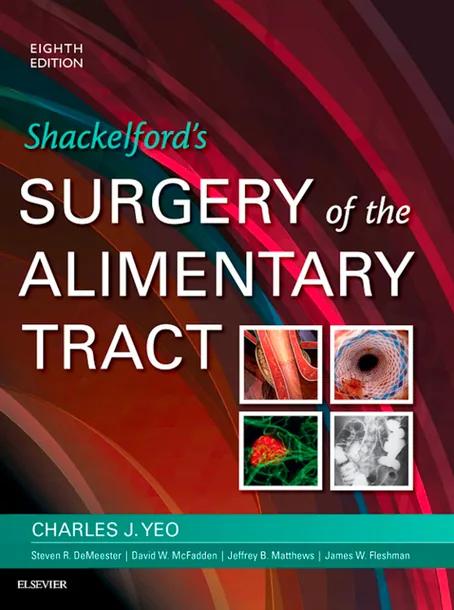
Shackelford's Surgery of the Alimentary Tract
by Charles J. Yeo, Steven R. DeMeester, David W. McFadden
8th Edition
Publisher: Elsevier
Book Details
| Print ISBN | 9780323402323 |
| eText ISBN | 9780323531788 |
| Publisher | Elsevier |
| Publishing Year | 2019 |
| Edition | 8th Edition |
| Language | English |
| Pages | 2408 |
Shackelford's Surgery of the Alimentary Tract, 8th Edition, is a comprehensive reference offering systematic approaches to adult and pediatric gastrointestinal disorders and operations.
The volume provides clinical guidance on endoscopic, robotic, and minimally invasive procedures alongside modern medical therapies. Core subject areas include the diagnosis and management of esophageal disorders, hernia repairs, and surgical interventions for conditions of the stomach and small intestine.
Designed for gastrointestinal surgeons and fellows, the work clarifies operative strategies through intraoperative photographs, laparoscopic views, radiographs, line drawings, and tabular summaries of differential diagnoses.
Table of Contents
Chapter 1: Esophageal Sphincters in Health and Disease
Chapter 2: Esophageal Body in Health and Disease
Chapter 3: Esophageal Mucosa in Health and Disease
Chapter 4: Relevant Anatomic Relations of the Esophagus
Chapter 5: Esophageal Symptoms and Selection of Diagnostic Tests
Chapter 6: Radiology of the Esophagus:Barium, Computed Tomography Scan, Positron Emission Tomography Scan, Magnetic Resonance Imaging
Chapter 7: Endoscopic Evaluation of the Esophagus and Endoscopic Ultrasonography of the Esophagus
Chapter 8: High-Resolution Esophageal Motility: Techniques and Use in the Diagnosis of Esophageal Motility Disorders and for Surgical Decision Making
Chapter 9: pH and Impedance Evaluation of the Esophagus
Chapter 10: Novel Diagnostic Technologies: Mucosal Impedance, Optical Coherence Tomography, Endomicroscopy
Chapter 11: Cricopharyngeal Dysfunction and Zenker Diverticulum
Chapter 12: Surgical Management of Mid- and Distal Esophageal Diverticula
Chapter 13: Epidemiology, Diagnosis, and Medical Management of Achalasia
Chapter 14: Endoscopic and Surgical Therapies for Achalasia
Chapter 15: Gastroesophageal Reflux Disease: Definition and Scope of the Problem in the United States of America and Worldwide
Chapter 16: Etiology and Natural History of Gastroesophageal Reflux Disease and Predictors of Progressive Disease
Chapter 17: Respiratory Complications of Gastroesophageal Reflux Disease
Chapter 18: Acid-Suppression Therapy for Gastroesophageal Reflux Disease and the Therapeutic Gap
Chapter 19: Fundoplication for Gastroesophageal Reflux Disease
Chapter 20: Magnetic Sphincter Augmentation for Gastroesophageal Reflux Disease
Chapter 21: Endoscopic Management of Gastroesophageal Reflux Disease
Chapter 22: Options to Address Delayed Gastric Emptying in Gastroesophageal Reflux Disease
Chapter 23: Management of Failed Fundoplications, End-Stage Gastroesophageal Reflux Disease, and Scleroderma
Chapter 24: Esophageal Complications of Bariatric Procedures
Chapter 25: Paraesophageal Hernia: Etiology, Presentation, and Indications for Repair
Chapter 26: Laparoscopic Paraesophageal Hernia Repair: Technique, Outcomes, and Management of Complications
Chapter 27: Open Paraesophageal Hernia Repair
Chapter 28: Diaphragmatic Relaxing Incisions for Crural Tension During Hiatal Hernia Repair
Chapter 29: Collis Gastroplasty for a Foreshortened Esophagus
Chapter 30: Mesh at the Hiatus
Chapter 31: Controversies in the Definition of Barrett Esophagus
Chapter 32: Epidemiology of Barrett Esophagus and Risk Factors for Progression
Chapter 33: Medical and Surgical Therapy for Gastroesophageal Reflux Disease and Barrett Esophagus
Chapter 34: Ablation for Patients with Barrett Esophagus or Dysplasia
Chapter 35: Epidemiology, Risk Factors, and Clinical Manifestations of Esophageal Cancer
Chapter 36: Esophageal Cancer Diagnosis and Staging
Chapter 37: Endoscopic Management of High-Grade Dysplasia and Superficial Esophageal Carcinoma
Chapter 38: Neoadjuvant and Definitive Therapy for Esophageal Cancer
Chapter 39A: Surgical Approaches to Remove the Esophagus: Open
Chapter 39B: Surgical Approaches to Remove the Esophagus: Minimally Invasive
Chapter 39C: Surgical Approaches to Remove the Esophagus: Vagal-Sparing
Chapter 39D: Surgical Approaches to Remove the Esophagus: Robotic
Chapter 40: Extent of Lymphadenectomy for Esophageal Cancer
Chapter 41: Options for Esophageal Replacement
Chapter 42: Palliative Therapy for Esophageal Cancer
Chapter 43: Anastomotic Complications After Esophagectomy: Frequency, Prevention, and Management
Chapter 44: Nonreflux Esophagitis
Chapter 45: Esophageal Duplication Cyst
Chapter 46: Submucosal Tumors in the Esophagus and Gastroesophageal Junction
Chapter 47: Caustic Esophageal Injury
Chapter 48: Etiology and Surgical Management of Esophageal Perforation
Chapter 49: Management of Esophageal Perforations and Leaks
Chapter 50: Basic Concepts and Factors Associated with Ventral Hernia Recurrence
Chapter 51: Congenital Diaphragmatic Hernia
Chapter 52: Ventral Hernia and Abdominal Release Procedures
Chapter 53A: Inguinal Hernia Repair: Laparoscopic
Chapter 53B: Inguinal Hernia Repair: Open
Chapter 54: Lumbar, Pelvic, and Uncommon Hernias
Chapter 55: Mesh: Material Science of Hernia Repair
Chapter 56: Anatomy and Physiology of the Stomach
Chapter 57: Diagnostic and Therapeutic Endoscopy of the Stomach and Small Bowel
Chapter 58: Access and Intubation of the Stomach and Small Intestine
Chapter 59: Surgery for Peptic Ulcer Disease
Chapter 60: Zollinger-Ellison Syndrome
Chapter 61: Gastric Adenocarcinoma
Chapter 62: Postgastrectomy Syndromes
Chapter 63: Operations for Morbid Obesity
Chapter 64: Foreign Bodies and Bezoars of the Stomach and Small Intestine
Chapter 65: Motility Disorders of the Stomach and Small Intestine
Chapter 66: Miscellaneous Benign Lesions and Conditions of the Stomach, Duodenum, and Small Intestine
Chapter 67: Surgical Diseases of the Stomach and Duodenum in Infants and Children
Chapter 68: Anatomy and Physiology of the Duodenum
Chapter 69: Adenocarcinoma of the Small Intestine
Chapter 70: Reoperations on the Stomach and Duodenum
Chapter 71: Anatomy and Physiology of the Small Intestine
Chapter 72: Small Bowel Obstruction
Chapter 73: Volvulus of the Stomach and Small Bowel
Chapter 74: Internal Hernias: Congenital and Acquired
Chapter 75: Crohn Disease and Its Surgical Management
Chapter 76: Gastric, Duodenal, and Small Intestinal Fistulas
Chapter 77: Small Bowel Diverticula
Chapter 78: Radiation Enteritis
Chapter 79: Short Bowel Syndrome
Chapter 80: Gastrointestinal Carcinoid Tumors
Chapter 81: Gastrointestinal Stromal Tumors
Chapter 82: Gastrointestinal Lymphomas
Chapter 83: Surgical Conditions of the Small Intestine in Infants and Children
Chapter 84: Ileostomy
Chapter 85: Suturing, Stapling, and Tissue Adhesion
Chapter 86: Anatomy and Physiology of the Mesenteric Circulation
Chapter 87: Mesenteric Ischemia
Chapter 88: Aortoenteric Fistula and Visceral Artery Aneurysms
Chapter 89: Mesenteric Arterial Trauma
Chapter 90: Anatomy, Physiology, and Embryology of the Pancreas
Chapter 91: Acute Pancreatitis
Chapter 92: Chronic Pancreatitis 000
Chapter 93: Pseudocysts and Other Complications of Pancreatitis
Chapter 94: Endoscopic and Minimally Invasive Therapy for Complications of Pancreatitis
Chapter 95: Imaging and Radiologic Intervention in the Pancreas
Chapter 96: Pancreatic and Periampullary Cancer
Chapter 97: Neuroendocrine Tumors of the Pancreas
Chapter 98: Primary Pancreatic Cystic Neoplasms
Chapter 99: Unusual Pancreatic Tumors
Chapter 100: Techniques of Pancreatic Resection for Cancer
Chapter 101: Minimally Invasive Pancreas Surgery
Chapter 102: Pancreatic Trauma
Chapter 103: Pancreatic Problems in Infants and Children
Chapter 104: Pancreas and Islet Allotransplantation
Chapter 105: Prevention and Management of Complications of Pancreatic Surgery
Chapter 106: Anatomy, Embryology, Anomalies, and Physiology of the Biliary Tract
Chapter 107: Imaging and Radiologic Intervention in the Biliary Tract
Chapter 108: Operative Management of Cholecystitis and Cholelithiasis
Chapter 109: Management of Common Bile Duct Stones
Chapter 110: Biliary Dyskinesia and Sphincter of Oddi Dysfunction
Chapter 111: Endoscopic Evaluation and Management of Pancreaticobiliary Disease
Chapter 112: Biliary Tract Tumors
Chapter 113: Prevention and Management of Bile Duct Injury
Chapter 114: Operative Management of Bile Duct Strictures
Chapter 115: Biliary Atresia and Biliary Hypoplasia
Chapter 116: Cystic Disorders of the Bile Ducts
Chapter 117: Surgical Treatment of Primary Sclerosing Cholangitis
Chapter 118: Anatomy and Physiology of the Liver
Chapter 119: Laboratory Measurement of Hepatic Function
Chapter 120: Perioperative Management and Nutritional Support in Patients with Liver and Biliary Tract Disease
Chapter 121: Hepatic Cysts
Chapter 122: Liver Abscess
Chapter 123: Management of Hepatobiliary Trauma
Chapter 124: Diagnostic Operation of the Liver and Techniques of Hepatic Resection
Chapter 125: Minimally Invasive Techniques of Hepatic Resection
Chapter 126: Ablative Therapies for Hepatic Neoplasms
Chapter 127: Hepatic Transplantation
Chapter 128: Acute Liver Failure and Bioartificial Liver Support
Chapter 129: Vascular Diseases of the Liver
Chapter 130: Drug-Induced Liver Injury
Chapter 131: Benign Hepatic Neoplasms
Chapter 132: Hepatocellular Cancer
Chapter 133: Management of Primary Malignant Hepatic Neoplasms Other Than Hepatocellular Cancer
Chapter 134: Management of Secondary Hepatic Neoplasms
Chapter 135: Management of Portal Hypertension
Chapter 136: Splenic Anatomy and Physiology
Chapter 137: Technique of Splenectomy
Chapter 138: Minimally Invasive and Image-Guided Interventional Approaches to the Spleen
Chapter 139: Management of Splenic Trauma in Adults
Chapter 140: Splenic Trauma in Children
Chapter 141: Splenectomy for Conditions Other Than Trauma
Chapter 142: Cysts and Tumors of the Spleen
Chapter 143: Operative Anatomy of the Colon, Rectum, and Anus
Chapter 144: Physiology of the Colon and Its Measurement
Chapter 145: Diagnostic and Therapeutic Colonoscopy
Chapter 146: Magnetic Resonance Imaging Staging of Rectal Cancer
Chapter 147: Ultrasonographic Diagnosis of Anorectal Disease Benign Colon, Rectal, and Anal Conditions
Chapter 148: Diagnosis and Management of Fecal Incontinence
Chapter 149: Surgical Treatment of Dysmotility Disorders of the Colon
Chapter 150: Pelvic Floor Dysfunction
Chapter 151: Rectovaginal and Rectourethral Fistulas
Chapter 152: Current Approaches to Complete Rectal Prolapse and Internal Intussusception
Chapter 153: Pilonidal Disease and Perianal Hidradenitis
Chapter 154: Emergent Care of the Victim of Colorectal Trauma
Chapter 155: Colonic Intussusception and Volvulus
Chapter 156: Colonic Bleeding and Ischemia
Chapter 157: Diverticular Disease Management
Chapter 158: Hemorrhoids and Rectoceles
Chapter 159: Fissure-in-Ano
Chapter 160: Anal Fistula Management Inflammatory Diseases
Chapter 161: Concepts in Inflammatory Bowel Disease Management
Chapter 162: Operative Therapy for Ulcerative Colitis: A Minimally Invasive Approach
Chapter 163: Surgery for Crohn Disease: Personalizing the Operation
Chapter 164: Appendix Neoplastic Disease
Chapter 165: Inherited Colorectal Cancer and the Genetics of Colorectal Cancer
Chapter 166: Basic Principles of the Operative Treatment of Colorectal Cancer
Chapter 167A: Transanal Approaches to Early Rectal Cancer: Transanal Minimally Invasive Surgery
Chapter 167B: Transanal Approaches to Early Rectal Cancer: Transanal Endoscopic Microsurgery and Conventional Transanal Excision
Chapter 168: Operations for Rectal Cancer: Low Anterior Resection—Open, Laparoscopic or Robotic, taTME, Coloanal Anastomosis
Chapter 169: Abdominoperineal Resection for Rectal Cancer
Chapter 170: Minimally Invasive Approaches to Colon Cancer
Chapter 171: Recurrent and Metastatic Colorectal Cancer
Chapter 172: Management of Metastatic Colorectal Cancer to the Liver
Chapter 173: Neoplasms of the Anus: High-Grade Squamous Intraepithelial Lesions and Cancer
Chapter 174: Retrorectal Tumors
Chapter 175: Rare Colorectal Malignancies
Chapter 176: Adjuvant and Neoadjuvant Therapy for Colorectal Cancer: Molecular-Based Therapy
Chapter 177: Prevention, Diagnosis, and Management of Anastomotic Leak
Chapter 178: Ostomy Construction and Management: Personalizing the Stoma for the Patient
Chapter 179: Reducing the Risk of Infection in the Elective and Emergent Colectomy Patient
Chapter 180: Reoperative Pelvic Surgery
Chapter 181: Evidence-Based Decision Making in Colon and Rectal Surgery
Customer Reviews
0.0
0 reviews
No reviews yet. Be the first to review this book!
Write a Review
Reviewed by GradeFocus Editorial Team