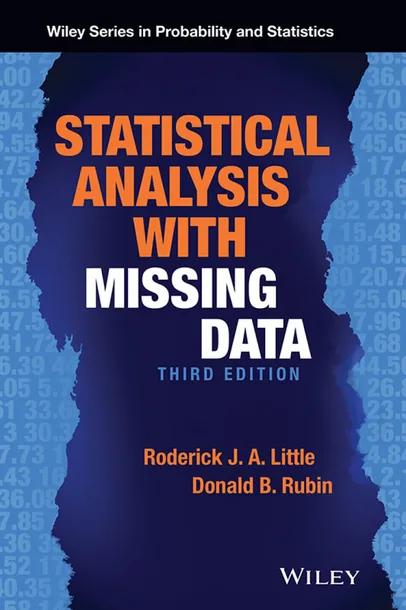
Statistical Analysis with Missing Data
by Roderick J. A. Little, Donald B. Rubin
3rd Edition
Publisher: Wiley-Blackwell
Book Details
| Print ISBN | 9780470526798 |
| eText ISBN | 9781118595695 |
| Publisher | Wiley-Blackwell |
| Publishing Year | 2019 |
| Edition | 3rd Edition |
| Language | English |
| Pages | 462 |
Statistical Analysis with Missing Data, 3rd Edition, is a textbook that presents practical methodology and likelihood-based theory for analyzing incomplete data. The volume provides a unified framework for evaluating missing values and the mechanisms that create them.
Core subjects span complete-case and available-case analysis, weighting methods, and single imputation techniques alongside strategies for handling missing-data uncertainty. The text also details likelihood-based estimation, Bayesian inference, and multiple imputation.
Published in the Wiley Series in Probability and Statistics, this work offers over 150 exercises designed to support practical learning, incorporating revisions informed by student feedback.
Table of Contents
Chapter 1: Introduction
- • 1.1 The Problem of Missing Data
- • 1.2 Missingness Patterns and Mechanisms
- • 1.3 Mechanisms That Lead to Missing Data
- • 1.4 A Taxonomy of Missing Data Methods
Chapter 2: Missing Data in Experiments
- • 2.1 Introduction
- • 2.2 The Exact Least Squares Solution with Complete Data
- • 2.3 The Correct Least Squares Analysis with Missing Data
- • 2.4 Filling in Least Squares Estimates
- • 2.5 Bartlett’s ANCOVA Method
- • 2.6 Least Squares Estimates of Missing Values by ANCOVA Using Only Complete-Data Methods
- • 2.7 Correct Least Squares Estimates of Standard Errors and One Degree of Freedom Sums of Squares
- • 2.8 Correct Least-Squares Sums of Squares with More Than One Degree of Freedom
Chapter 3: Complete-Case and Available-Case Analysis, Including Weighting Methods
- • 3.1 Introduction
- • 3.2 Complete-Case Analysis
- • 3.3 Weighted Complete-Case Analysis
- • 3.4 Available-Case Analysis
Chapter 4: Single Imputation Methods
- • 4.1 Introduction
- • 4.2 Imputing Means from a Predictive Distribution
- • 4.3 Imputing Draws from a Predictive Distribution
- • 4.4 Conclusion
Chapter 5: Accounting for Uncertainty from Missing Data
- • 5.1 Introduction
- • 5.2 Imputation Methods that Provide Valid Standard Errors from a Single Filled-in Data Set
- • 5.3 Standard Errors for Imputed Data by Resampling
- • 5.4 Introduction to Multiple Imputation
- • 5.5 Comparison of Resampling Methods and Multiple Imputation
Chapter 6: Theory of Inference Based on the Likelihood Function
- • 6.1 Review of Likelihood-Based Estimation for Complete Data
- • 6.2 Likelihood-Based Inference with Incomplete Data
- • 6.3 A Generally Flawed Alternative to Maximum Likelihood: Maximizing over the Parameters and the Missing Data
- • 6.4 Likelihood Theory for Coarsened Data
Chapter 7: Factored Likelihood Methods When the Missingness Mechanism Is Ignorable
- • 7.1 Introduction
- • 7.2 Bivariate Normal Data with One Variable Subject to Missingness: ML Estimation
- • 7.3 Bivariate Normal Monotone Data: Small-Sample Inference
- • 7.4 Monotone Missingness with More Than Two Variables
- • 7.5 Factored Likelihoods for Special Nonmonotone Patterns
Chapter 8: Maximum Likelihood for General Patterns of Missing Data: Introduction and Theory with Ignorable Nonresponse
- • 8.1 Alternative Computational Strategies
- • 8.2 Introduction to the EM Algorithm
- • 8.3 The E Step and The M Step of EM
- • 8.4 Theory of the EM Algorithm
- • 8.5 Extensions of EM
- • 8.6 Hybrid Maximization Methods
Chapter 9: Large-Sample Inference Based on Maximum Likelihood Estimates
- • 9.1 Standard Errors Based on The Information Matrix
- • 9.2 Standard Errors via Other Methods
Chapter 10: Bayes and Multiple Imputation
- • 10.1 Bayesian Iterative Simulation Methods
- • 10.2 Multiple Imputation
Chapter 11: Multivariate Normal Examples, Ignoring the Missingness Mechanism
- • 11.1 Introduction
- • 11.2 Inference for a Mean Vector and Covariance Matrix with Missing Data Under Normality
- • 11.3 The Normal Model with a Restricted Covariance Matrix
- • 11.4 Multiple Linear Regression
- • 11.5 A General Repeated-Measures Model with Missing Data
- • 11.6 Time Series Models
- • 11.7 Measurement Error Formulated as Missing Data
Chapter 12: Models for Robust Estimation
- • 12.1 Introduction
- • 12.2 Reducing the Influence of Outliers by Replacing the Normal Distribution by a Longer-Tailed Distribution
- • 12.3 Penalized Spline of Propensity Prediction
Chapter 13: Models for Partially Classified Contingency Tables, Ignoring the Missingness Mechanism
- • 13.1 Introduction
- • 13.2 Factored Likelihoods for Monotone Multinomial Data
- • 13.3 ML and Bayes Estimation for Multinomial Samples with General Patterns of Missingness
- • 13.4 Loglinear Models for Partially Classified Contingency Tables
Chapter 14: Mixed Normal and Nonnormal Data with Missing Values, Ignoring the Missingness Mechanism
- • 14.1 Introduction
- • 14.2 The General Location Model
- • 14.3 The General Location Model with Parameter Constraints
- • 14.4 Regression Problems InvolvingMixtures of Continuous and Categorical Variables
- • 14.5 Further Extensions of the General Location Model
Chapter 15: Missing Not at RandomModels
- • 15.1 Introduction
- • 15.2 Models with Known MNAR Missingness Mechanisms: Grouped and Rounded Data
- • 15.3 Normal Models for MNAR Missing Data
- • 15.4 Other Models and Methods for MNAR Missing Data
Customer Reviews
0.0
0 reviews
No reviews yet. Be the first to review this book!
Write a Review
Reviewed by GradeFocus Editorial Team
Related Books
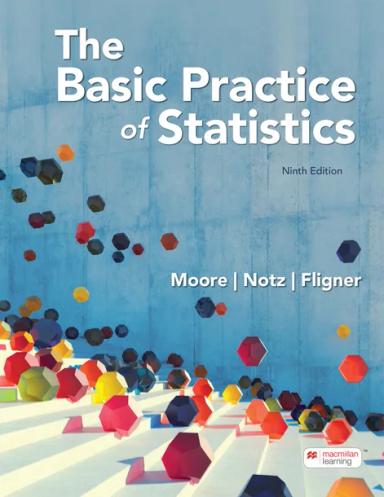
The Basic Practice of Statistics
David S. Moore
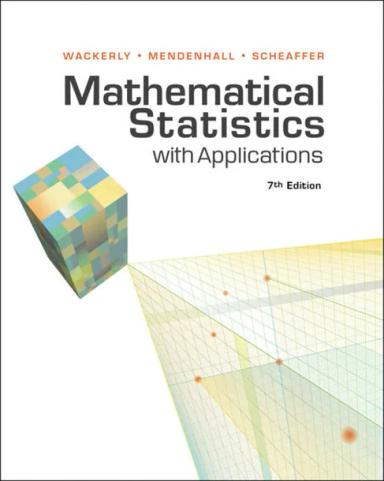
Mathematical Statistics with Applications
Dennis Wackerly
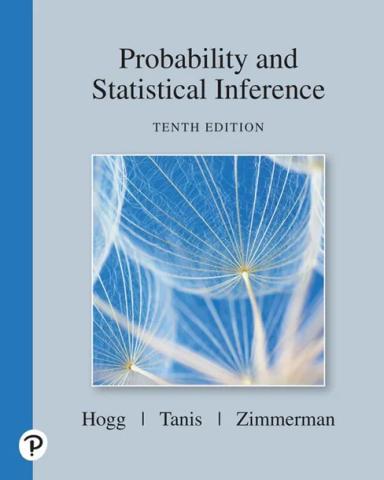
Probability and Statistical Inference
Robert V. Hogg
Essentials of Statistics for the Behavioral Sciences
Frederick J Gravetter

The Practice of Statistics for the AP® Course
Daren Starnes

The Practice of Statistics for the AP® Course
Daren Starnes