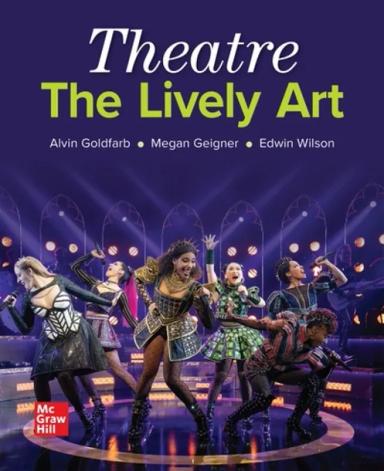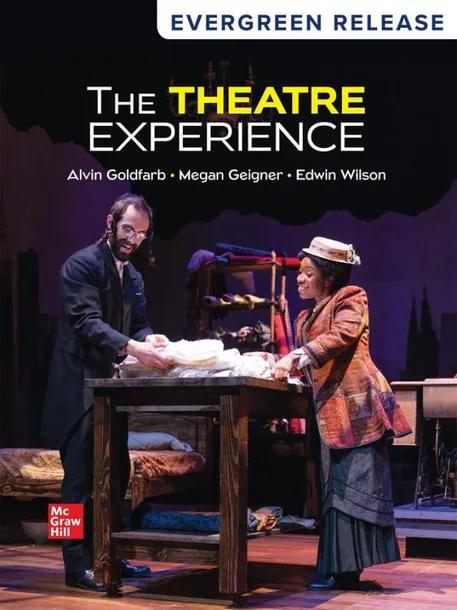
The Theatre Experience
by Edwin Wilson, Alvin Goldfarb
15th Edition
Publisher: McGraw-Hill Higher Education
Book Details
| Print ISBN | 9781266298356 |
| eText ISBN | 9781265756789 |
| Publisher | McGraw-Hill Higher Education |
| Publishing Year | 2022 |
| Edition | 15th Edition |
| Language | English |
The Theatre Experience, 15th Edition, is an introductory college textbook written by Edwin Wilson and Alvin Goldfarb and published by McGraw-Hill Higher Education. The volume introduces theatre students and instructors to the fundamental study of performance art by examining the audience's active role, cultural background, personal expectations, and psychological imagination during a live show.
The text evaluates traditional and contemporary physical performance spaces, detailing the specific layouts, advantages, and staging conditions of proscenium, arena, thrust, black box, and created spaces. Additional chapters address core technical elements of stage production, exploring how creative teams design scenery, construct stage costumes, and implement lighting and sound.
Furthermore, this release includes dedicated coverage of diverse and inclusive plays, playwrights, and theatrical forms across historical and modern performance contexts. The structured text offers introductory college students and instructors a complete reference for examining the shared relationship between audience members and stage practitioners.
Table of Contents
Chapter 1: The Audience: Its Role and Imagination
- • The Mediated Arts: Film and Television
- • The Contrast Between Theatre, Film, Television, and Streamed Media
- • Theatre Is Transitory and Immediate
- • Human Beings—The Focus of Theatre
- • The Chemistry of the Performer–Audience Contact
- • Theatre as a Group Experience
- • Psychology of Groups
- • How Audience Composition Affects the Theatre Experience
- • The Separate Roles of Performers and Spectators
- • How Should the Audience Be Involved?
- • Audience Participation through Direct Action
- • The Imagination of the Audience
- • Tools of the Imagination: Symbol and Metaphor
- • The “Reality” of the Imagination
- • The Imaginary Worlds of Theatre
- • Realistic Elements of Theatre
- • Departures from Realism: Nonrealistic Elements of Theatre
- • Combining the Realistic and the Nonrealistic
- • Distinguishing Stage Reality from Fact
- • Summary
Chapter 2: Background and Expectations of the Audience
- • Background of Individual Spectators
- • Background Information on the Play or Playwright
- • Background of the Period
- • Theatre and Society
- • Modern Theatre and Culture
- • Expectations: The Variety of Experiences in Modern Theatre
- • Broadway and Touring Theatre
- • Resident Professional Theatre
- • Alternative Theatre: Off-Broadway and Elsewhere
- • Young People’s and Children’s Theatre
- • College and University Theatre
- • Community and Amateur Theatre
- • Diverse and Global Theatres
- • The Audience, Critic, Reviewer, and Blogger
- • The Critic, Reviewer, and Blogger
- • Online Theatre Critics and Reviewers: New Approaches
- • Preparation for Criticism
- • Fact and Opinion in Criticism
- • Critical Criteria
- • The Dramaturg or Literary Manager
- • The Audience’s Relation to Criticism
- • The Audience’s Independent Judgment
- • Summary
Chapter 3: Theatre Spaces
- • Creating the Environment
- • Theatre Spaces
- • Proscenium or Picture-Frame Stage: History and Characteristics
- • Arena Stage: History and Characteristics
- • Thrust Stage: History and Characteristics
- • Alley or Traverse Theatre Space
- • Created and Found Spaces
- • All-Purpose Theatre Spaces: The Black Box
- • Special Requirements of Theatre Environments
- • Evaluating the Theatre Space
- • Summary
Chapter 4: Acting for the Stage
- • Acting in Everyday Life
- • Social Roles
- • Personal Roles
- • Acting in Life versus Acting on Stage
- • Three Challenges of Acting
- • Making Characters Believable
- • Physical Acting: Voice and Body
- • Synthesis and Integration
- • Evaluating Performances
- • Summary
Chapter 5: The Director and the Producer
- • The Theatre Director
- • The Traditional Director
- • The Director and the Script
- • The Auteur Director and the Postmodern Director
- • The Auteur Director
- • The Postmodern Director
- • The Director and the Production: The Physical Production
- • The Director’s Work with the Performers
- • Casting
- • Diversity and Inclusion in Directing: Inclusive Casting
- • Rehearsals
- • The Director as the Audience’s Eye
- • Movement, Pace, and Rhythm
- • Technical Rehearsal
- • Dress Rehearsal
- • Previews
- • The Director’s Collaborator: The Stage Manager
- • The Director’s Collaborator: The Choreographer
- • The Director’s Collaborators: The Fight Director and the Intimacy Director
- • The Director’s Collaborator: The Dramaturg
- • The Director’s Power and Responsibility
- • The Producer or Managing Director
- • The Commercial Producer
- • Noncommercial Theatres
- • The Producer and Director’s Collaborator: The Production Manager
- • Completing The Picture: Playwright, Director, and Producer
- • Evaluating Directing
- • Summary
Chapter 6: Scenery
- • The Audience’s View
- • The Scene Designer
- • A Brief History of Stage Design
- • Scenic Design Today
- • The Scene Designer’s Objectives
- • Elements of Scene Design
- • The Process of Scene Design
- • The Scene Designer’s Collaborators and the Production Process
- • Designing a Total Environment
- • Evaluating Scene Design
- • Summary
Chapter 7: Stage Costumes
- • Costumes for the Stage
- • Objectives of Costume Design
- • The Process of Costume Design
- • The Costume Designer at Work
- • The Costume Designer’s Resources
- • The Costume Designer’s Collaborators
- • Related Elements of Costume Design
- • Makeup
- • Hairstyles and Wigs
- • Masks
- • Millinery, Accessories, and Crafts
- • Coordination of the Whole
- • Evaluating Costume Design
- • Summary
Chapter 8: Lighting and Sound
- • Stage Lighting
- • A Brief History of Stage Lighting
- • Objectives and Functions of Lighting Design
- • The Lighting Designer
- • Sound in the Theatre
- • Sound Reproduction: Advantages and Disadvantages
- • The Sound Designer
- • Understanding Sound Reproduction and Sound Reinforcement
- • Sound Creates the Environment
- • Sound Technology
- • Special Effects in Lighting and Sound
- • Evaluating Lighting and Sound Design
- • Summary
Chapter 9: Creating the World of the Play
- • The Subject and Verb of Drama: People and Action
- • Structural Conventions: The Rules of the Game
- • Limited Space
- • Limited Time
- • Strongly Opposed Forces
- • A Balance of Forces
- • Incentive and Motivation
- • Creating Structure
- • Plot versus Story
- • The Opening Scene
- • Obstacles and Complications
- • Crisis and Climax
- • Point of View
- • The Dramatist’s Point of View
- • Society’s Point of View
- • Summary
Chapter 10: Dramatic Structure and Dramatic Characters
- • Dramatic Structure
- • Characteristics of Climactic Structure
- • Characteristics of Episodic Structure
- • Combinations of Climactic and Episodic Form
- • Rituals as Dramatic Structure
- • Patterns as Dramatic Structure
- • Serial Structure
- • Structure in Experimental and Avant-Garde Theatre
- • Structure in Musical Theatre
- • Diversity and Inclusion in Dramatic Structure: Feminist Structure
- • Dramatic Characters
- • Extraordinary Characters
- • Representative or Quintessential Characters
- • Stock Characters
- • Minor Characters
- • A Narrator or Chorus
- • Nonhuman Characters
- • The Audience and Character Types
- • Juxtaposition of Characters
- • Orchestration of Characters
- • Summary
Chapter 11: Theatrical Genres
- • Types of Drama
- • Tragedy
- • Traditional Tragedy
- • Modern Tragedy
- • Heroic Drama
- • Bourgeois or Domestic Drama
- • Melodrama
- • Comedy
- • Characteristics of Comedy
- • Techniques of Comedy
- • Forms of Comedy
- • Tragicomedy
- • What Is Tragicomedy?
- • Modern Tragicomedy
- • Theatre of the Absurd
- • Absurdist Plots: Illogicality
- • Absurdist Language: Nonsense and Non Sequitur
- • Absurdist Characters: Existential Beings
- • Musical Theatre
- • Antecedents
- • The Book Musical Is Born
- • A High Point of Musicals
- • Musicals after 1975
- • Summary
Chapter 12: Alternative and Experimental Dramatic and Theatrical Forms
- • Expressionism, Surrealism, Epic Theatre, and Theatre of Cruelty
- • Other Nontraditional and Experimental Forms
- • Two Forms that Bridge the Traditonal and Nontraditional
- • Traditional Genres and Forms Continue and Transform
- • Summary
Chapter 13: Diverse and Inclusive Plays, Playwrights, and Theatrical Forms
- • Diverse Multicultural Theatre and Playwrights
- • African American Theatre and Playwrights: Introduction
- • African Theatres and Drama
- • African American Theatres and Playwrights
- • Asian American Playwrights and Theatres
- • Latinx Theatre
- • Indigenous Theatres and Playwrights
- • Feminist Theatre and Women Playwrights
- • LGBTQ Theatre and Playwrights
- • Global Theatre
- • Summary
Customer Reviews
0.0
0 reviews
No reviews yet. Be the first to review this book!
Write a Review
Reviewed by GradeFocus Editorial Team
▶Research Sources (12)
- The Theatre Experience: 2025 Release | Rent | 9781265756789
- Theatre Experience 15th Edition Guide | PDF | Information Science
- The theater experience : Wilson, Edwin : Free Download, Borrow, and ...
- Loose Leaf for the Theatre Experience: 2025 Release
- ISBN 9781265756789 - The Theatre Experience 15th Edition ...
- The Theatre Experience 15th Edition: Wilson & Goldfarb Textbook
- Theatre
- The Theatre Experience
- The Theatre Experience - Edwin Wilson, Alvin Goldfarb, Megan E. ...
- ISBN 9781266298356 - The Theatre Experience
- Exam 1 - The Theatre Experience: Chapters 1-7 Flashcards
- The Theatre Experience 15th Edition Edwin Wilson Premium Version | PDF