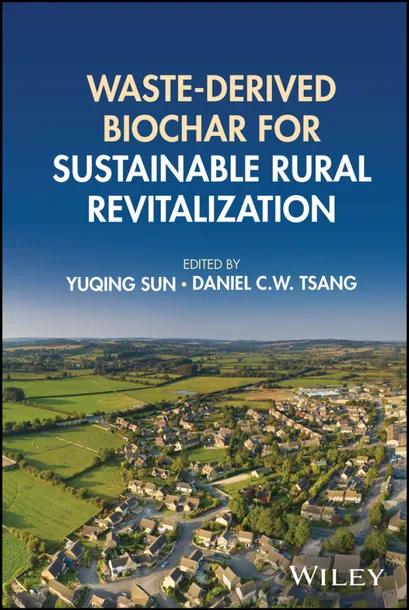
Waste-derived Biochar for Sustainable Rural Revitalization
by Yuqing Sun, Daniel C. W. Tsang
1st Edition
Publisher: Wiley-Blackwell
Book Details
| Print ISBN | 9781394250271 |
| eText ISBN | 9781394250288 |
| Publisher | Wiley-Blackwell |
| Publishing Year | 2025 |
| Edition | 1st Edition |
| Language | English |
| Pages | 528 |
Waste-derived Biochar for Sustainable Rural Revitalization, 1st Edition, is a 528-page reference volume edited by Yuqing Sun and Daniel C. W. Tsang and published by Wiley-Blackwell. The text summarizes technical methods for application-oriented biochar production derived from agricultural and biomass waste resources.
The volume details thermal conversion pathways, including slow, fast, microwave, and flash pyrolysis, alongside physical and chemical modification procedures. It systematically examines rural applications ranging from renewable biofuels and energy recovery during waste fermentation to organic seeding substrates. Further chapters cover slow-release fertilizers, slow-release pesticides, targeting plant disease suppressors, and the physical, chemical, and biological conditioning of farmland soils.
This structured reference offers clear procedural insights for professionals evaluating biochar behavior in rural environmental settings. It is designed for engineers, scientists, researchers, and graduate students specializing in waste recycling and management, sustainable rural development, chemical engineering, civil engineering, and environmental engineering.
Table of Contents
Chapter 1: Tailored Biochar Production from Waste Biomass Resource in Rural Areas
- • 1.1 Introduction
- • 1.2 Overview of Rural Solid Wastes
- • 1.3 Biochar Production Methods
- • 1.4 Biochar Modification Methods
- • 1.5 Conclusion
Chapter 2: Waste-derived Biochar as Renewable Bio-fuels
- • 2.1 Feedstocks Type of Waste-derived Biochar Fuels
- • 2.2 Preparation Technologies of Waste-derived Biochar Fuels
- • 2.3 Preparation of Biochar Fuel by Carbonization
- • 2.4 Types and Characteristics of Carbonation Reactors
- • 2.5 Fuel Properties of Biochar
- • 2.6 Combustion of Biochar
- • 2.7 Combustion Characteristics of Biochar
- • 2.8 Combustion Kinetics of Biochar
- • 2.9 Emission Characteristics of Biochar Combustion
- • 2.10 Migration of Alkali Metals During Biochar Combustion
- • 2.11 Prospects and Challenges of Biochar Energy
Chapter 3: Agricultural Waste-derived Biochar for Energy Recovery from Waste Fermentation
- • 3.1 Introduction
- • 3.2 Biochar Preparation from Agricultural Waste
- • 3.3 Energy Recovery from Waste Biomass Fermentation Based on Biochar Treatment
- • 3.4 A Case for Biochar in Energy Recovery
- • 3.5 Conclusion
Chapter 4: Waste-derived Biochar as Organic Seeding Substrate
- • 4.1 Peat-based Growing Media Substituted by Biochar
- • 4.2 Coir-based Growing Media Substituted by Biochar
- • 4.3 Growing Media of Compost, Humic Acid, and Activated Carbon
Chapter 5: Waste-derived Biochar as Slow-release Fertilizers
- • 5.1 Introduction
- • 5.2 Research Progress of SRF
- • 5.3 The Preparation Technologies of Biochar-based SRFs
- • 5.4 Mechanism of Slow Release of Biochar
- • 5.5 The Specific Applications of Biochar SRF
- • 5.6 Summary and Outlook
Chapter 6: Waste-derived Biochar as Slow-release Pesticides
- • 6.1 Introduction
- • 6.2 Research Progress of Biochar-based Slow-release Pesticides
- • 6.3 The Mechanisms of Biochar Loading and Slow Release of Pesticide
- • 6.4 Determinants Influencing Biochar Loading Efficiency and Pesticidal Release Capacity
- • 6.5 Modification of Biochar for Sustained Release of Pesticide
- • 6.6 Summary and Outlook
Chapter 7: Waste-derived Biochar as Targeting Plant Disease Suppressors
- • 7.1 Introduction
- • 7.2 Methods
- • 7.3 Using Biochar for Managing Plant Diseases
- • 7.4 Conclusion
Chapter 8: Improvement of Soil Physical, Chemical, and Biological Properties by Waste-derived Biochar
- • 8.1 Biochar Improves Soil Physical Properties
- • 8.2 Biochar Improves Soil Chemical Properties
- • 8.3 Biochar Improves Soil Biological Properties
Chapter 9: Impact of Biochar on Pesticides Transportation, Bioavailability, Performance, and Degradation in Soil Environment
- • 9.1 Introduction to Biochar and Pesticides
- • 9.2 Biochar Application for Pesticide Control
- • 9.3 Biochar’s Impact on Pesticide Transportation
- • 9.4 Bioavailability of Pesticides in the Presence of Biochar
- • 9.5 Performance Enhancement of Pesticides with Biochar
- • 9.6 Degradation of Pesticides Influenced by Biochar
- • 9.7 Future Prospects and Challenges in Biochar–Pesticide Research
Chapter 10: Waste-derived Biochar as Adsorbent for Agriculture Wastewater Treatment
- • 10.1 Introduction
- • 10.2 Preparation of Biochar-based Agriculture Wastewater Adsorbent
- • 10.3 Efficacy of Biochar-adsorption on Agriculture Wastewater Treatment
- • 10.4 Effects of Modification Methods on Biochar-enhanced Adsorption Agriculture Wastewater Treatment
- • 10.5 Mechanisms of Adsorption and Future Prospects
Chapter 11: Waste-derived Biochar as Catalyst for Agriculture Wastewater Treatment
- • 11.1 Photocatalysis
- • 11.2 H2O2-based Catalysis Processes
- • 11.3 PS-based Catalysis Processes
- • 11.4 PI-based Catalysis Processes
- • 11.5 O3-based Catalysis Processes
- • 11.6 PAA-based Catalysis Processes
Chapter 12: Waste-derived Biochar for Efficient CO2 Capture
- • 12.1 Introduction
- • 12.2 Biomass-based Carbon Materials
- • 12.3 Activation Methods for Carbon Materials
- • 12.4 The Recent Advances of Functionalized Biochar Materials for CO2 Capture
- • 12.5 Conclusion and Outlook
Chapter 13: Biomass Waste-derived Biochar as Graphitic Carbon for Agricultural Applications
- • 13.1 Literature Statistics Methodology
- • 13.2 Biomass Waste Feedstocks Suitable for the Preparation of Graphitic Carbon
- • 13.3 Graphitization and Carbonization Processes of Waste Biomass and Characteristics of Graphitic Carbon
- • 13.4 Optimization Methods for Biomass Waste-derived Graphitic Carbon
- • 13.5 Removal of Organic Pollutants from Water and Soil by Waste-derived Graphitic Carbon
- • 13.6 Improvement of Soil Properties by Waste-derived Graphitic Carbon
- • 13.7 Improvement of Fertilizer Properties by Waste-derived Graphitic Carbon
- • 13.8 Immobilization of Heavy Metals by Waste-derived Graphitic Carbon
- • 13.9 Conclusions and Prospects
Chapter 14: Waste-derived Biochar for Low-carbon Construction Materials in Rural Areas
- • 14.1 Introduction
- • 14.2 Properties of Waste-derived Biochar
- • 14.3 Treatment and Engineering of Biochar
- • 14.4 Applications in Low-carbon Construction
- • 14.5 Environmental and Economic Benefits
- • 14.6 Conclusion
Chapter 15: Low-carbon Soil Remediation with Biochar and GGBS
- • 15.1 Introduction
- • 15.2 Latest Developments and Applications of Biochar in Soil Remediation
- • 15.3 Biochar-enhanced Cement for Stabilization/Solidification
- • 15.4 Key Parameters in Biochar-enhanced Soil S/S
- • 15.5 Supply Availability of Biochar
- • 15.6 GGBS Supply Availability
- • 15.7 Environmental Benefits
- • 15.8 Conclusion
Chapter 16: Technical and Economic Analysis of Biochar Technologies
- • 16.1 Introduction
- • 16.2 Techno-economic Analysis of Biochar Technologies in Production Process
- • 16.3 Techno-economic Analysis of Biochar Application Scenarios
- • 16.4 Element Circulation and Sustainable Development
- • 16.5 Current Limitations and Future Perspectives
- • 16.6 Summary
Chapter 17: ESG Perspective and Biodiversity Impact of Waste-derived Biochar
- • 17.1 Introduction
- • 17.2 Environmental (E) Perspective
- • 17.3 Social (S) Perspective
- • 17.4 Governance (G) Perspective
- • 17.5 Biodiversity
- • 17.6 Challenges and Opportunities
- • 17.7 Conclusion
Chapter 18: Environmental Stability of Biochar in Natural Systems
- • 18.1 Environmental Reactivity of Biochar
- • 18.2 Aggregation and Transport Behaviors of Biochar Colloids
- • 18.3 Biochar Carbon Stability
- • 18.4 Perspectives
Chapter 19: Risk Assessment of Biochar in Soil and Aquatic Ecosystem
- • 19.1 Negative Impacts of Biochar on Soil Ecosystem
- • 19.2 Negative Impacts of Biochar on Aquatic Ecosystem
- • 19.3 Combined Effects of Biochar and Pollutants to Organisms
- • 19.4 Potential Measures for Risk Avoidance
Customer Reviews
0.0
0 reviews
No reviews yet. Be the first to review this book!
Write a Review
Reviewed by GradeFocus Editorial Team
▶Research Sources (14)
- Waste-derived Biochar for Sustainable Rural Revitalization
- Waste-derived Biochar for Sustainable Rural Revitalization
- Waste-derived Biochar for Sustainable Rural Revitalization
- Captcha - Erie2 BOCES | Erie BOCES
- https://lernerbooks.com/products/search_results?se...
- Sign In - MyLibrary | Hal Leonard Online
- Search
- Sourcebooks, LLC.
- Waste-derived Biochar for Sustainable Rural Revitalization
- Waste‐derived Biochar for Sustainable Rural Revitalization
- Waste-derived Biochar for Sustainable Rural Revitalization
- Waste-derived Biochar for Sustainable Rural Revitalization
- Waste-derived Biochar for Sustainable Rural Revitalization
- Valorization of waste biomass towards biochar production