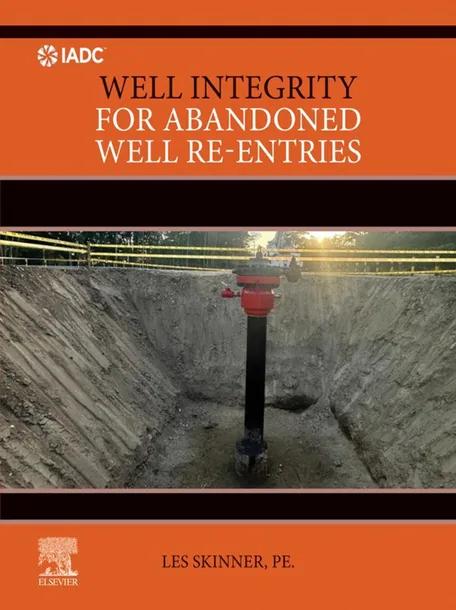
Well Integrity for Abandoned Well Re-entries
by Les Skinner
1st Edition
Publisher: Elsevier
Book Details
| Print ISBN | 9780443238253 |
| eText ISBN | 9780443238246 |
| Publisher | Elsevier |
| Publishing Year | 2026 |
| Edition | 1st Edition |
| Language | English |
Well Integrity for Abandoned Well Re-entries, 1st Edition, provides systematic guidance on evaluating and restoring inactive wellbores for renewed operational use. This textbook targets engineering students and practicing personnel seeking to repurpose existing well structures, thereby avoiding the financial expense, drilling waste, and environmental emissions associated with constructing new wells.
The content outlines several major re-entry applications, detailed through enhanced oil recovery, carbon dioxide EOR paired with sequestration, underground natural gas storage, and geothermal heat recovery. It structures the practical methods required to reclaim abandoned wellbores while maintaining strict mechanical containment across diverse subsurface settings.
By connecting integrity diagnostics with field execution protocols, the volume delivers practical support for project design and operational management. The material fits primary or supplemental engineering curricula while equipping technical teams to plan, evaluate, and execute safe wellbore reclamation projects across varied operational environments.
Table of Contents
Chapter 1: INTRODUCTION
- • 1.1 Terminology
- • 1.2 Why re-enter an abandoned well?
- • 1.3 Chapter summary
- • 1.4 Chapter quiz
- • 1.5 Bibliography
Chapter 2: WELL INTEGRITY BASICS
- • 2.1 General remarks
- • 2.2 Terminology
- • 2.3 Well design
- • 2.4 Well construction
- • 2.5 Barrier installation
- • 2.6 Barrier quality control
- • 2.7 Well integrity prior to abandonment
- • 2.8 Well integrity assessment prior to re-entry
- • 2.9 Well integrity required for re-entry
- • 2.10 Chapter summary
- • 2.11 Chapter quiz
- • 2.12 Bibliography
Chapter 3: THE ABANDONED WELL
- • 3.1 General comments
- • 3.2 Historical abandonment procedures
- • 3.3 Modern abandonment procedures
- • 3.4 Barrier threats
- • 3.5 Typical abandoned well configurations
- • 3.6 Chapter summary
- • 3.7 Chapter quiz
- • 3.8 Bibliography
Chapter 4: POTENTIAL USES FOR RE-ENTERED WELLS
- • 4.1 Hydrocarbon production
- • 4.2 Non-hydrocarbon uses
- • 4.3 Chapter summary
- • 4.4 Chapter quiz
- • 4.5 Bibliography
Chapter 5: ABANDONED WELL ANALYSIS FOR RE-ENTRY
- • 5.1 Candidate well selection
- • 5.2 Risk
- • 5.3 Well condition at abandonment
- • 5.4 Original well design
- • 5.5 Chapter summary
- • 5.6 Chapter quiz
- • 5.7 Bibliography
Chapter 6: ESG CONSIDERATIONS
- • 6.1 General discussion, ESG principles
- • 6.2 Abandoned well leakage
- • 6.3 Resource/cost savings
- • 6.4 Chapter summary
- • 6.5 Chapter quiz
- • 6.6 Bibliography
Chapter 7: ECONOMICS
- • 7.1 The size of the prize
- • 7.2 Risk impact reduction through CAPEX increases
- • 7.3 Risk ranking and mitigation
- • 7.4 Economic indicators
- • 7.5 Chapter summary
- • 7.6 Chapter quiz
- • 7.7 Bibliography
Chapter 8: PRELIMINARY SURFACE PROCEDURES
- • 8.1 Introduction
- • 8.2 Sunk costs
- • 8.3 Chapter summary
- • 8.4 Chapter quiz
- • 8.5 Bibliography
Chapter 9: RE-ENTRY PROCEDURES
- • 9.1 Rig selection
- • 9.2 Blowout prevention system
- • 9.3 Additional equipment
- • 9.4 Drill string
- • 9.5 Drilling fluid
- • 9.6 Blowout prevention system testing
- • 9.7 Bell nipple installation
- • 9.8 Drilling out surface plug
- • 9.9 Cleaning out hole below surface plug
- • 9.10 Exposed surface/intermediate casing condition
- • 9.11 Cleaning out additional plugs
- • 9.12 Attaching to cut-off casing
- • 9.13 Unusual problems
- • 9.14 Chapter summary
- • 9.15 Chapter quiz
- • 9.16 Bibliography
Chapter 10: INVESTMENT DECISION
- • 10.1 Re-entry advantages and disadvantages
- • 10.2 Well integrity
- • 10.3 Risk re-assessment
- • 10.4 Chapter summary
- • 10.5 Chapter quiz
- • 10.6 Bibliography
Customer Reviews
0.0
0 reviews
No reviews yet. Be the first to review this book!
Write a Review
Reviewed by GradeFocus Editorial Team
▶Research Sources (15)
- Well Integrity for Abandoned Well Re-entries Skinner, Les
- Well Integrity for Abandoned Well Re-entries
- Master Books
- Well Integrity for Abandoned Well Re-entries - 1st Edition
- Please verify you are human - Captcha
- Psychology & Personal Growth Archives
- Catalog
- Bookstore - Way of Life Literature
- "Well Integrity for Abandoned Well Re-entries" Published by IADC ...
- Well integrity for abandoned well re-entries - ResearchGate
- Well Integrity for Abandoned Well Re-Entries - by Les Skinner ... - Target
- The Role of Well Integrity in Plug and Abandonment Operations - IPT Global
- [PDF] Well Integrity for Abandoned Well Re-entries by Les Skinner
- Plug & abandonment of offshore wells: Ensuring long-term ... - SINTEF
- Barrier monitoring in a temporarily abandoned well | Expro