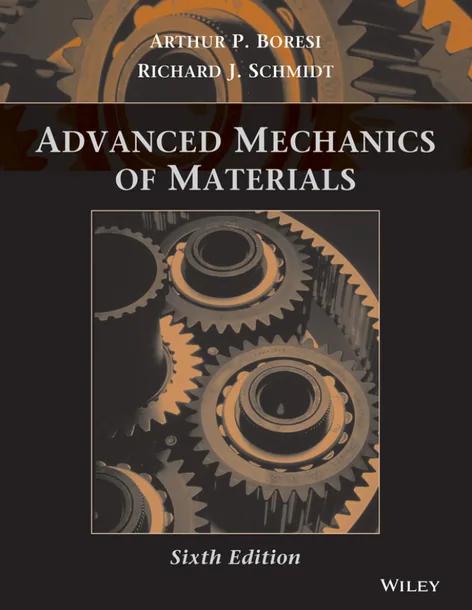
Advanced Mechanics of Materials
by Arthur P. Boresi, Richard J. Schmidt
6th Edition
Publisher: Wiley
Book Details
| Print ISBN | 9780471438816 |
| eText ISBN | 9781119628767 |
| Publisher | Wiley |
| Publishing Year | 2020 |
| Edition | 6th Edition |
| Language | English |
| Pages | 704 |
Advanced Mechanics of Materials, 6th Edition, is an engineering textbook that presents a unified approach to studying structural member behavior and establishing design and failure criteria.
The text investigates fundamental stress and strain theories, linear stress-strain-temperature relationships, and energy methods. It also addresses the mechanics of structural components, such as straight and curved beams, flat plates, and thick-wall cylinders, alongside failure modes including fracture, fatigue, and creep.
To facilitate the transition from elementary mechanics of materials to advanced topics, the volume provides a review of foundational principles supported by examples and problems for practice.
Table of Contents
Chapter 1: INTRODUCTION
- • 1.1 Review of Elementary Mechanics of Materials
- • 1.2 Methods of Analysis
- • 1.3 Stress–Strain Relations
- • 1.4 Failure and Limits on Design
- • Problems
- • References
Chapter 2: THEORIES OF STRESS AND STRAIN
- • 2.1 Definition of Stress at a Point
- • 2.2 Stress Notation
- • 2.3 Symmetry of the Stress Array and Stress on an Arbitrarily Oriented Plane
- • 2.4 Transformation of Stress, Principal Stresses, and Other Properties
- • 2.5 Differential Equations of Motion of a Deformable Body
- • 2.6 Deformation of a Deformable Body
- • 2.7 Strain Theory, Transformation of Strain, and Principal Strains
- • 2.8 Small-Displacement Theory
- • 2.9 Strain Measurement and Strain Rosettes
- • Problems
- • References
Chapter 3: LINEAR STRESS–STRAIN–TEMPERATURE RELATIONS
- • 3.1 First Law of Thermodynamics, Internal-Energy Density, and Complementary Internal-Energy Density
- • 3.2 Hooke’s Law: Anisotropic Elasticity
- • 3.3 Hooke’s Law: Isotropic Elasticity
- • 3.4 Equations of Thermoelasticity for Isotropic Materials
- • 3.5 Hooke’s Law: Orthotropic Materials
- • Problems
- • References
Chapter 4: INELASTIC MATERIAL BEHAVIOR
- • 4.1 Limitations on the Use of Uniaxial Stress–Strain Data
- • 4.2 Nonlinear Material Response
- • 4.3 Yield Criteria: General Concepts
- • 4.4 Yielding of Ductile Metals
- • 4.5 Alternative Yield Criteria
- • 4.6 General Yielding
- • Problems
- • References
Chapter 5: APPLICATIONS OF ENERGY METHODS
- • 5.1 Principle of Stationary Potential Energy
- • 5.2 Castigliano’s Theorem on Deflections
- • 5.3 Castigliano’s Theorem on Deflections for Linear Load–Deflection Relations
- • 5.4 Deflections of Statically Determinate Structures
- • 5.5 Statically Indeterminate Structures
- • Problems
- • References
Chapter 6: TORSION
- • 6.1 Torsion of a Prismatic Bar of Circular Cross Section
- • 6.2 Saint-Venant’s Semiinverse Method
- • 6.3 Linear Elastic Solution
- • 6.4 The Prandtl Elastic-Membrane (Soap-Film) Analogy
- • 6.5 Narrow Rectangular Cross Section
- • 6.6 Torsion of Rectangular Cross Section Members
- • 6.7 Hollow Thin-Wall Torsion Members and Multiply Connected Cross Sections
- • 6.8 Thin-Wall Torsion Members with Restrained Ends
- • 6.9 Numerical Solution of the Torsion Problem
- • 6.10 Inelastic Torsion: Circular Cross Sections
- • 6.11 Fully Plastic Torsion: General Cross Sections
- • Problems
- • References
Chapter 7: BENDING OF STRAIGHT BEAMS
- • 7.1 Fundamentals of Beam Bending
- • 7.2 Bending Stresses in Beams Subjected to Nonsymmetrical Bending
- • 7.3 Deflections of Straight Beams Subjected to Nonsymmetrical Bending
- • 7.4 Effect of Inclined Loads
- • 7.5 Fully Plastic Load for Nonsymmetrical Bending
- • Problems
- • References
Chapter 8: SHEAR CENTER FOR THIN-WALL BEAM CROSS SECTIONS
- • 8.1 Approximations for Shear in Thin-Wall Beam Cross Sections
- • 8.2 Shear Flow in Thin-Wall Beam Cross Sections
- • 8.3 Shear Center for a Channel Section
- • 8.4 Shear Center of Composite Beams Formed from Stringers and Thin Webs
- • 8.5 Shear Center of Box Beams
- • Problems
- • References
Chapter 9: CURVED BEAMS
- • 9.1 Introduction
- • 9.2 Circumferential Stresses in a Curved Beam
- • 9.3 Radial Stresses in Curved Beams
- • 9.4 Correction of Circumferential Stresses in Curved Beams Having I, T, or Similar Cross Sections
- • 9.5 Deflections of Curved Beams
- • 9.6 Statically Indeterminate Curved Beams: Closed Ring Subjected to a Concentrated Load
- • 9.7 Fully Plastic Loads for Curved Beams
- • Problems
- • References
Chapter 10: BEAMS ON ELASTIC FOUNDATIONS
- • 10.1 General Theory
- • 10.2 Infinite Beam Subjected to a Concentrated Load: Boundary Conditions
- • 10.3 Infinite Beam Subjected to a Distributed Load Segment
- • 10.4 Semiinfinite Beam Subjected to Loads at Its End
- • 10.5 Semiinfinite Beam with Concentrated Load Near Its End
- • 10.6 Short Beams
- • 10.7 Thin-Wall Circular Cylinders
- • Problems
- • References
Chapter 11: THE THICK-WALL CYLINDER
- • 11.1 Basic Relations
- • 11.2 Stress Components at Sections Far from Ends for a Cylinder with Closed Ends
- • 11.3 Stress Components and Radial Displacement for Constant Temperature
- • 11.4 Criteria of Failure
- • 11.5 Fully Plastic Pressure and Autofrettage
- • 11.6 Cylinder Solution for Temperature Change Only
- • 11.7 Rotating Disks of Constant Thickness
- • Problems
- • References
Chapter 12: ELASTIC AND INELASTIC STABILITY OF COLUMNS
- • 12.1 Introduction to the Concept of Column Buckling
- • 12.2 Deflection Response of Columns to Compressive Loads
- • 12.3 The Euler Formula for Columns with Pinned Ends
- • 12.4 Euler Buckling of Columns with Linearly Elastic End Constraints
- • 12.5 Local Buckling of Columns
- • 12.6 Inelastic Buckling of Columns
- • Problems
- • References
Chapter 13: FLAT PLATES
- • 13.1 Introduction
- • 13.2 Stress Resultants in a Flat Plate
- • 13.3 Kinematics: Strain–Displacement Relations for Plates
- • 13.4 Equilibrium Equations for Small-Displacement Theory of Flat Plates
- • 13.5 Stress–Strain–Temperature Relations for Isotropic Elastic Plates
- • 13.6 Strain Energy of a Plate
- • 13.7 Boundary Conditions for Plates
- • 13.8 Solution of Rectangular Plate Problems
- • 13.9 Solution of Circular Plate Problems
- • Problems
- • References
Chapter 14: STRESS CONCENTRATIONS
- • 14.1 Nature of a Stress Concentration Problem and the Stress Concentration Factor
- • 14.2 Stress Concentration Factors: Theory of Elasticity
- • 14.3 Stress Concentration Factors: Combined Loads
- • 14.4 Stress Concentration Factors: Experimental Techniques
- • 14.5 Effective Stress Concentration Factors
- • 14.6 Effective Stress Concentration Factors: Inelastic Strains
- • Problems
- • References
Chapter 15: FRACTURE MECHANICS
- • 15.1 Failure Criteria and Fracture
- • 15.2 The Stationary Crack
- • 15.3 Crack Propagation and the Stress Intensity Factor
- • 15.4 Fracture: Other Factors
- • Problems
- • References
Chapter 16: FATIGUE: PROGRESSIVE FRACTURE
- • 16.1 Fracture Resulting from Cyclic Loading
- • 16.2 Effective Stress Concentration Factors: Repeated Loads
- • 16.3 Effective Stress Concentration Factors: Other Influences
- • 16.4 Low Cycle Fatigue and the \_–N Relation
- • Problems
- • References
Chapter 17: CONTACT STRESSES
- • 17.1 Introduction
- • 17.2 The Problem of Determining Contact Stresses
- • 17.3 Geometry of the Contact Surface
- • 17.4 Notation and Meaning of Terms
- • 17.5 Expressions for Principal Stresses
- • 17.6 Method of Computing Contact Stresses
- • 17.7 Deflection of Bodies in Point Contact
- • 17.8 Stress for Two Bodies in Line Contact: Loads Normal to Contact Area
- • 17.9 Stresses for Two Bodies in Line Contact: Loads Normal and Tangent to Contact Area
- • Problems
- • References
Chapter 18: CREEP: TIME-DEPENDENT DEFORMATION
- • 18.1 Definition of Creep and the Creep Curve
- • 18.2 The Tension Creep Test for Metals
- • 18.3 One-Dimensional Creep Formulas for Metals Subjected to Constant Stress and Elevated Temperature
- • 18.4 One-Dimensional Creep of Metals Subjected to Variable Stress and Temperature
- • 18.5 Creep Under Multiaxial States of Stress
- • 18.6 Flow Rule for Creep of Metals Subjected to Multiaxial States of Stress
- • 18.7 An Application of Creep of Metals
- • 18.8 Creep of Nonmetals
- • References
Chapter APPENDIX A: AVERAGE MECHANICAL PROPERTIES OF SELECTED MATERIALS
Chapter APPENDIX B: SECOND MOMENT (MOMENT OF INERTIA) OF A PLANE AREA
- • B.1 Moments of Inertia of a Plane Area
- • B.2 Parallel Axis Theorem
- • B.3 Transformation Equations for Moments and Products of Inertia
- • Problems
Chapter APPENDIX C: PROPERTIES OF STEEL CROSS SECTIONS
Customer Reviews
0.0
0 reviews
No reviews yet. Be the first to review this book!
Write a Review
Reviewed by GradeFocus Editorial Team
Related Books
Fundamentals of Thermal Fluid Sciences
Yunus A. Cengel
Manufacturing Processes for Engineering Materials
Serope Kalpakjian
Fundamentals of Engineering Thermodynamics
Michael J. Moran
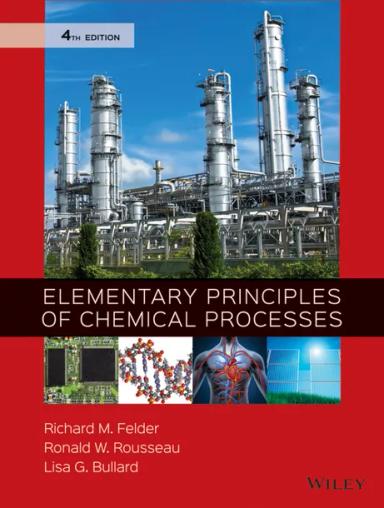
Elementary Principles of Chemical Processes
Richard M. Felder
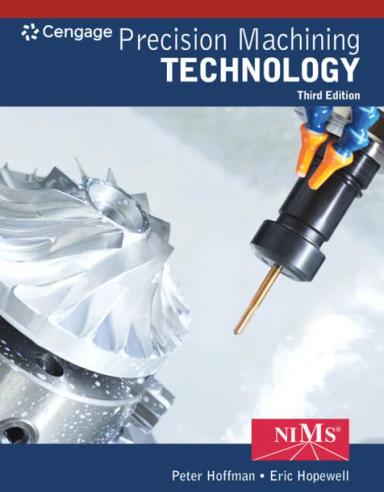
Precision Machining Technology
Peter J. Hoffman
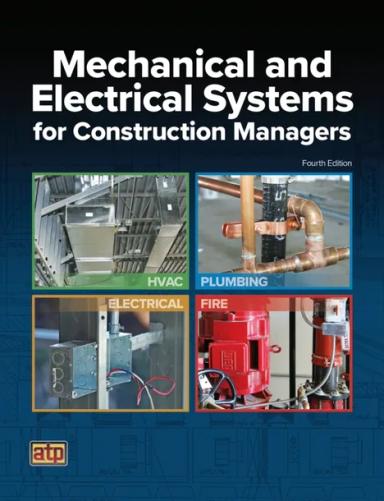
Mechanical and Electrical Systems for Construction Managers
American Technical Publishers