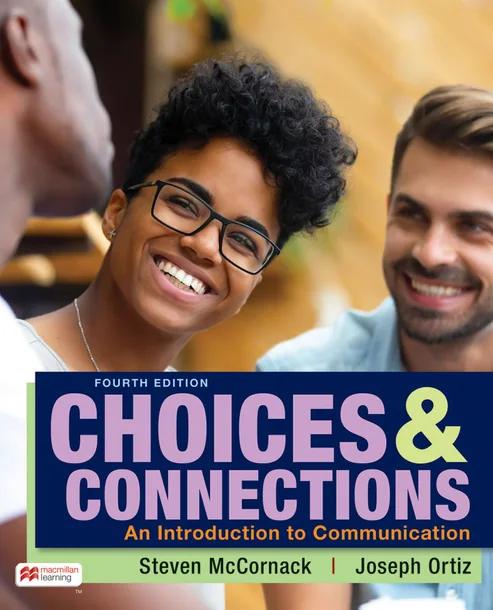
Choices & Connections
An Introduction to Communication
by Steven McCornack, Joseph Ortiz
4th Edition
Publisher: Bedford/St. Martin's
Book Details
| Print ISBN | 9781319448547 |
| eText ISBN | 9781319485153 |
| Publisher | Bedford/St. Martin's |
| Publishing Year | 2023 |
| Edition | 4th Edition |
| Language | English |
| Pages | 576 |
Choices & Connections: An Introduction to Communication, 4th Edition delivers a clear introduction to human communication theory and speech fundamentals for students. Authors Steven McCornack and Joseph Ortiz designed this textbook to guide readers through primary communication concepts. The volume establishes foundational theoretical frameworks while demonstrating how human communication behaviors function across daily social interactions.
Early thematic sections examine individual perception, self-identity, cultural backgrounds, and gender dynamics. The text subsequently investigates message delivery methods, analyzing mediated communication environments, verbal messaging structures, nonverbal expression, and active listening practices. These core topics prepare learners to analyze how personal choices affect message interpretation across various settings.
Published by Bedford/St. Martin's in 2023, this 576-page textbook fits lower-division college speech and introductory human communication courses. The structured material is designed for undergraduate students and requires no prior prerequisite coursework in speech or communication studies.
Table of Contents
Chapter 1: Introduction to Communication
- • What Is Communication?
- • Defining Communication
- • Why We Communicate
- • Communication Models
- • Studying Communication
- • A Brief History of Communication
- • Types of Communication
- • Communication Competence
- • Understanding Communication Competence
- • Putting Competence into Practice
- • Choices and Connections
- • Communication Skills
- • Advance the Conversation: Phubbing Your Partner
- • Communication Connections
- • Advance the Conversation Take Two: Competent Conversations
- • Chapter 1 Review
Chapter 2: Self and Perception
- • The Nature of Self
- • Self-Awareness
- • Self-Concept
- • Self-Esteem
- • Gender, Sexual Orientation, Culture, and Self
- • Presenting Self
- • Creating Faces and Masks
- • Losing Face
- • Maintaining Face
- • Advance the Conversation: Distorting Online Self-Presentation
- • Perceiving Others
- • The Perception Process
- • Perception and Culture
- • Attributions and Perceptual Errors
- • Forming Impressions
- • Gestalts
- • Algebraic Impressions
- • Stereotypes
- • Improving Perception
- • Perception-Checking
- • Empathy
- • Advance the Conversation Take Two: Empathy for a Group Member
- • Chapter Review
Chapter 3: Understanding Gender and Culture
- • What Is Gender?
- • Gender Defined
- • Gender and Communication
- • Gender and Verbal Communication
- • Gender and Nonverbal Communication
- • Moving Beyond Gender Stereotypes
- • Advance the Conversation: Challenging Binary Judgments
- • What Is Culture?
- • Culture Defined
- • Co-Cultures
- • Intersections of Identity
- • Prejudice
- • Culture and Communication
- • Dimensions of Difference
- • Communication Accommodation
- • Creating Intercultural Competence
- • World-Mindedness
- • Attributional Complexity
- • Advance the Conversation Take Two: Confronting Cultural Stereotypes and Communicating More Competently
- • Chapter Review
Chapter 4: Mediated Communication
- • What Is Mediated Communication?
- • Types of Mediated Communication
- • Functions of Mediated Communication
- • Characteristics of Mediated Communication
- • Self-Presentation and Mediated Communication
- • Creating Online Face
- • Managing Online Face
- • Mediated Communication Challenges
- • Perceived Social Isolation
- • Online Disinhibition
- • Digital Deception
- • Using Mediated Communication Competently
- • Advance the Conversation: Friends Dont Let Friends Fight on Social Media
- • Advance the Conversation Take Two: Removing an Embarrassing Post
- • Chapter Review
Chapter 5: Verbal Communication
- • The Nature of Verbal Communication
- • Language Is Symbolic
- • Language Is Governed by Rules
- • Language Conveys Meaning
- • Language and Culture Are Intertwined
- • Verbal Communication Skills
- • Create Understandable Messages
- • Use "I" and "We" Language
- • Avoid Gender-Based Presumptions
- • Be Mindful of Cultural Differences
- • Verbal Communication Challenges
- • Prejudiced Language
- • Verbal Aggression
- • Deception
- • Advance the Conversation: Protecting a Friend from Harm
- • Defamation
- • Advance the Conversation Take Two: Disagreement with Family
- • Chapter Review
Chapter 6: Nonverbal Communication
- • Characteristics of Nonverbal Communication
- • Nonverbal Communication Uses Multiple Channels
- • Nonverbal Communication Conveys More Meaning Than Verbal Communication
- • Nonverbal Communication Blends with Verbal Communication
- • Nonverbal Communication Is Influenced by Gender
- • Nonverbal Communication Is Influenced by Culture
- • Types of Nonverbal Communication
- • Body Movement
- • Voice
- • Touch
- • Personal Space
- • Appearance
- • Environmental Features
- • Functions of Nonverbal Communication
- • Conveying Meaning
- • Expressing Emotion
- • Presenting Self
- • Managing Interactions
- • Advance the Conversation: I Wasnt Being Sarcastic!
- • Defining Intimacy
- • Strengthening Your Nonverbal Communication Skills
- • Enhancing Your Nonverbal Expressiveness
- • Inhibiting Your Nonverbal Behaviors
- • Checking Your Nonverbal Attributions
- • Advance the Conversation Take Two: Perceiving Nonverbal Messages
- • Chapter Review
Chapter 7: Active Listening
- • The Listening Process
- • Stages of the Listening Process
- • Motives for Listening
- • Multitasking and Listening
- • Advance the Conversation: To Multitask or Not, That Is the Question!
- • Listening Styles
- • Four Listening Styles
- • Gender and Listening Styles
- • Culture and Listening Styles
- • Barriers to Active Listening
- • Selective Listening
- • Pseudo-Listening
- • Aggressive Listening
- • Improving Active Listening Skills
- • Manage Your Feedback
- • Adapt Listening
- • Recognize the Value of Silence
- • Advance the Conversation Take Two: Active Listening
- • Chapter Review
Chapter 8: Principles of Interpersonal Communication
- • What Is Interpersonal Communication?
- • Interpersonal Communication Is Transactional
- • Interpersonal Communication Is Dynamic
- • Interpersonal Communication Is Relational
- • Interpersonal Communication Is Impactful
- • Why Form Relationships?
- • Proximity
- • Resources
- • Similarity
- • Reciprocal Liking
- • Physical Attractiveness
- • Types of Relationships
- • Romantic Relationships
- • Family Relationships
- • Friendships
- • Advance the Conversation: When a Good Friend Changes
- • Workplace Relationships
- • Relationship Stages
- • Coming Together
- • Coming Apart
- • Advance the Conversation Take Two: Ending a Relationship
- • Chapter Review
Chapter 9: Managing Interpersonal Relationships
- • Self-Disclosure in Relationships
- • Self-Disclosure and Relationship Development
- • Communicating Self-Disclosure
- • Self-Disclosure Skills
- • Advance the Conversation: I Dont Want to Hear This!
- • Managing Relationship Tensions
- • Openness versus Protection
- • Autonomy versus Connection
- • Novelty versus Predictability
- • Sustaining Your Relationships
- • Relational Maintenance
- • Supportive Communication
- • Advance the Conversation Take Two: Relationship Maintenance at Work
- • Chapter Review
Chapter 10: Managing Conflict
- • Defining Conflict
- • Conflict Begins with Perception
- • Conflict Involves Clashes between Goals or Actions
- • Conflict Is a Process
- • Selecting an Approach to Conflict
- • Avoidance
- • Accommodation
- • Competition
- • Advance the Conversation: I Didnt Lie!
- • Collaboration
- • Conflict Endings
- • Separation
- • Domination
- • Compromise
- • Integrative Agreements
- • Structural Improvements
- • Barriers to Constructive Conflict
- • Attributional Errors
- • Destructive Messages
- • Cultural Differences
- • Advance the Conversation Take Two: Conflict with a Roommate
- • Chapter Review
Chapter 11: Small Group Communication
- • Defining Small Groups
- • Characteristics of Small Groups
- • Types of Small Groups
- • Development of Small Groups
- • How Small Groups Communicate
- • Balancing Group Roles
- • Building Cohesion
- • Establishing Positive Norms
- • Sharing Responsibility
- • The Selfs Influence on Small Group Communication
- • Communication Traits
- • Gender
- • Culture
- • Advance the Conversation: Youre Not Funny
- • Virtuality and Small Groups
- • Benefits and Challenges of Group Virtuality
- • Improving the Quality of Virtual Group Meetings
- • Advance the Conversation Take Two: Conflict with a Group Member
- • Chapter Review
Chapter 12: Leadership in Group Communication
- • Perspectives on Leadership
- • Traits View
- • Style View
- • Situational View
- • Functional View
- • Leading with Communication
- • Supporting Diversity, Equity, and Inclusion
- • Creating a Communication Climate
- • Preventing Groupthink
- • Dealing with Conflict
- • Advance the Conversation: The Bearer of Bad News
- • Leading Problem Solving
- • Structured Problem Solving
- • Group Brainstorming
- • Leading Decision Making
- • Decision by Authority
- • Decision by Vote
- • Decision by Consensus
- • Leading Meetings
- • Planning Meetings
- • Conducting Meetings
- • Following Up On/Evaluating Meetings
- • Advance the Conversation Take Two: Handling Complaints
- • Chapter Review
Chapter 13: Preparing Your Speech
- • Preparing a Speech: First Steps
- • Choosing a Speech Topic
- • Identifying the General Purpose
- • Considering Speech Topics
- • Deciding on a Topic
- • Analyzing an Audience
- • Understanding an Audience
- • Developing an Audience Analysis
- • Advance the Conversation: Speaking Your Mind
- • Writing a Specific Purpose Statement
- • Planning a Research Strategy
- • Identifying Information Needs
- • Drawing on Personal Knowledge
- • Talking with Librarians
- • Documenting Research Findings
- • Conducting Research
- • Primary and Secondary Resources
- • Internet Resources
- • Library Resources
- • Interpersonal Resources
- • Evaluating Your Resources
- • Advance the Conversation Take Two: Oral Citations
- • Chapter Review
Chapter 14: Composing Your Speech
- • Developing a Speech Thesis
- • Identifying and Supporting Main Points
- • Identifying Main Points
- • Supporting Main Points
- • Organizing a Speech
- • Selecting an Organizational Pattern
- • Using Connectives
- • Keeping Listeners Engaged
- • Advance the Conversation: But the Video Went Viral!
- • Introducing and Concluding a Speech
- • Introducing a Speech
- • Concluding a Speech
- • Putting It All Together: Speech Outlines
- • Preparation Outline
- • Delivery Outline
- • Advance the Conversation Take Two: Elevator Speeches
- • Sample Preparation and Delivery Outlines
- • Chapter Review
Chapter 15: Delivering Your Speech
- • Speech Delivery Modes
- • Impromptu Speaking
- • Manuscript Speaking
- • Extemporaneous Speaking
- • Maximizing Speech Delivery
- • Conveying Immediacy
- • Projecting Confidence and Competence
- • Managing Delivery in Online Speeches
- • Managing Speech Anxiety
- • Advance the Conversation: Helping a Friend Manage Speech Anxiety
- • Choosing and Using Presentation Aids
- • Types of Presentational Aids
- • Presentation Software
- • Tips for Using Presentational Aids
- • Evaluating Speeches and Managing Feedback
- • Giving Effective Feedback
- • Using Feedback to Improve Speech Performance
- • Advance the Conversation Take Two: Delivering a Speech
- • Chapter Review
Chapter 16: Informative Speaking
- • What Is Informative Speaking?
- • Functions of Informative Speeches
- • Specific Purposes for Informative Speeches
- • Informative versus Persuasive Speaking
- • Types of Informative Speeches
- • Expository Presentations
- • Process or Demonstration Presentations
- • Narrative Presentations
- • Comparison/Contrast Presentations
- • Guidelines for Informative Speaking
- • Choose a Personally Involving Topic
- • Capture—and Hold—Listeners’ Attention
- • Advance the Conversation: Some Things Are Better Left Unsaid
- • Use Conversational Language
- • Make the Speech Content Understandable
- • Help Audiences Remember the Message
- • Advance the Conversation Take Two: Responding to Audience Questions
- • Sample Informative Speech: Going Carbon Neutral on Campus
- • Chapter Review
Chapter 17: Persuasive Speaking
- • What Is Persuasive Speaking?
- • Types of Persuasive Propositions
- • Audience Analysis for Persuasive Speeches
- • Credibility in Persuasive Speeches
- • Organizing and Supporting Persuasive Speeches
- • Organizing Persuasive Speeches
- • Advance the Conversation: Do or Die: Using Scare Tactics to Persuade Others
- • Reasoning for Persuasive Speeches
- • Avoiding Fallacies
- • Appealing to Your Audiences Needs and Emotions
- • Connecting to Audiences Needs
- • Providing Testimony and Stories
- • Using Descriptive Language
- • Guidelines for Persuasive Speaking
- • Establish Goodwill with Your Audience
- • Keep Your Specific Purpose Realistic
- • Decide How to Present an Issue
- • Maintain High Ethical Standards
- • Advance the Conversation Take Two: Emotional Appeals
- • Sample Persuasive Speech: Becoming a Socially Conscious Consumer
- • Chapter Review
Chapter Appendix: Interviewing
- • What Is Interviewing?
- • Types of Interviews
- • Preparing for an Interview
- • Essential Communication Skills for Interviewing
- • Being an Active Listener
- • Building Rapport and Demonstrating Cooperation
- • Using Mediated Communication during Interviews
- • Information Interviewing
- • Preparing for an Information Interview
- • Managing an Information Interview
- • Employment and Admissions Selection Interviewing
- • Preparing for Selection Interviews
- • Advance the Conversation: Well… to Be Totally Honest With You
- • Managing a Selection Interview
- • Advance the Conversation Take Two: Managing Stress Questions
- • Appendix Review
Customer Reviews
0.0
0 reviews
No reviews yet. Be the first to review this book!
Write a Review
Reviewed by GradeFocus Editorial Team
▶Research Sources (12)
- Choices & Connections 4th Edition | Steven McCornack
- Choices & Connections, 4th Edition
- Choices & Connections - ISBN 9781319485153
- Book Information
- Thoughtful Learning K-12 |
- Choices & Connections An Introduction to Communication
- Choices & Connections An Introduction to Communication 4th
- Choices & connections : an introduction to communication
- Choices & Connections, 4th Edition
- Communication - Choices & Connections
- Book Information
- u/Professional-Face618