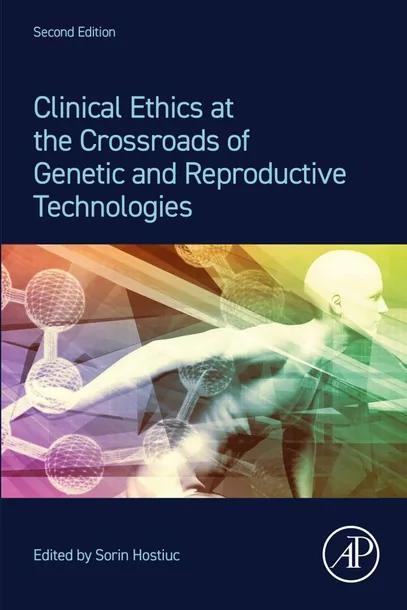
Clinical Ethics at the Crossroads of Genetic and Reproductive Technologies
by Sorin Hostiuc
2nd Edition
Publisher: Academic Press
Book Details
| Print ISBN | 9780443190452 |
| eText ISBN | 9780443190469 |
| Publisher | Academic Press |
| Publishing Year | 2023 |
| Edition | 2nd Edition |
| Language | English |
Clinical Ethics at the Crossroads of Genetic and Reproductive Technologies, 2nd Edition, edited by Sorin Hostiuc and published by Academic Press, addresses ethical questions surrounding modern reproductive technologies and human genetics. The book offers bioethicists, fertility specialists, medical students, and graduate students an organized overview of clinical and scientific ethics.
The content focuses on specific technical practices and emerging laboratory methods. Detailed arguments examine the ethical aspects of CRISPR gene editing, organoid development, pharmacogenomics, and direct-to-consumer genetic testing.
Selected for 2026 Doody's Core Titles in Medical Ethics, this English-language release supports institutional libraries and upper-level medical ethics curricula. It delivers grounded analysis for academic research and clinical policy evaluation.
Table of Contents
Chapter 1: Genomic editing: From human health to the “perfect child”
- • 1. Introduction
- • 1.1 Beginnings
- • 1.2 Definitions and context
- • 1.3 Recombinant DNA technology: The basis for DNA modification
- • 1.4 Genome editing
- • 1.5 Zinc finger nucleases (ZFNs)
- • 1.6 CRISPR/Cas9 technology
- • 1.7 Base editing technology
- • 1.8 Principles of using genome editing in research and clinical practice
- • 2. Ethical issues in clinical genome editing
- • 2.1 Nonmaleficence and risk/benefit assessment
- • 2.2 Beneficence in gene editing therapies
- • 2.3 Respect for autonomy
- • 2.4 Confidentiality
- • 2.5 Applying the principle of justice in clinical genome editing
- • 2.6 Eugenics, enhancement, and “designer babies”
- • 3. Conclusions
- • References
Chapter 2: Ethics of mitochondrial gene replacement therapy
- • 1. Introduction
- • 2. What is mitochondrial disease and mitochondrial donation?
- • 3. The UK timeline
- • 4. The international position
- • 5. Are the techniques safe?
- • 6. Ethical issues
- • 7. “Three parent babies” and identity
- • 8. Genetic modification and the “slippery slope”
- • 9. Risks for egg donors
- • 10. Ethical differences between PNT and MST
- • 11. Mitochondrial disease as complex: Diagnosis, predicting risk, and genetic counseling
- • 12. Alternative reproductive options
- • 13. Polar body transfer and gene editing
- • 14. Conclusion
- • References
Chapter 3: Reproductive technologies used by same-gender couples
- • 1. Introduction
- • 2. Procreative autonomy
- • 3. Gamete and embryo donation
- • 4. Surrogacy agreement
- • 5. Trans parenthood
- • 6. Conscience clause
- • 7. Conclusions
- • References
- • Further Reading
Chapter 4: Ethical issues raised by multiparents
- • 1. Introduction
- • 1.1 Key terms of the debate: Filiation, kinship, and parenthood
- • 2. Multiparents of children born through ARTs
- • 2.1 Maternity
- • 2.2 Paternity
- • 3. Where do all these parents come from?
- • 3.1 Sperm donation
- • 3.2 Egg donation
- • 3.3 Embryo donation
- • 3.4 Surrogacy
- • 4. Ethical issues
- • 4.1 The right to know one’s origins
- • 4.2 Donors’ anonymity
- • 4.3 The consent of participants
- • 5. Secondary ethical issues
- • 5.1 Medical tourism
- • 5.2 Slippery slope
- • 6. Final considerations
- • References
Chapter 5: Revisiting the nondirective principle of genetic counseling in prenatal screening
- • 1. Introduction
- • 2. Genetic counseling: An overview
- • 3. The nondirective principle in genetic counseling
- • 3.1 “Nondirectivity” or “sharing decision-making”?
- • 3.2 The nondirective principle of genetic counseling in preimplantation screening
- • 3.3 The nondirective principle of genetic counseling in prenatal screening
- • 4. Does the nondirective principle compromise genetic counseling in prenatal screening?
- • 5. Does genetic counseling in prenatal screening compromise the nondirective principle?
- • 6. The concept of nondirectivity vs the role of genetic counseling
- • 7. Activating the conscience clause in genetic counseling in prenatal screening?
- • 8. Genetic counseling in prenatal screening in ethnic and cultural minorities
- • 9. Medical tourism for abortion after genetic counseling
- • 10. Issues of genetic counseling in prenatal screening
- • 10.1 The absence of genetic counseling
- • 10.2 The inappropriate genetic counseling
- • 11. Final considerations
- • References
Chapter 6: Sex selection, gender selection, and sexism
- • 1. Introduction
- • 2. The roots and reasons for sex selection
- • 3. From politics on reproduction to biopolicy
- • 4. Missing girls: Why and how many?
- • 5. Legal and ethical questions
- • 6. Conclusion
- • References
Chapter 7: The impact of Big Data on beginning-of-life issues
- • 1. Introduction: First, what is really “Big Data”?
- • 2. Big Data and healthcare: An expanding universe
- • 3. Big Data and Beginning-of-life issues: A field in its infancy
- • 4. Conclusion: Work in progress
- • References
Chapter 8: The moral status of the embryo and its uses: Bioethics and social perceptions
- • 1. Introduction
- • 2. The empirical perspective in bioethics and public perceptions of science studies
- • 3. The notion of moral status
- • 4. Contrasting narratives on the moral status of the embryo
- • 5. The status of the embryo frame and the beginning of individual human life
- • 6. Views on the status of the embryo, religious beliefs, scientific literacy, and gender
- • 7. Moral status and attitudes to embryo research
- • 8. Conclusions
- • References
Chapter 9: Fetal reduction
- • 1. Bioethical issues of fetal reduction: Why words matter
- • 1.1 Medical use: Selective fetal reduction
- • 1.2 Medical use: Nonselective fetal reduction
- • 1.3 Nonmedical uses: Selective fetal reduction
- • 1.4 Nonmedical use: Nonselective fetal reduction
- • 2. The moral status of embryo and fetus
- • 3. Fetal reduction: “A soft cover for hard choices”
- • 4. Parental autonomy and parental responsibility
- • 5. Conclusion
- • References
Chapter 10: Stem cell therapies for neurodegenerative disorders: An ethical analysis
- • 1. Introduction
- • 2. An overview on stem cell therapies for neurodegenerative disorders
- • 2.1 Parkinson’s disease
- • 2.2 Stem cell treatments for other neurological disorders
- • 2.3 Use of placebo controls in sham surgery
- • 3. Risk-to-benefit analysis for stem cell therapies in neurodegenerative disorders
- • 3.1 What are the potential benefits of stem cell therapy in neurodegenerative disorders?
- • 4. Induced pluripotent stem cell therapies for neurodegenerative disorders
- • 5. Moral status of IPSCs
- • 6. Conclusions
- • References
Chapter 11: Predictive genetic testing in multifactorial disorders
- • 1. Introduction
- • 2. Respect for autonomy
- • 2.1 Delivering relevant information
- • 2.2 Understanding relevant information
- • 2.3 Capacity to act voluntarily
- • 2.4 The concept of relational autonomy in predictive genetic testing
- • 3. Nondirectiveness in predictive testing for multifactorial disorders
- • 4. Direct-to-consumer genetic testing
- • 5. When to recommend predictive genetic testing?
- • 6. Nonmaleficence and risk assessment
- • 7. Confidentiality and family sharing of the genetic results
- • 8. Predictive genetic testing in children
- • 9. Genetic exceptionalism and multifactorial disorders
- • 10. Conclusions
- • References
Chapter 12: Whole-genome sequencing as a method of prenatal genetic diagnosis
- • 1. Introduction
- • 2. From the standard of prenatal diagnosis to whole-genome sequencing
- • 3. Whole-genome sequencing as a prenatal diagnostic tool
- • 3.1 What is whole-genome sequencing?
- • 3.2 Whole-genome sequencing applications in prenatal diagnosis
- • 3.3 Limitations of whole-genome sequencing
- • 4. Ethical problems surrounding whole-genome sequencing
- • 4.1 Large amounts of information
- • 4.2 Anxiety and confusion in parents
- • 4.3 Parents’ reproductive choices, expectations, and genetic determinism
- • 4.4 Right of the parents to information vs right of the child to “Not to Know”
- • 5. The importance of pre-WGS test and post-WGS diagnostic counseling
- • 5.1 Counseling in WGS
- • 5.2 Pre-WGS test counseling
- • 5.3 Post-WGS diagnostic counseling
- • 5.4 Ethical reflection on WGS test in prenatal diagnosis
- • 6. Conclusion
- • References
Chapter 13: Noninvasive prenatal genetic diagnosis
- • 1. Introduction
- • 2. High- versus low-risk populations
- • 3. Reproductive autonomy
- • 4. Counseling for NIPT
- • 5. Should parents be allowed to get tested “for information only”
- • 5.1 A teleological approach to NIPT
- • 6. NIPT and discrimination
- • 7. Eugenics, procreative beneficence, and NIPT
- • 8. Conclusions
- • References
Chapter 14: Prenatal testing in low-risk populations: After routinization for aneuploidy
- • 1. Introduction
- • 2. Background on offering the test to low-risk women
- • 3. Diagnostic test versus screening test
- • 4. Reduced penetrance and variable expressivity
- • 5. Negative test and healthy baby assumptions
- • 6. Incidental findings: Maternal conditions
- • 7. Ethics of testing just for information
- • 8. Practical issues: Who will counsel patients?
- • 9. OB/Gyn counseling
- • 10. Information access outside of the United States
- • 11. Problematic solutions
- • 12. Linear model of information transmission
- • 13. Justice issues: Access to testing
- • 14. Conclusion
- • References
Chapter 15: Using genetics for enhancement (liberal eugenics)
- • 1. Introduction
- • 1.1 Definition of enhancement
- • 1.2 Types of enhancement
- • 1.3 (How) should we distinguish enhancement from therapy?
- • 2. Genetic enhancement
- • 2.1 Genomics and epigenomics as base for genetic enhancement
- • 2.2 High-throughput methodology for genome wide genetic, epigenetic, and gene expression profiling
- • 2.3 Personalized medicine as a model for implementation of genetic enhancement
- • 2.4 From predictive genomics to preventive medicine and genetic enhancement
- • 2.5 Ethical issues in personalized medicine
- • 2.6 Gene therapy, molecular-targeted therapy, and cellular therapy
- • 2.7 Ethical aspects of gene therapy, molecular-targeted therapy, and cellular therapy
- • 2.8 Gene enhancement, molecular-targeted enhancement, cellular enhancement
- • 3. Liberal eugenics
- • 4. Regulation, health coverage, and public opinion
- • 5. Conclusion
- • Acknowledgments
- • References
Chapter 16: Should incidental findings arising from prenatal testing be reported indiscriminately to patients?
- • 1. Introduction
- • 2. Incidental findings in the prenatal setting
- • 2.1 Challenges of definition
- • 2.2 Current practice, new developments, and specific features of the prenatal setting
- • 3. Reporting incidental findings in the prenatal setting
- • 3.1 Arguments pro disclosure
- • 3.2 Arguments against disclosure
- • 4. Handling incidental findings: Informed consent procedures and pretest counseling in genetic testing
- • 5. Conclusion
- • References
Chapter 17: Third-party sharing of genetic information
- • 1. Introduction
- • 2. Disclosure of genetic data to relatives
- • 2.1 Disclosure of genetic information by the patients to their biological relatives
- • 2.2 Communication by parents of genetic information about their children
- • 2.3 Refusal of the individuals to disclose genetic data to their biological relatives
- • 2.4 Disclosure of information by the healthcare provider without the patient’s consent
- • 3. Disclosure of genetic information to employers
- • 4. Disclosure of genetic data to health insurance companies
- • 5. Third-party sharing of genetic data in the context of biomedical research
- • 5.1 Sharing data resulting from genetic testing with research entities
- • 5.2 Disclosure of genetic data resulting from research to the participants’ relatives
- • 6. Disclosure of data resulting from DTC genetic tests
- • 7. Disclosure of data resulting from genetic interpretation services
- • 8. Third-party sharing for forensic purposes
- • References
Chapter 18: Cerebral and noncerebral organoids
- • 1. Stem cells applications: Organoids and brain organoids
- • 1.1 Biological foundations
- • 1.2 Brain organoids: What they are and what they recapitulate of the human brain
- • 1.3 Applications and limitations
- • 2. Ethical issues
- • 2.1 Cell origins, biobanking, and usage of brain organoids
- • 2.2 Nonhuman animals and grafted organoids
- • 2.3 Consciousness and moral status
- • 3. Final remarks
- • 3.1 Brain organoids and society
- • 3.2 Conclusions
- • References
Chapter 19: Cognitive enhancement: Bioethical aspects
- • 1. Introduction
- • 2. Libertarian and utilitarian theories
- • 3. Personalist and egalitarian theories
- • 4. Hidden risks of enhancement
- • 5. Possible future regulation about enhancement
- • 6. Conclusion
- • References
Chapter 20: Risks and benefits of direct-to-consumer genetic testing in the reproductive context
- • 1. Introduction
- • 2. A brief history of DTC genetic testing
- • 3. Current status of DTC genetic testing relevant to reproductive decisions
- • 3.1 Physician involvement
- • 3.2 DTC genomic platforms
- • 3.3 Types of results provided
- • 3.4 Concerns currently raised
- • 4. Limits and risks
- • 4.1 Limitation in detectable genes and variants
- • 4.2 Variants of unknown significance
- • 4.3 Accuracy (false positives and false negatives)
- • 4.4 Varying interpretation
- • 4.5 Risks of raw data interpretation
- • 4.6 Privacy risks
- • 5. Benefits
- • 6. Ethical issues
- • 6.1 Principlism approach to DTC genetic testing
- • 6.2 Ethical challenges in DTC-based reproductive choices
- • 7. Conclusion
- • References
Chapter 21: Genetic immunization: Enhancement or public health measure?
- • 1. Introduction
- • 1.1 Definitions and background
- • 1.2 Introducing a case study
- • 2. Public health and ethics
- • 2.1 Definition and goals
- • 3. Moral concepts from public health ethics
- • 3.1 Collective easy rescue
- • 3.2 Public goods
- • 3.3 Collective welfare
- • 3.4 Distributive justice
- • 4. Ethical analysis of genetic immunization
- • 4.1 Stakeholders, harms and benefits
- • 4.2 Distribution of stakeholder harms and benefits
- • 4.3 Policy alternatives
- • 5. Conclusions
- • References
Customer Reviews
0.0
0 reviews
No reviews yet. Be the first to review this book!
Write a Review
Reviewed by GradeFocus Editorial Team
▶Research Sources (17)
- Clinical Ethics at the Crossroads of Genetic and Reproductive ...
- Sourcebooks, LLC.
- Clinical Ethics at the Crossroads of Genetic and ...
- Clinical ethics at the crossroads of genetic and ... - 도서관 - 카이스트
- Thompson Learn.
- HOMESCHOOL
- Clinical Ethics at the Crossroads of Genetic and Reproductive ...
- BookFinder.com: Search Results
- Mariko Nakano-Okuno - My portal
- Clinical Ethics at the Crossroads of Genetic and Reproductive ...
- Clinical Ethics At the Crossroads of Genetic and Reproductive ...
- Clinical Ethics at the Crossroads of Genetic and Reproductive ...
- Publications | Bioethics Lab | Washington State University
- Clinical ethics at the crossroads of genetic and reproductive ...
- Clinical Ethics at the Crossroads of Genetic and Reproductive ...
- Clinical Ethics at the Crossroads of Genetic and Reproductive ...
- Log in for access - Hinari - Research4Life