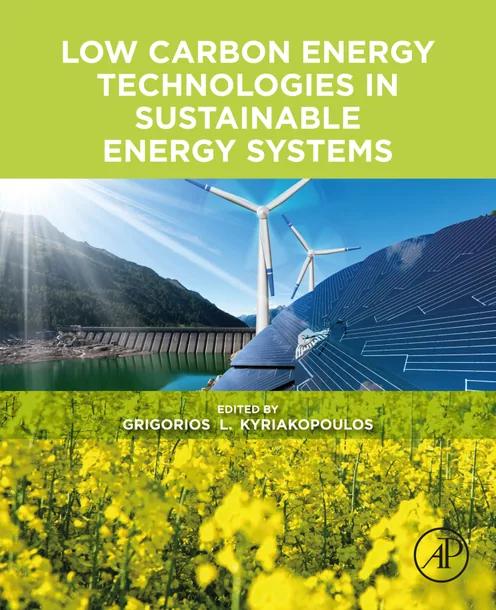
Low Carbon Energy Technologies in Sustainable Energy Systems
by Grigorios L. Kyriakopoulos
1st Edition
Publisher: Academic Press
Book Details
| Print ISBN | 9780128228975 |
| eText ISBN | 9780128230879 |
| Publisher | Academic Press |
| Publishing Year | 2021 |
| Edition | 1st Edition |
| Language | English |
| Pages | 418 |
Low Carbon Energy Technologies in Sustainable Energy Systems, 1st Edition, connects technoeconomic evaluations of low-carbon energy systems with statutory and market regulations.
The volume evaluates socio-cultural perspectives, environmental sustainability, and economic feasibility across environmentally directed energy markets. Topics include regulatory governance affecting environmental protection and social cohesion, consumer awareness, and circular economy considerations. The work also examines carbon trading mechanisms that assign economic value to carbon and enable participation by individuals, corporations, and nations.
This book serves early career graduate and doctoral researchers across engineering, energy economics, and policy studies, alongside energy analysts, policy advisors, and public or NGO practitioners.
Table of Contents
Chapter 1: The role of resource recovery technologies in reducing the demand of fossil fuels and conventional fossil-based mineral fertilizers
- • 1 Introduction
- • 1.1 Urban wastewater and energy resource recovery
- • 1.2 The global demand of P-fertilizers and the need of nutrient recovery
- • 2 Methods for energy and resource recovery
- • 2.1 Anaerobic digestion
- • 2.2 Incineration and co-incineration
- • 2.3 Gasification
- • 2.4 Pyrolysis
- • 2.5 Wet air oxidation
- • 2.6 Supercritical water oxidation
- • 2.7 Hydrothermal treatment
- • 3 Energy recovery
- • 3.1 Biogas
- • 3.2 Bio-hydrogen
- • 3.3 Bio-diesel
- • 4 Nutrients recovery
- • 4.1 Ammonia recovery
- • 4.2 Struvite precipitation
- • 5 Integrated resource recovery in a future smart city
- • References
Chapter 2: Increasing efficiency of mining enterprises power consumption
- • 1 Significance
- • 2 The degree of elaboration of the issue
- • 3 Theoretical part
- • 4 Solution method
- • 5 Discussion of the results
- • 6 Conclusion
- • References
Chapter 3: The contribution of energy crops to biomass production
- • 1 Introduction
- • 1.1 General
- • 1.2 Energy production and demands
- • 1.3 Biomass production
- • 1.4 Biofuel
- • 1.5 Energy crops distribution, contribution, and utilization
- • 2 Biomass conversion to biomass production
- • 3 Conclusions
- • Websites
- • References
Chapter 4: Public attitudes toward the major renewable energy types in the last 5 years: A scoping review of the literature
- • 1 Introduction
- • 2 Methodology
- • 3 Results
- • 3.1 Attitudes to renewable energy sources in general
- • 3.2 Attitudes to wind energy
- • 3.3 Attitudes to solar energy
- • 4 Discussion and conclusions
- • References
Chapter 5: Understanding willingness to pay for renewable energy among citizens of the European Union during the period 2010–20
- • 1 Introduction
- • 2 Methodology
- • 3 Results
- • 3.1 Estimations of willingness to pay for renewable energy in European Union
- • 3.2 Factors affecting the willingness or unwillingness to pay for renewable energy
- • 3.3 Methodologies employed in WTP studies
- • 4 Discussion
- • 5 Conclusions
- • References
Chapter 6: Linking energy homeostasis, exergy management,and resiliency to develop sustainable grid-connected distributed generation systems for their integration into the distribution grid by electric utilities
- • 1 Introduction
- • 1.1 Climate change and the energy crisis
- • 1.2 Electric power systems (EPS) decentralization for growing environmental threats
- • 1.3 Role of the microgrid
- • 2 Resiliency and energy homeostasis
- • 2.1 Homeostasis-based control systems in the design of SES
- • 3 Grid-tied microgrids with and without energy storage
- • 3.1 Building sustainability in energy systems
- • 3.2 Sustainability performance indicators
- • 3.3 Control methods of EPS
- • 4 Sustainable hybrid energy systems (SHES) as living open systems
- • 4.1 HC system installed in a SHES
- • 4.2 Discussion
- • 5 Conclusions
- • References
Chapter 7: Smart energy systems and the need to incorporate homeostatically controlled microgrids to the electric power distribution industry: an electric utilities’ perspective
- • 1 Smart energy systems, energy sustainability, and grid flexibility
- • 1.1 Toward a new electric utilities’ perspective
- • 1.2 Homeostaticity of energy systems
- • 1.3 Climate change and the current energy transition
- • 1.4 Electric power systems’ decentralization
- • 2 Electric power distribution’s decentralization agenda
- • 2.1 Microgrid trends
- • 2.2 Homeostaticity in electric utility-operated microgrids
- • 2.3 Homeostaticity of SHES
- • 3 Homeostaticity in energy systems
- • 3.1 Exergy and energy efficiency
- • 3.2 Role of the electric tariff differentiation
- • 4 Energy homeostasis and homeostatic control strategies
- • 4.1 Discussion
- • 5 Conclusions
- • References
Chapter 8: Grid-tied distributed generation with energy storage to advance renewables in the residential sector: tariffs analysis with energy sharing innovations
- • 1 Introduction
- • 1.1 Sustainable energy systems
- • 1.2 The important, albeit not yet fully understood role of energy storage for electric utilities’ power distribution systems
- • 1.3 Case study
- • 2 Deployment of distributed generation systems
- • 2.1 Electricity tariffs
- • 2.2 Criteria A: Customers share the Nth part of generated renewable energy
- • 2.3 Criterion B: Substantial renewable energy supply according to customer merit
- • 3 Analysis on Chilean potential case scenario
- • 3.1 Separate customers’ scenario
- • 3.2 Simulation results
- • 4 Conclusions
Chapter 9: Integrating green energy into the grid: how to engineer energy homeostaticity, flexibility and resiliency in electric power distribution systems and why should electric utilities care
- • 1 Introduction
- • 2 How to incorporate energy homeostaticity in electric power systems?
- • 2.1 Thriftiness and resiliency in electric power systems
- • 3 Control engineering design
- • 3.1 Why is energy efficiency (EF) not enough?
- • 3.2 Energy prosumers
- • 3.3 50 kWh battery
- • 3.4 The case with 100 kWh battery
- • 3.5 The case with 150 kWh battery
- • 4 Conclusion
- • Websites
- • References
Chapter 10: Multi energy systems of the future
- • 1 Introduction
- • 2 Multi energy supply chain
- • 3 Multi forms of energy storage systems
- • 3.1 General
- • 3.2 Forms and key properties
- • 4 Assessment, economic issues, and perspectives
- • 4.1 Technological and economic issues
- • 4.2 Optimization and decision making
- • 5 Conclusions
- • References
Chapter 11: Bibliometric analysis of scientific production on energy, sustainability, and climate change
- • 1 Introduction
- • 2 Data and methodology
- • 2.1 Data
- • 2.2 Methodology
- • 3 Results
- • 3.1 Analysis of publications per year
- • 3.2 Subject area
- • 3.3 Document and source type
- • 3.4 Analysis of the major sources of publication and citation
- • 3.5 Analysis of countries
- • 3.6 Analysis of institutions
- • 4 Conclusions
- • References
Chapter 12: Public acceptance of renewable energy sources
- • 1 Introduction
- • 2 Materials and methods
- • 2.1 Sample size and collection
- • 2.2 Survey questionnaire
- • 2.3 Data analysis
- • 3 Results and discussion
- • 3.1 Socio-demographic characteristics of the sample
- • 4 Descriptive analysis and the effect of socio-demographic characteristics
- • 5 Environmental sensitivity
- • 6 Opinions and knowledge about the RES
- • 7 Hypothetic RES installation scenario
- • 8 Conclusions
- • References
Chapter 13: Sustainable site selection of offshore wind farms using GIS-based multi-criteria decision analysis and analytical hierarchy process. Case study: Island of Crete (Greece)
- • 1 Introduction to our work
- • 2 Introduction to the offshore wind energy sector
- • 2.1 Worldwide current status
- • 2.2 The situation in Europe
- • 2.3 The case of Greece
- • 3 Case study—the island of Crete
- • 3.1 Characteristics of the area
- • 3.2 The energy system
- • 4. Methodology
- • 5 Results and conclusions
- • References
Chapter 14: Accounting and Sustainability
- • 1 Introduction
- • 2 Sustainability and EU strategy
- • 3 Sustainability and the Accounting Profession
- • 4 Sustainable Finance and Circular Economy
- • 5 Conclusions
- • References
Chapter 15: Should low carbon energy technologies be envisaged in the context of sustainable energy systems?
- • 1 Introduction
- • 2 Methods
- • 3 Results
- • 3.1 Low carbon energy: the technological dimension
- • 3.2 Sustainable energy systems: the social dimension
- • 4 Discussion and current research considerations
- • 5 Conclusions and future research orientations
- • 5.1 Challenges of carbon abatement based on energy systems
- • 5.2 Policies and implications
- • References
Customer Reviews
0.0
0 reviews
No reviews yet. Be the first to review this book!
Write a Review
Reviewed by GradeFocus Editorial Team