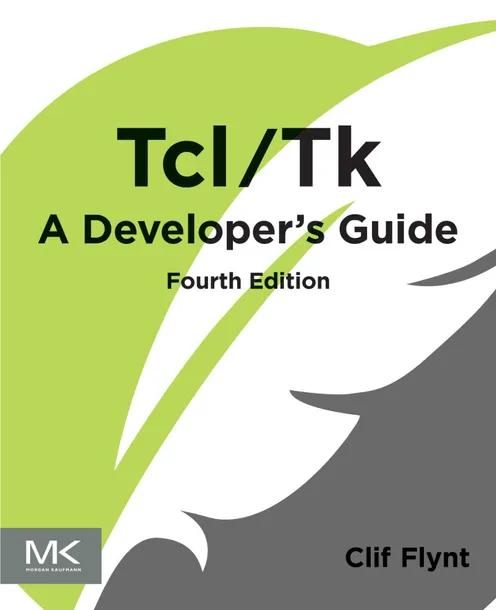
Tcl/Tk
A Developer's Guide
by Clif Flynt
4th Edition
Publisher: Morgan Kaufmann
Book Details
| Print ISBN | 9780443265563 |
| eText ISBN | 9780443265570 |
| Publisher | Morgan Kaufmann |
| Publishing Year | 2026 |
| Edition | 4th Edition |
| Language | English |
In Tcl/Tk: A Developer's Guide, 4th Edition, author Clif Flynt provides technical instruction for building cross-platform applications using the Tcl scripting language and Tk graphical interface toolkit. Published under the Morgan Kaufmann imprint, this reference is written for applications developers, systems software engineers, software architects, and systems administrators who build production software.
The text organizes its instruction around operational development requirements. It explains web technology setups that pair Rivet with SQLite alongside artificial intelligence integration with AWS services. Software engineering teams examine how to implement updated features from Tcl/Tk 9.0 across client/server network deployments, web applications, and system extensions.
To support hands-on practice, a companion website includes source code formatted for interactive programming and software development. This resource provides direct support for design engineers, software testers, and programmers responsible for building, testing, debugging, and maintaining script-based application environments.
Table of Contents
Chapter 1: Tcl/Tk Features
- • 1.1 Tcl Overview
- • 1.2 Tcl As a Glue Language
- • 1.3 Tcl As a General-Purpose Interpreter
- • 1.4 Tcl As an Extensible Interpreter
- • 1.5 Tcl As an Embeddable Interpreter
- • 1.6 Tcl As a Rapid Development Tool
- • 1.7 GUI-Based Programming
- • 1.8 Shipping Products
- • 1.9 Bottom Line
- • 1.10 Problems
Chapter 2: The Mechanics of Using the Tcl and Tk Interpreters
- • 2.1 The tclsh and wish Interpreters
- • 2.2 Using tclsh/wish Interactively
- • 2.3 Evaluating Tcl Script Files
- • 2.4 Bottom Line
- • 2.5 Problems
Chapter 3: Introduction to the Tcl Language
- • 3.1 Overview of the Basics
- • 3.2 Command Evaluation and Substitutions
- • 3.3 Data Types
- • 3.4 Arithmetic and Boolean Operations
- • 3.5 Modularization
- • 3.6 Bottom Line
- • 3.7 Problems
Chapter 4: Navigating the File System, Basic I/O and Sockets
- • 4.1 Navigating the File System
- • 4.2 Properties of File System Items
- • 4.3 Removing Files
- • 4.4 Input/Output in TCL
- • 4.5 Sockets
- • 4.6 Bottom Line
- • 4.7 Problems
Chapter 5: Using Strings and Lists
- • 5.1 Converting a String into a List
- • 5.2 Examining the List with a for Loop
- • 5.3 Using the foreach Command
- • 5.4 Using string match Instead of string first
- • 5.5 Using lsearch
- • 5.6 The regexp Command
- • 5.7 Creating a Procedure
- • 5.8 Making a Script
- • 5.9 Speed
- • 5.10 Bottom Line
- • 5.11 Problems
Chapter 6: Complex Data Structures with Lists, Arrays and Dicts
- • 6.1 Using the Tcl List
- • 6.2 Using the Dict
- • 6.3 Using the Associative Array
- • 6.4 Trees in Tcl
- • 6.5 Tcl and SQL
- • 6.6 Performance
- • 6.7 Bottom Line
- • 6.8 Problems
Chapter 7: Procedure Techniques
- • 7.1 Arguments to Procedures
- • 7.2 Renaming or Deleting Commands
- • 7.3 Getting Information About Procedures
- • 7.4 Substitution and Evaluation of Strings
- • 7.5 Working with Global and Local Scopes
- • 7.6 Making a Tcl Object
- • 7.7 Bottom Line
- • 7.8 Problems
Chapter 8: Namespaces, Packages and Modules
- • 8.1 Namespaces and Scoping Rules
- • 8.2 Packages
- • 8.3 TCL Modules
- • 8.4 Namespaces and Packages
- • 8.5 Hanoi with a Stack Namespace and Package
- • 8.6 Conventions and Caveats
- • 8.7 Bottom Line
- • 8.8 Problems
Chapter 9: Basic Object-Oriented Programming in Tcl
- • 9.1 Creating a TclOO Class and Object
- • 9.2 Bottom Line
- • 9.3 Problems
Chapter 10: Advanced Object-Oriented Programming in Tcl
- • 10.1 Modifying Classes and Objects
- • 10.2 Modifying Objects
- • 10.3 Examining Classes and Objects
- • 10.4 Examining Objects
- • 10.5 Using TclOO with Callbacks
- • 10.6 Adding New Functionality to TCLOO
- • 10.7 Bottom Line
- • 10.8 Problems
Chapter 11: Introduction to Tk Graphics
- • 11.1 Creating a Widget
- • 11.2 Conventions
- • 11.3 Common Options
- • 11.4 Determining and Setting Options
- • 11.5 The Basic Widgets
- • 11.6 Introducing Widgets: label, button, and entry
- • 11.7 Application Layout: Geometry Managers and Container Widgets
- • 11.8 Selection Widgets: radiobutton, checkbutton, menu, and listbox
- • 11.9 Scrollbar
- • 11.10 The scale Widget
- • 11.11 New Windows
- • 11.12 Interacting with the Event Loop
- • 11.13 Scheduling the Future: after
- • 11.14 Bottom Line
- • 11.15 Problems
Chapter 12: Using the Canvas Widget
- • 12.1 Overview of the canvas Widget
- • 12.2 Creating a canvas Widget
- • 12.3 Creating Displayable canvas Items
- • 12.4 More canvas Widget Subcommands
- • 12.5 The bind and focus Commands
- • 12.6 Creating a Widget
- • 12.7 A Help Balloon: Interacting with the Window Manager
- • 12.8 The image Object
- • 12.9 Bottom Line
- • 12.10 Problems
Chapter 13: The text Widget and htmllib
- • 13.1 Overview of the text Widget
- • 13.2 Creating a text Widget
- • 13.3 Text Widget Subcommands
- • 13.4 HTML Display Package
- • 13.5 Bottom Line
- • 13.6 Problems
Chapter 14: Tk Megawidgets
- • 14.1 Standard Dialog Widgets
- • 14.2 Megawidget Building Philosophy
- • 14.3 Functionality That Makes Megawidgets Possible
- • 14.4 Building a Megawidget
- • 14.5 A Scrolling Listbox Megawidget
- • 14.6 Namespaces and TK Widgets
- • 14.7 Incorporating a Megawidget into a Larger Megawidget
- • 14.8 Making a Modal Megawidget: The grab and tkwait Commands
- • 14.9 Automating Megawidget Construction
- • 14.10 Building Megawidgets with TclOO
- • 14.11 Bottom Line
- • 14.12 Problems
Chapter 15: Extending Tcl
- • 15.1 Functional View of a TCL Extension
- • 15.2 Building an Extension
- • 15.3 An Example
- • 15.4 Complex Data
- • 15.5 Embedding the Tcl Interpreter
- • 15.6 Building Tcl and Tk from Sources
- • 15.7 Bottom Line
- • 15.8 Problems
Chapter 16: Applications with Multiple Environments
- • 16.1 Event Loop
- • 16.2 Threads
- • 16.3 Embedded Tcl Interp and Threading
- • 16.4 Bottom Line
- • 16.5 Problems
Chapter 17: Extensions and Packages
- • 17.1 [incr Tcl]
- • 17.2 Expect
- • 17.3 TclX
- • 17.4 TDBC
- • 17.5 Rivet
- • 17.6 BWidgets
- • 17.7 Graphics Extensions: Img
- • 17.8 Bottom Line
Chapter 18: Programming Tools
- • 18.1 Code Formatter
- • 18.2 Code Checkers
- • 18.3 Debuggers
- • 18.4 Exercising and Regression Testing
- • 18.5 Packaging Tools
- • 18.6 Tcl Extension Generators
- • 18.7 Integrated Development Environments
- • 18.8 Bottom Line
Chapter 19: Tips and Techniques
- • 19.1 Debugging Techniques
- • 19.2 TCL as a Glue Language: The exec Command
- • 19.3 Common Mistakes
- • 19.4 Coding Tips and Techniques
- • 19.5 Optimization
- • 19.6 Techniques for Improving Performance
- • 19.7 Bottom Line
Chapter 20: Web Tech
Chapter 21: AI and Cloud
Customer Reviews
0.0
0 reviews
No reviews yet. Be the first to review this book!
Write a Review
Reviewed by GradeFocus Editorial Team
▶Research Sources (17)
- Tcl/Tk eBook by Clif Flynt - EPUB
- Perusall
- Tcl/Tk : A Developer's Guide: Clif Flynt: 9780443265570
- Computer science print books and ebooks - page 12
- "Tcl/Tk" als eBook kaufen
- Bodywork & Somatics Archives
- 楽天Kobo電子書籍ストア: Tcl/Tk - Clif Flynt - 9780443265570
- Please verify you are human - Captcha
- Thompson Learn.
- Tcl/Tk - 4th Edition
- Tcl/TK : A Developer's Guide by Clif Flynt
- Tcl/Tk by Clif Flynt - 9780443265563
- Tcl/Tk
- Tcl-tk - Clif Flynt - 2 million+ books
- Tcl/Tk Documentation
- Practical Programming in Tcl and Tk, 4th Edition
- Practical Programming in Tcl and Tk, Fourth Edition