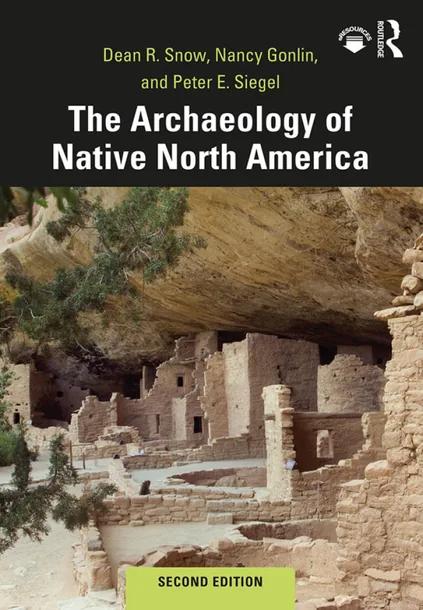
The Archaeology of Native North America
by Dean Snow, Nancy Gonlin, Peter Siegel
2nd Edition
Publisher: Routledge
Book Details
| Print ISBN | 9781138118850 |
| eText ISBN | 9781351588249 |
| Publisher | Routledge |
| Publishing Year | 2020 |
| Edition | 2nd Edition |
| Language | English |
The Archaeology of Native North America, 2nd Edition, is a textbook that examines the early peopling of the continent and the long-term cultural evolution of Indigenous societies. The volume traces trajectories from mobile foraging bands to the development of agriculture, urban centers, and complex political organizations.
Coverage spans diverse continental environments, incorporating Mesoamerica and the Caribbean to address broad regional interactions and the movement of people, goods, and ideas. The text also examines the material record of cultural clashes and transformations that reshaped both colonizers and colonists after European contact.
Intended for upper-level undergraduate and graduate students in survey courses as well as other advanced readers, the textbook concludes every chapter with a dedicated glossary of specialized terms.
Table of Contents
Chapter 1: Introduction
- • Archaeological Science
- • Coping with Incomplete Information
- • The Use and Misuse of Evidence
- • Mistakes and Fakes
- • Biological and Cultural Evolution
- • Basic Concepts for the Study of Cultural Evolution
- • Theoretical Approaches
- • North America and Human Potential
- • Calendric Conventions and Basic Terms
- • Oral Tradition
- • Art and Symbolism: Rock Art
- • Glossary
- • References
Chapter 2: Eurasian Origins
- • Geological Background
- • The Expansion of Early Humans
- • Environment and Adaptation
- • Genetic Evidence
- • The Evidence of Languages
- • The Evidence of Bones and Teeth
- • Demography and Conflict
- • Subsistence and Economy
- • Traveling Companions
- • Architecture and Technology
- • Resilience and Collapse
- • Glossary
- • References
Chapter 3: The Peopling of America
- • Environment and Adaptation
- • Demography and Conflict
- • Expansion Along the Pacific Coast
- • Expansion into the Interior
- • Architecture and Technology
- • Subsistence and Economy
- • The Great Extinction
- • Paleoindian Skeletal Evidence
- • Culture, Language, and Identity
- • Art and Symbolism
- • Resilience and Collapse
- • Glossary
- • References
Chapter 4: Archaic Cultures
- • Environment and Adaptation
- • Demography and Conflict
- • Managing Mobility
- • Subsistence and Economy
- • Centers of Plant Domestication
- • Architecture and Technology
- • Culture, Language, and Identity
- • Art and Symbolism
- • Resilience and Collapse
- • Glossary
- • References
Chapter 5: The Arctic and Subarctic
- • Arctic Environment and Adaptation
- • Northern Paleoindian and Paleo-Arctic
- • Northern Archaic and Related Adaptations
- • The Arctic Small Tool Tradition
- • Dorset, Kachemak, Norton, Choris, Ipiutak, and Old Bering Sea
- • Thule
- • Arctic Demography and Conflict
- • Arctic Subsistence and Economy
- • Arctic Architecture and Technology
- • Arctic Culture, Language, and Identity
- • Arctic Art and Symbolism
- • Arctic Resilience and Collapse
- • Subarctic Environment and Adaptation
- • Subarctic Demography and Conflict
- • Subarctic Subsistence and Economy
- • Subarctic Architecture and Technology
- • Subarctic Culture, Language, and Identity
- • Subarctic Art and Symbolism
- • Subarctic Resilience and Collapse
- • Glossary
- • References
Chapter 6: Moundbuilders of the Eastern Woodlands
- • Environment and Adaptation
- • Demography, Cooperation, and Conflict
- • Subsistence and Economy
- • Architecture and Technology
- • Adena Culture
- • Hopewell Culture
- • The Hopewell Trade Network
- • Culture, Language, and Identity
- • Art and Symbolism
- • Resilience and Collapse
- • Glossary
- • References
Chapter 7: The Mississippians
- • Environment and Adaptation
- • Demography and Conflict
- • Subsistence and Economy
- • Architecture and Technology
- • Culture, Language, and Identity
- • Regional Variants
- • Art and Symbolism
- • Resilience and Collapse
- • Glossary
- • References
Chapter 8: The Northeastern Forests
- • Environment and Adaptation
- • Demography and Conflict
- • Central and Eastern Algonquians
- • Northern Iroquoians
- • Subsistence and Economy
- • New England and the Maritime Provinces
- • Lower Great Lakes
- • Upper Great Lakes and Upper Mississippi River
- • Architecture and Technology
- • Culture, Language, and Identity
- • Art and Symbolism
- • Resilience and Collapse
- • Glossary
- • References
Chapter 9: The Interior West
- • Environment and Adaptation
- • The Great Plains
- • The Great Basin
- • The Plateau
- • Demography and Conflict
- • Plains Woodland Cultures
- • Plains Village Cultures
- • Middle Missouri Cultures
- • The Coalescent Tradition
- • Fremont Culture
- • The Numic Expansion
- • The Horse Nomads
- • Subsistence and Economy
- • Architecture and Technology
- • Culture, Language, and Identity
- • Art and Symbolism
- • Resilience and Collapse
- • Glossary
- • References
Chapter 10: The Greater Southwest
- • Environment and Adaptation
- • Demography and Conflict
- • Subsistence and Economy
- • Architecture and Technology
- • Hohokam
- • Mogollon
- • Ancestral Pueblo
- • Culture, Language, and Identity
- • Language Families
- • The Chaco Phenomenon
- • Art and Symbolism
- • Resilience and Collapse
- • Glossary
- • References
Chapter 11: The West Coast
- • Environment and Adaptation
- • Northwest Coast
- • California
- • Baja California
- • Demography and Conflict
- • California and Baja California
- • Subsistence and Economy
- • Architecture and Technology
- • Culture, Language, and Identity
- • California Tribelets
- • Chumash Culture
- • Art and Symbolism
- • Resilience and Collapse
- • Glossary
- • References
Chapter 12: The Gulf Rim and the Caribbean Islands
- • Environment and Adaptation
- • The Gulf Coast
- • The Caribbean Islands
- • Demography and Conflict
- • Subsistence and Economy
- • Architecture and Technology
- • Early Mound Building
- • Troyville-Coles Creek Culture
- • Weeden Island–Fort Walton Cultures
- • Safety Harbor
- • Belle Glade
- • The Miami Circle
- • Pensacola Culture
- • The Antilles
- • Culture, Language, and Identity
- • Art and Symbolism
- • Resilience and Collapse
- • Glossary
- • References
Chapter 13: Mesoamerica
- • Environment and Adaptation
- • Highland Basin of Mexico
- • Highlands in Oaxaca, Mexico
- • The Gulf Lowlands
- • The Maya Lowlands
- • Demography and Conflict
- • The Olmecs: Complexity in the Formative
- • Monte Albán: From Formative to Classic Center
- • Maya City-States in the Lowlands
- • The Postclassic Toltecs
- • Rise of the Aztecs
- • Subsistence and Economy
- • Architecture and Technology
- • Olmec Centers
- • The Mexican Highlands
- • Teotihuacan
- • Monte Albán
- • Tula
- • West Mexico
- • Tenochtitlan
- • Culture, Language, and Identity
- • Classic Maya City-States
- • Tikal
- • Palenque
- • Copan
- • The Aztecs
- • Art and Symbolism
- • The Mesoamerican Ball Game
- • Olmec Art and Symbolism
- • Zapotec Art and Symbolism
- • Teotihuacan Art and Symbolism
- • Classic Maya Art and Symbolism
- • Maya Calendars
- • Aztec Art and Symbolism
- • Resilience and Collapse
- • The Classic Maya Collapse
- • Glossary
- • References
Chapter 14: Archaeology in the Modern World
- • Environment and Adaptation
- • Demography and Conflict
- • The Colonial Experience
- • Subsistence and Economy
- • Architecture and Technology
- • Culture, Language, and Identity
- • NAGPRA
- • Art and Symbolism
- • Resilience and Collapse
- • Modern American Indians
- • Archaeology and American Indians
- • Glossary
- • References
Customer Reviews
0.0
0 reviews
No reviews yet. Be the first to review this book!
Write a Review
Reviewed by GradeFocus Editorial Team