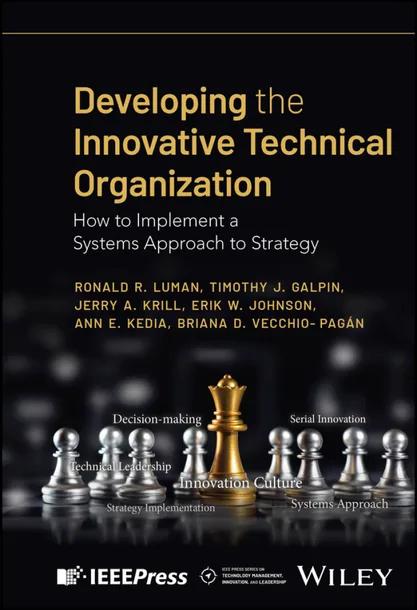
Developing the Innovative Technical Organization
How to Implement a Systems Approach to Strategy
by Ronald R. Luman, Timothy J. Galpin, Jerry A. Krill
1st Edition
Publisher: Wiley-IEEE Press
Book Details
| Print ISBN | 9781394376117 |
| eText ISBN | 9781394376124 |
| Publisher | Wiley-IEEE Press |
| Publishing Year | 2026 |
| Edition | 1st Edition |
| Language | English |
| Pages | 288 |
In Developing the Innovative Technical Organization, 1st Edition, authors Ronald R. Luman, Timothy J. Galpin, Jerry A. Krill, Erik W. Johnson, Ann E. Kedia, and Briana D. Vecchio-Pagan establish a systems approach to corporate strategy and organizational alignment. Writing as current and former senior leaders at the Johns Hopkins University Applied Physics Laboratory, the authors detail the institution's decade-long work in strategy development and implementation.
The core content introduces a full-cycle management system linking long-range vision frameworks, strategy articulation, continuous decision-making, innovation, and accountability processes. It outlines specific methods to align organizational resources with strategic priorities, helping technical institutions maximize organizational agility through structured strategic planning.
This textbook directly supports graduate-level courses in engineering management, business strategy, and organizational leadership. It offers academic programs a structured framework to examine continuous decision-making processes, resource allocation, and strategy implementation across complex technical enterprises.
Table of Contents
Chapter 1: INTRODUCTION
Chapter 2: THE STRATEGIC INNOVATION IMPERATIVE
- • 2.1 What Is Innovation?
- • 2.2 Why Innovate?
- • 2.3 What Is the Innovation Imperative for Your Organization?
Chapter 3: THE INTEGRATED STRATEGY SYSTEM
- • 3.1 Classic Long-Range Vision Framework
- • 3.2 One-Page Strategy Articulation: The VSE
- • 3.3 Alignment of Resources to Strategic Priorities
- • 3.4 Regular Accountability Reviews
- • 3.5 Continuous Decision-Making Process
- • 3.6 Inspiring the Entire Organization to Innovate
- • 3.7 Looking Ahead
Chapter 4: IMPLEMENTING THE SYSTEM'S ANNUAL CYCLE: PHASE 1
- • 4.1 Background
- • 4.2 Adopting a Discipline for Decision-Making: The Strategic Decision Agenda
- • 4.3 Crafting Strategy on One Page: The VSE
- • 4.4 Adding the "Bite": Alignment of Resources with Strategy
- • 4.5 Ensuring Strategic Accountability: Regular Portfolio Reviews
- • 4.6 Inspiring Innovation: Initial Efforts
- • 4.7 Summary: The Complete Annual Strategy Cycle
Chapter 5: ANNUAL STRATEGY CYCLE PLANNING GUIDE
- • 5.1 Why a Planning Guide?
- • 5.2 Establishing the Annual Priorities
- • 5.3 Allocating Financial Resources
- • 5.4 Reviews
- • 5.5 Outcomes
- • 5.6 Summary
- • 5.7 Sample Annual Planning Memo
Chapter 6: BUILDING THE LONG-RANGE VISION TO ANCHOR THE SYSTEM: PHASE 2
- • 6.1 The Perfect Storm Motivates the Long-Term Strategy
- • 6.2 Core Purpose
- • 6.3 Core Values
- • 6.4 Big Hairy Audacious Goal and Defining Innovations
- • 6.5 Vivid Description of the Envisioned Future
- • 6.6 Summary: The Complete System
Chapter 7: INNOVATING INNOVATION - "KEEP WHAT WORKS"
- • 7.1 Permission
- • 7.2 Proximity
- • 7.3 Privacy
- • 7.4 Perspective
- • 7.5 Performance
- • 7.6 Summary
Chapter 8: ENGAGING MIDDLE MANAGEMENT
- • 8.1 The Critical Role of Middle Managers
- • 8.2 That's a Nice VSE, But What About Me?
- • 8.3 But We're Already Too Busy!
- • 8.4 What About My Day Job?
- • 8.5 Experimentation Is the Key
- • 8.6 Augmenting the Workforce
- • 8.7 Summary: Key Takeaways
Chapter 9: COMMUNICATING THE STRATEGY
- • 9.1 Communications' Central Role in Effective Strategy Execution
- • 9.2 Essential Communications Elements and Capabilities for Strategic Change
- • 9.3 The Importance of Aligning Communications Efforts
- • 9.4 Strategy Communications in Action
- • 9.5 Metrics and Indicators to Evaluate Effectiveness of Communicating the Strategy
- • 9.6 Summary
Chapter 10: STRATEGY-DRIVEN RESULTS
- • 10.1 Innovating Through the COVID Crucible
- • 10.2 Strategy-Driven Transformative Innovations
- • 10.3 New Defining Innovations
- • 10.4 Formal External Recognition
- • 10.5 Engaging Within the Global Innovation Ecosystem
Chapter 11: LESSONS LEARNED AND RETROSPECTIVE
- • 11.1 Lessons Learned
- • 11.2 Retrospective and a Challenge
Chapter 12: APPENDIX A. THE FEDERALLY FUNDED RESEARCH AND DEVELOPMENT SECTOR
Chapter 13: APPENDIX B. APL'S INNOVATION IMPERATIVE AND STRATEGY JOURNEY
- • 13.1 Foundation of Critical Contributions to Critical Challenges
- • 13.2 The First Five Decades: World War II Through the Cold War
- • 13.3 The First Disruptive Decade: The Post-Cold War "Peace Dividend"
- • 13.4 The Second Disruptive Decade: New Strategies for New Adversaries
- • 13.5 Preparing for the Storm
Customer Reviews
0.0
0 reviews
No reviews yet. Be the first to review this book!
Write a Review
Reviewed by GradeFocus Editorial Team
▶Research Sources (16)
- Developing the Innovative Technical Organization, eBook by Ronald ...
- Developing the Innovative Technical Organization - ISBN ...
- Developing the Innovative Technical Organization - Ronald R ...
- Captcha
- Sign In - MyLibrary | Hal Leonard Online
- Thompson Learn.
- Book Resources | New Society Publishers
- Please verify you are human - Captcha
- How to Implement a Systems Approach to Strategy by Galpin ...
- Developing the Innovative Technical Organization
- Developing the Innovative Technical Organization ... - Biblio
- The Innovative Organization
- Developing the Innovative Technical Organization
- Developing the Innovative Technical Organization How to ...
- Developing the Innovative Technical Organization
- The Innovation