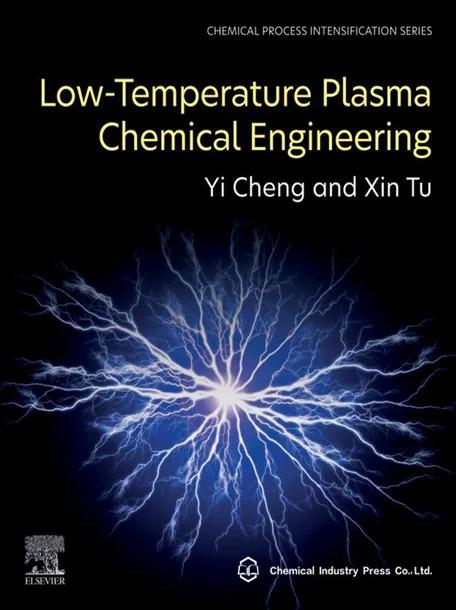
Low-Temperature Plasma Chemical Engineering
by Yi Cheng, Xin Tu
1st Edition
Publisher: Elsevier
Book Details
| Print ISBN | 9780443187292 |
| eText ISBN | 9780443187308 |
| Publisher | Elsevier |
| Publishing Year | 2025 |
| Edition | 1st Edition |
| Language | English |
Low-Temperature Plasma Chemical Engineering, 1st Edition, presents a structured framework for plasma process intensification, reactor design, and reaction engineering. Authored by Yi Cheng and Xin Tu, this textbook establishes principles for analyzing chemical reactions driven by electrical discharges.
The content develops core conversion pathways, detailing the plasma-catalytic oxidation of volatile organic compounds alongside methane reforming and carbon dioxide conversion. Subsequent sections extend these methodologies to biomass tar reforming, nitrogen fixation, plasma agriculture, and cold atmospheric plasma biotechnology.
Designed for college instructors, university students, and scientific researchers across chemical and energy engineering, this volume provides structured methodologies for system optimization in low-temperature plasma environments.
Table of Contents
Chapter 1: Introduction
- • Introduction to low-temperature plasmas
- • Overview of low-temperature plasma process intensification
- • Cold plasma
- • Warm plasma
- • Thermal plasma
- • Advanced diagnostics for low-temperature plasma process intensification
- • Challenges in low-temperature plasma process intensification
- • Outlook
- • References
Chapter 2: Plasma reforming of tars from biomass gasification
- • Introduction
- • Biomass gasification & challenges
- • Overview of different technologies for tar removal
- • Plasma reforming of tars
- • Effect of different operating parameters
- • Reaction mechanism
- • Plasma-catalytic reforming of tars
- • Catalyst development for plasma tar reforming
- • Integration of biomass gasification and plasma tar reforming
- • Outlook
- • References
Chapter 3: Plasma-catalytic oxidation of VOCs
- • Introduction
- • Plasma oxidation of VOCs
- • Plasma-catalytic oxidation of VOCs
- • Cycled storage-discharge plasma-catalysis oxidation of VOCs
- • Key issues in the storage stage
- • Key issues in the discharge stage
- • Cycled storage-discharge process and stability analysis
- • Outlook
- • References
Chapter 4: Plasma conversion of CO 2
- • Introduction
- • Plasma decomposition of CO 2
- • Plasma decomposition of CO2: Effect of operating parameters
- • Plasma-catalytic decomposition of CO 2
- • Plasma CO 2 hydrogenation
- • CO 2 hydrogenation to CO
- • CO 2 methanation
- • CO 2 hydrogenation to liquid fuels and chemicals
- • Plasma dry reforming of CH 4 and CO 2
- • Dry reforming of methane for the production of syngas
- • Dry reforming of methane for the production of higher hydrocarbons
- • Dry reforming of methane for the production of oxygenates
- • Plasma reduction of CO 2 with water
- • Outlook
- • References
Chapter 5: From electrostatic precipitation to non-thermal plasma
- • Introduction
- • Basic principle of electrostatic precipitator (ESP)
- • DC corona discharge
- • Particle charging
- • Migration collection
- • Rapping for ash cleaning
- • Key factors of dust removal efficiency
- • Particle size of dust
- • Specific resistance
- • Rapping of electrostatic precipitator
- • High voltage power supply
- • Operating temperature
- • Precipitator selection
- • Ionic wind
- • Models for dust collection efficiency prediction
- • Deutsch equation
- • Overview on ESP index
- • Derivation of ESP index
- • Validity of ESP index
- • ESP index and particulate emission
- • Electric field optimization for electrostatic precipitator
- • Outlook
- • References
Chapter 6: Cold atmospheric plasma biotechnology
- • Introduction
- • Overview of CAP biotechnology
- • Interaction mechanism of CAP biotechnolog
- • CAP biotechnology applications
- • Sterilization and disinfection
- • Biological mutation breeding
- • Agriculture and food processing
- • Biomedicine
- • 5 Outlook
- • References
Chapter 7: Gas-liquid plasma-based advanced oxidation process
- • Introduction
- • Diagnostics and mechanism of advanced oxidation process in gas-liquid plasma
- • Visualization of mass transfer and reaction behavior in gas-liquid plasma
- • Gas-liquid plasma reactors
- • Energy efficiency of gas-liquid plasma reactors
- • Applications of high-efficiency reactors
- • Research progress of advanced oxidation process in gas-liquid plasmas
- • Outlook
- • References
Chapter 8: Gas-liquid plasmas in micro-channels for organic synthesis
- • Introduction
- • Process intensification by microfluidic and plasma processes
- • Flow chemistry and microfluidic reactor
- • Case studies of flow chemistry
- • Plasma-assisted organic synthesis
- • Principles of process intensification
- • Paschen's law and microreactors
- • Mass transfer and reactions at the gas-liquid interface
- • Applications
- • Bubble type microchannel gas-liquid plasma reactor
- • Application of ESR free radical detection technique in microchannel gas-liquid plasma reactor
- • Outlook
- • References
Chapter 9: Plasma nitrogen fixation
- • Introduction
- • Advantages of plasma nitrogen fixation
- • Overview of plasma nitrogen fixation
- • Plasma synthesis of NO x
- • Plasma-catalytic synthesis of NO x
- • Energy efficiency of plasma NO x synthesis
- • Plasma synthesis of ammonia
- • Plasma-catalytic synthesis of ammonia
- • Optimization of plasma ammonia synthesis
- • Outlook
- • References
Chapter 10: Plasma-catalytic reforming of methane
- • Introduction
- • Overview of plasma-catalytic reforming of methane
- • Electrical and optical diagnostics in plasma reforming of methane
- • Plasma-catalytic reforming of methane
- • Effect of different operating parameters
- • Mechanism of plasma-catalytic reforming of methane
- • Case studies
- • Plasma-catalytic reforming of biogas
- • Integrated plasma reforming and water electrolysis for energy storage
- • Outlook
- • References
Chapter 11: Thermal plasma pyrolysis of coal for the synthesis of acetylene
- • Introduction
- • Acetylene production technologies
- • Advantages of ultra-high temperature thermal plasmas
- • Recent advances in thermal plasma pyrolysis of coal for acetylene production
- • Key challenges in thermal plasma pyrolysis of coal for acetylene production
- • Fundamentals in thermal plasma pyrolysis of coal for acetylene production
- • Thermodynamic analysis
- • Experimental study on coal pyrolysis to acetylene
- • Pyrolysis kinetics of pulverized coal
- • Generalized model of heat transfer and volatiles evolution inside particles
- • Cross-scale modeling and simulation of plasma coal pyrolysis to acetylenes
- • Mass/energy balance analysis and techno-economic evaluation of plasma coal pyrolysis to acetylene
- • Analysis of hydrocarbon products recycle process
- • Optimization of quenching for high-temperature acetylene products
- • Co-production of acetylene and ethylene using chemical quenching
- • Outlook
- • References
Chapter 12: Thermal plasma chemical vapor deposition for the preparation of nanomaterials
- • Overview of thermal plasma preparation of nanomaterials
- • Key issues in thermal plasma chemical vapor deposition for nanomaterial preparation
- • On-line monitoring of ultra-high temperature chemical vapor deposition
- • Controlling mechanism of microstructural properties of materials
- • Principle of process intensification
- • Principle of thermal plasma enhanced chemical vapor deposition
- • Typical reactor design for thermal plasma enhanced chemical vapor deposition
- • Applications
- • Production of graphene nanosheets
- • Production of silicon/silicon carbide nanocrystals
- • Production of high purity magnesium oxide from Salt Lake resources
- • Outlook
- • References
Chapter 13: Thermal plasma intensified process for the production of ultrafine powders
- • Overview of thermal plasma intensified processes
- • Definition and characteristics of thermal plasma
- • Essential features of thermal plasma intensified processes
- • Applications of thermal plasma intensified processes in production of fine powders
- • Typical applications of thermal plasma intensified processes
- • Production of ultrafine tungsten powders
- • Production of fine nickel powders
- • Production of ultrafine oxide powders
- • Mechanism of thermal plasma intensified reduction
- • Plasma enhanced solid-state exothermic reactions for the production of non-oxide ceramic powders
- • Advances in production of non-oxide ceramic powders
- • Plasma synthesis of non-oxide ceramic powders
- • Plasma-enhanced Mg-thermal reduction for the synthesis of high-temperature ceramic powders
- • Outlook
- • References
Chapter 14: Thermal plasma solid waste treatment
- • Overview of thermal plasma solid waste treatment
- • Significance of thermal plasma solid waste treatment
- • Principle of thermal plasma solid waste treatment
- • Advances in thermal plasma solid waste treatment
- • Thermal plasma processes for solid waste treatment
- • Plasma pyrolysis
- • Plasma gasification
- • Plasma melting
- • Principle of thermal plasma process intensification in solid waste treatment
- • Thermal plasma-enhanced gas-phase reactions
- • Thermal plasma-enhanced solid-phase reactions
- • Case studies
- • Plasma melting of fly ash from municipal solid waste incineration
- • Demonstration plant of thermal plasma melting of fly ash
- • Other applications of thermal plasma solid waste treatment
- • Outlook
- • References
Customer Reviews
0.0
0 reviews
No reviews yet. Be the first to review this book!
Write a Review
Reviewed by GradeFocus Editorial Team
▶Research Sources (15)
- Low-Temperature Plasma Chemical Engineering | Rent
- Low-Temperature Plasma Chemical Engineering - 1st Edition
- Low-Temperature Plasma Chemical Engineering: Yi Cheng
- Low-Temperature Plasma Chemical Engineering - Yi Cheng, Xin ...
- Low-Temperature Plasma Chemical Engineering - Yi Cheng
- Plasma-assisted nitrogen fixation - TUE Research portal
- Sourcebooks, LLC.
- Booklovers Library
- Please verify you are human - Captcha
- Low-Temperature Plasma Chemical Engineering - ScienceDirect.com
- Low-Temperature Plasma Chemical Engineering | Parnassus Books
- Low-Temperature Plasma Techniques in Biomedical Applications and ...
- [PDF] Low –Temperature Plasmas :
- Transforming society with low-temperature plasma science
- Low-Temperature Plasma Chemical Engineering | Rent | 9780443187292