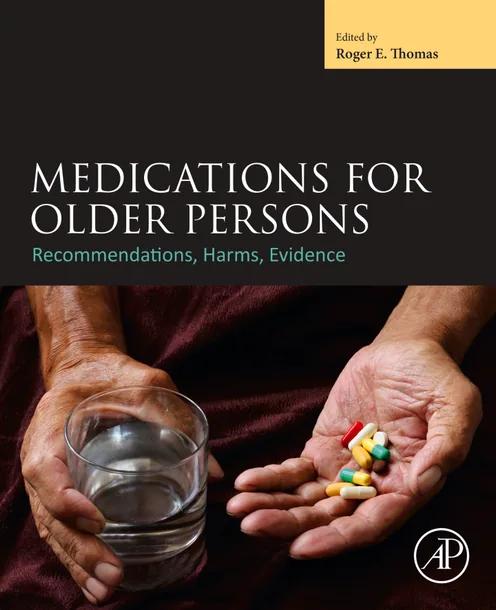
Medications for Older Persons
Recommendations, Harms, Evidence
by Roger E. Thomas
1st Edition
Publisher: Academic Press
Book Details
| Print ISBN | 9780443290251 |
| eText ISBN | 9780443290268 |
| Publisher | Academic Press |
| Publishing Year | 2025 |
| Edition | 1st Edition |
| Language | English |
| Pages | 356 |
Medications for Older Persons, 1st Edition delivers a rigorous assessment of therapeutic benefits and adverse risks across senior pharmacotherapy. Designed primarily for clinicians caring for aging patients in community and hospital environments, this work investigates how specific prescribing choices contribute to adverse drug events, hospital readmissions, and patient mortality.
The publication organizes medical evidence across primary drug classes, including cardiovascular, central nervous system, renal, gastrointestinal, musculoskeletal, respiratory, and endocrine preparations, alongside pain management and fall prevention regimens. Each category is evaluated using randomized controlled trials with long follow-up periods, low risk of bias, and high GRADE quality, emphasizing precise Numbers Needed to Treat and Numbers Needed to Harm.
It incorporates established clinical screening tools such as STOPP and Beers criteria for potentially inappropriate medications, together with START criteria for potential prescribing omissions. This structured evidence base supports medical researchers identifying superior benefit-to-harm drug profiles and aids health ministry funders evaluating elder care interventions.
Table of Contents
Chapter 1: A summary of medications that most benefit older patients: for clinicians, patients, their families, policy makers and health ministries
Chapter 2: STOPP and American Geriatrics Society “potentially inappropriate medications" (PIMs) and START ”potential prescribing omissions” (PPOs)
Chapter 3: The Calgary study of 295,706 admissions of older persons to four acute care hospitals 2013-2021
Chapter 4: Adverse drug interactions in the Veterans Affairs Adverse Drug Event Reporting System
Chapter 5: Pharmacokinetics and pharmacodynamics in older persons
Chapter 6: Methods to identify adverse drug interactions and effects
Chapter 7: How personalized medicine has changed senior patient outcomes at the Mayo Clinic and other centers
Chapter 8: Older persons alcohol consumption
Chapter 9: Self-medication and over the counter medications by older persons
Chapter 10: The accuracy of recording medication lists, transferring lists between community practitioners and medical institutions, and the potential effects on the accuracy of assessing PIMs, PPOs and adverse medication events
Chapter 11: Medications for hypertension
Chapter 12: Medications for heart failure
Chapter 13: Medications for arrhythmias
Chapter 14: Medications for diuresis
Chapter 15: Medications for coagulation
Chapter 16: Medications for depression
Chapter 17: Medications for anxiety
Chapter 18: Medications for insomnia
Chapter 19: Neuroleptic/antipsychotic medications
Chapter 20: Avoiding medications with risks of delirium
Chapter 21: Avoiding medications that augment dementia
Chapter 22: Prescribing to reduce risks of renal insufficiency and failure
Chapter 23: Prescribing to reduce the risks of peptic ulcer disease, gastritis, and esophagitis and treat if present
Chapter 24: Prescribing to reduce the risks of constipation or diarrhea
Chapter 25: Medications for arthritis
Chapter 26: Medications for osteoporosis
Chapter 27: Medications for COPD
Chapter 28: Medications for diabetes
Chapter 29: Non-opioid analgesics and opioids for seniors
Chapter 30: Prescribing to prevent falls
Customer Reviews
0.0
0 reviews
No reviews yet. Be the first to review this book!
Write a Review
Reviewed by GradeFocus Editorial Team
▶Research Sources (15)
- [PDF] Medications for Older Persons by Roger Thomas ... - Perlego
- Academic Press print books and ebooks - page 111 | Elsevier ...
- Medications for insomnia - Maastricht University
- Medications for Older Persons - Roger Thomas - Bokklubben
- Thompson Learn.
- Please verify you are human - Captcha
- Collection Updates December 2025 - Specialty Guides
- Medications for Older Persons - 1st Edition - Elsevier Shop
- Medications for Older Persons - ScienceDirect.com
- Aging and Medications - Older People's Health - Merck Manuals
- Medication Management for Older Adults | BeMedWise
- Prescribing medicines to older people—How to consider the impact of ...
- Medications for Older Persons ... | 9780443290251 - Ryefield Books
- Common Medications for Older Adults - Healthy Aging - WebMD
- Medication management in older adults | Cleveland Clinic Journal of ...