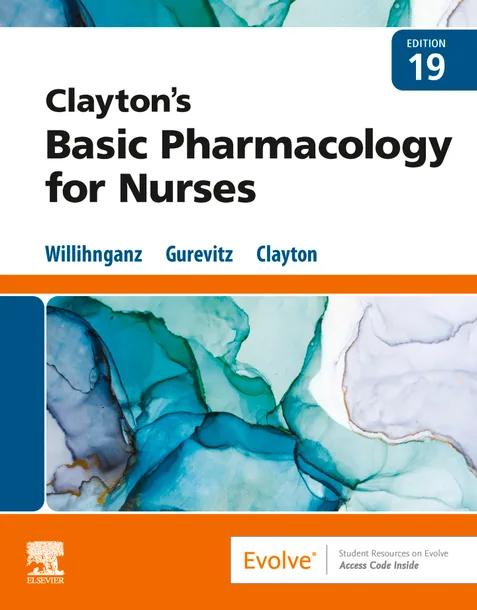
Clayton's Basic Pharmacology for Nurses
by Michelle J. Willihnganz, Samuel L. Gurevitz, Bruce D. Clayton
19th Edition
Publisher: Mosby
Book Details
| Print ISBN | 9780323796309 |
| eText ISBN | 9780323812580 |
| Publisher | Mosby |
| Publishing Year | 2022 |
| Edition | 19th Edition |
| Language | English |
| Pages | 880 |
Clayton's Basic Pharmacology for Nurses, 19th Edition, is a textbook designed to teach nursing students the fundamentals of drug actions and medication administration.
Coverage connects core pharmacological concepts to the nursing process, examining medication administration techniques across percutaneous, enteral, and parenteral routes. Units organized by body system address therapies affecting the autonomic, central nervous, cardiovascular, and respiratory systems, pairing general care principles with targeted nursing considerations.
Written for students in LPN/LVN and ADN programs, the 2022 edition introduces Next Generation NCLEX-style questions and unfolding case studies to help learners develop clinical judgment.
Table of Contents
Chapter Unit 1: Applying Pharmacology to Nursing Practice
Chapter 1: Drug Definitions, Standards, and Information Sources
Chapter 2: Basic Principles of Drug Action and Drug Interactions
Chapter 3: Drug Action Across the Life Span
Chapter 4: The Nursing Process and Pharmacology
Chapter 5: Patient Education to Promote Health
Chapter Unit 2: Illustrated Atlas of Medication Administration
Chapter 6: Principles of Medication Administration and Medication Safety
Chapter 7: Percutaneous Administration
Chapter 8: Enteral Administration
Chapter 9: Parenteral Administration: Safe Preparation of Parenteral Medications
Chapter 10: Parenteral Administration: Intradermal, Subcutaneous, and Intramuscular Routes
Chapter 11: Parenteral Administration: Intravenous Route
Chapter Unit 3: Drugs Affecting the Autonomic and Central Nervous Systems
Chapter 12: Drugs Affecting the Autonomic Nervous System
Chapter 13: Drugs Used for Sedation and Sleep
Chapter 14: Drugs Used for Neurodegenerative Disorders
Chapter 15: Drugs Used for Anxiety Disorders
Chapter 16: Drugs Used for Depressive and Bipolar Disorders
Chapter 17: Drugs Used for Psychoses
Chapter 18: Drugs Used for Seizure Disorders
Chapter 19: Drugs Used for Pain Management
Chapter Unit 4: Drugs Affecting the Cardiovascular System
Chapter 20: Introduction to Cardiovascular Disease and Metabolic Syndrome
Chapter 21: Drugs Used to Treat Dyslipidemias
Chapter 22: Drugs Used to Treat Hypertension
Chapter 23: Drugs Used to Treat Dysrhythmias
Chapter 24: Drugs Used to Treat Angina Pectoris
Chapter 25: Drugs Used to Treat Peripheral Vascular Disease
Chapter 26: Drugs Used to Treat Thromboembolic Disorders
Chapter 27: Drugs Used to Treat Heart Failure
Chapter 28: Drugs Used for Diuresis
Chapter Unit 5: Drugs Affecting the Respiratory System
Chapter 29: Drugs Used to Treat Upper Respiratory Disease
Chapter 30: Drugs Used to Treat Lower Respiratory Disease
Chapter Unit 6: Drugs Affecting the Digestive System
Chapter 31: Drugs Used to Treat Oral Disorders
Chapter 32: Drugs Used to Treat Gastroesophageal Reflux and Peptic Ulcer Disease
Chapter 33: Drugs Used to Treat Nausea and Vomiting
Chapter 34: Drugs Used to Treat Constipation and Diarrhea
Chapter Unit 7: Drugs That Affect the Endocrine System
Chapter 35: Drugs Used to Treat Diabetes Mellitus
Chapter 36: Drugs Used to Treat Thyroid Disease
Chapter 37: Corticosteroids
Chapter 38: Gonadal Hormones
Chapter Unit 8: Drugs Affecting the Reproductive System
Chapter 39: Drugs Used in Obstetrics
Chapter 40: Drugs Used in Men’s and Women’s Health
Chapter 41: Drugs Used to Treat Disorders of the Urinary System
Chapter 42: Drugs Used to Treat Glaucoma and Other Eye Disorders
Chapter 43: Drugs Used to Treat Cancer
Chapter 44: Drugs Used to Treat the Musculoskeletal System
Chapter 45: Drugs Used to Treat Infections
Chapter 46: Nutrition
Chapter 47: Herbal and Dietary Supplement Therapy
Chapter 48: Substance Abuse
Customer Reviews
0.0
0 reviews
No reviews yet. Be the first to review this book!
Write a Review
Reviewed by GradeFocus Editorial Team