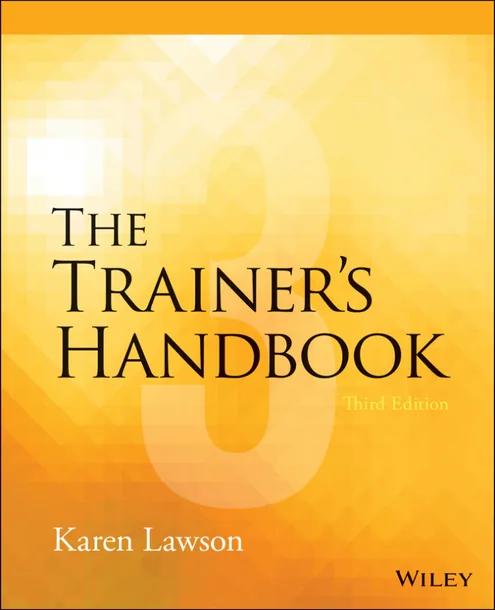
The Trainer's Handbook
by Karen Lawson
4th Edition
Publisher: John Wiley & Sons P&T
Book Details
| Print ISBN | 9781118933138 |
| eText ISBN | 9781118933145 |
| Publisher | John Wiley & Sons P&T |
| Publishing Year | 2016 |
| Edition | 4th Edition |
| Language | English |
| Pages | 384 |
The Trainer's Handbook, 4th Edition, by Karen Lawson, is a practical handbook for designing, developing, and delivering organizational training. Published by John Wiley & Sons P&T, the text outlines structured methods for instructors, facilitators, and performance consultants.
The volume covers core stages of instructional design, from conducting needs assessments and setting learning objectives to drafting instructional plans. Lawson examines adult learning concepts by comparing andragogical and pedagogical models, while addressing varied settings such as traditional classrooms, offsite sessions, and asynchronous online learning.
To aid classroom implementation, the handbook incorporates applied resources such as checklists, worksheets, job aids, and templates.
Table of Contents
Chapter 1: Assessing Needs
- • Understanding Needs Assessment
- • Needs-Assessment Process
- • How to Conduct a Needs Assessment
- • Developing an Action Plan
- • Assessing Participants’ Knowledge, Attitudes, Skills
- • Key Points
Chapter 2: Understanding Adult Learners
- • Andragogical versus Pedagogical Model
- • How and Why People Learn
- • Learning Styles
- • Application of Learning Principles
- • Key Points
Chapter 3: Training Styles
- • Trainer Characteristics and Competencies
- • Training Style
- • Learner-Centered versus Information-Centered
- • Key Elements of a Trainer’s Style
- • Key Points
Chapter 4: Understanding Today’s Learner
- • The Changing Training Environment
- • Self-Awareness
- • Diversity Issues
- • Key Points
Chapter 5: Writing Instructional Objectives
- • What Are Learning Objectives?
- • Writing Learning Objectives
- • Key Points
Chapter 6: Writing an Instructional Plan
- • Instructional Plan Overview
- • Time Needed to Develop a Training Program
- • Cost Considerations
- • Major Components of Design
- • Creating a Design Matrix
- • Creating a Detailed Instructional Plan
- • Components of an Instructional Plan
- • Instructional Methods
- • Developing Materials
- • Key Points
Chapter 7: Selecting, Designing, and Developing Active-Training Methods
- • The Case for Active Training
- • Cooperative Learning
- • Creating an Active-Learning Environment
- • Designing Active-Training Activities
- • Common Methods and Materials
- • Experiential Learning Activities
- • Key Points
Chapter 8: Delivering Training
- • Creating a Positive Learning Environment
- • Experiential Learning Cycle
- • Tips for Using Specific Methods
- • Improving Platform Presence
- • Key Points
Chapter 9: Using Visual Aids
- • Retention Rate in Visual Learning
- • Reasons to Use Visual Aids
- • Guidelines for Using Slides
- • Using Flip Charts
- • Using Videos and Video Clips
- • Key Points
Chapter 10: Working with Groups
- • The Trainer as Facilitator
- • Ways to Encourage Participation
- • The Art of Asking Questions
- • Responding to Questions
- • Scaling the Wall of Resistance
- • Problem Situations
- • Key Points
Chapter 11: Using Creativity
- • Creativity with Small Groups
- • Props and Other Theatrical Techniques
- • Using Games
- • Creative Closings
- • Key Points
Chapter 12: Evaluating Training
- • Evaluation Basics
- • Four-Level Model for Training Evaluation
- • Participant Evaluation and Accountability for e-Learning
- • Accountability for Training
- • Significance of the Evaluation Process
- • Key Points
Chapter 13: Training across Cultures
- • Globalization of Businesses and People
- • Culture and Cultural Dimensions
- • Becoming Culturally Intelligent
- • Practical Application
- • Key Points
Chapter 14: Storytelling as a Training Technique
- • The Value of Storytelling
- • Types of Stories
- • Telling Personal Stories
- • Capturing Your Personal Stories
- • How to Tell Your Story
- • Key Points
Chapter 15: Using Technology in Training
- • Workplace Trends
- • Advantages/Benefits of Distance Learning
- • Disadvantages/Drawbacks to Distance Learning
- • Types of Distance Learning
- • Guidelines for Designing Distance Learning
- • Designing and Developing Activities
- • Delivering Content and Activities
- • Key Points
Chapter 16: Training On the Job
- • The Need for Structured On-the-Job Training
- • Selecting the Trainer
- • Developing an Instructional Plan
- • On-the-Job Training Model
- • Evaluating On-the-Job Training
- • Key Points
Chapter 17: Training During Tough Times
- • Prove the Value of Training
- • Methods to Stretch Training Dollars
- • Technology-Based Delivery Methods
- • Just-in-Time Materials
- • Key Points
Chapter 18: The Business of Consulting: Internal and External
- • The Changing Role of the Trainer
- • The Client-Consultant Relationship
- • Developing a Proposal
- • Setting Clear Expectations
- • Selecting an External Consultant
- • After the Project
- • Key Points
Chapter Appendix A: Answers to Exercises
Chapter Appendix B: Recommended Resources
Chapter Appendix C: Criteria for Selecting Packaged Programs
Customer Reviews
0.0
0 reviews
No reviews yet. Be the first to review this book!
Write a Review
Reviewed by GradeFocus Editorial Team