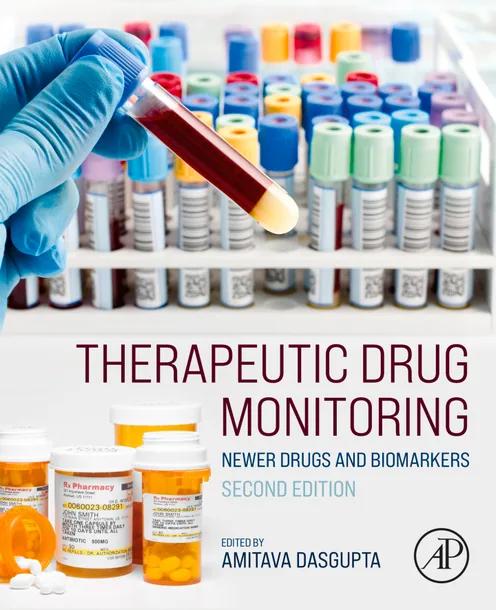
Therapeutic Drug Monitoring
Newer Drugs and Biomarkers
by Amitava Dasgupta
2nd Edition
Publisher: Academic Press
Book Details
| Print ISBN | 9780443186493 |
| eText ISBN | 9780443186509 |
| Publisher | Academic Press |
| Publishing Year | 2024 |
| Edition | 2nd Edition |
| Language | English |
| Pages | 578 |
Therapeutic Drug Monitoring: Newer Drugs and Biomarkers, 2nd Edition, edited by Amitava Dasgupta, provides structured reference content on laboratory drug testing and clinical monitoring practices. The text establishes practical foundations by examining core principles of pharmacokinetics and pharmacodynamics to support targeted patient monitoring strategies.
The volume organizes clinical coverage around major pharmaceutical categories and biomarker applications. It analyzes the clinical effectiveness of newer antiretroviral agents, anticonvulsants, and antidepressants, while detailing how biomarkers integrate into daily monitoring protocols.
This second edition incorporates seven new chapters focused on immunoassay design, alternative specimen drug monitoring, and combined chromatographic techniques. The reference meets the professional needs of clinical pathologists, toxicologists, pharmacologists, and clinical chemists working in laboratory and clinical environments.
Table of Contents
Chapter 1: Introduction to therapeutic drug monitoring: Frequently and less frequently monitored drugs
- • 1. Introduction
- • 2. Drugs that require therapeutic drug monitoring
- • 3. Benefits of therapeutic drug monitoring
- • 4. Pathophysiological conditions and other factors that affect drug concentrations
- • 5. Therapeutic drug monitoring of various drug class
- • 6. Conclusions
- • References
Chapter 2: Effects of preanalytical variables in therapeutic drug monitoring
- • 1. Introduction
- • 2. Lab-related variables
- • 3. Patient-specific variables
- • 4. Conclusions
- • References
- • Further reading
Chapter 3: Analytical techniques used in therapeutic drug monitoring
- • 1. Introduction
- • 2. A general classification of analytical methods
- • 3. Understanding and minimizing measurement uncertainty in the clinical laboratory
- • 4. Immunoassays
- • 5. Gas and liquid chromatography
- • 6. Mass spectrometry and LC-MS/MS application to TDM
- • 7. Conclusions
- • References
Chapter 4: Therapeutic drug monitoring using alternative specimens: Saliva and dried blood spot
- • 1. Introduction
- • 2. Free drug hypothesis
- • 3. Remote sampling for TDM
- • 4. Oral fluid (saliva)
- • 5. Saliva for TDM
- • 6. Saliva collection
- • 7. Factors affecting the distribution of the analytes in DBS
- • 8. DBS with the precise volume deposition
- • 9. Dried plasma spot
- • 10. DBS for TDM
- • 11. Specimen collection for DBS (and VAMS)
- • 12. Laboratory analysis of saliva and dried blood spot
- • 13. Conclusions
- • References
Chapter 5: Clinical utility of free-drug monitoring
- • 1. Introduction
- • 2. Free concentrations versus total concentrations
- • 3. Applications and methods for monitoring free drug concentrations
- • 4. Alternative methods
- • 5. Conclusions
- • References
Chapter 6: Therapeutic drug monitoring of classical and newer anticonvulsants
- • 1. Introduction
- • 2. Pathophysiology of epilepsy
- • 3. Antiepileptic drug monitoring
- • 4. Indications for measuring a drug level
- • 5. Therapeutic drug monitoring of classical AEDs
- • 6. Newer anticonvulsants
- • 7. Therapeutic monitoring of brivaracetam
- • 8. Therapeutic monitoring of cannabidiol
- • 9. Therapeutic monitoring of cenobamate
- • 10. Therapeutic monitoring of clobazam
- • 11. Therapeutic drug monitoring of eslicarbazepine acetate
- • 12. Therapeutic drug monitoring of felbamate
- • 13. Monitoring of fenfluramine
- • 14. Monitoring of gabapentin
- • 15. Therapeutic drug monitoring of lacosamide
- • 16. Therapeutic drug monitoring of lamotrigine
- • 17. Therapeutic drug monitoring of levetiracetam
- • 18. Therapeutic drug monitoring of oxcarbazepine
- • 19. Therapeutic drug monitoring of perampanel
- • 20. Therapeutic drug monitoring of pregabalin
- • 21. Therapeutic drug monitoring of rufinamide
- • 22. Therapeutic drug monitoring of stiripentol
- • 23. Therapeutic drug monitoring of tiagabine
- • 24. Therapeutic drug monitoring of topiramate
- • 25. Therapeutic drug monitoring of vigabatrin
- • 26. Therapeutic drug monitoring of zonisamide
- • 27. Analytical methods for monitoring of AEDs
- • 28. Conclusion
- • References
Chapter 7: Challenges in therapeutic drug monitoring of digoxin and other antiarrhythmic drugs
- • 1. Introduction
- • 2. Challenges in therapeutic drug monitoring of digoxin
- • 3. Therapeutic drug monitoring of other antiarrhythmic drugs
- • 4. Chromatographic methods for determining multiple antiarrhythmic drugs simultaneously
- • 5. Conclusions
- • References
Chapter 8: Guidelines for monitoring vancomycin, aminoglycosides, and other antibiotics
- • 1. Introduction
- • 2. Vancomycin
- • 3. Aminoglycosides
- • 4. Therapeutic drug monitoring of beta-lactam antibiotics
- • 5. Therapeutic drug monitoring sulfonamides and trimethoprim
- • 6. Therapeutic drug monitoring of chloramphenicol and tetracycline
- • 7. Therapeutic drug monitoring of quinolones
- • 8. Therapeutic drug monitoring of macrolides
- • 9. Therapeutic drug monitoring of antimycobacterial agents
- • 10. Conclusions
- • References
Chapter 9: Challenges in therapeutic drug monitoring of classical tricyclic and newer antidepressants: analytical and pharmacogenetics considerations
- • 1. Introduction
- • 2. Tricyclic antidepressants
- • 3. Newer antidepressants
- • 4. Pharmacogenetic considerations in TDM of antidepressants
- • 5. Conclusions
- • References
Chapter 10: Antiretroviral drug therapeutic drug monitoring for the management of human immunodeficiency infection
- • Abbreviations
- • 1. Introduction
- • 2. Role of therapeutic drug monitoring
- • 3. TDM instrumentation and matrices of antiretroviral drugs
- • 4. TDM of antiretroviral drugs by classes
- • 5. Challenges in practical application of TDM in managing patients with HIV
- • 6. Conclusion
- • References
Chapter 11: Therapeutic drug monitoring of selected antifungal agents
- • 1. Introduction
- • 2. Overview of therapeutic drug monitoring of antifungal drugs
- • 3. Analytical methods to support TDM of antifungal drugs
- • 4. Specific antifungal drugs
- • 5. Conclusions
- • References
Chapter 12: Therapeutic drug monitoring of selected direct oral anticoagulants
- • 1. Introduction
- • 2. DOAC: Pharmacokinetic, pharmacodynamics, clinical indications, and dosing
- • 3. DOAC measurementsdoverview
- • 4. Conclusion
- • References
Chapter 13: Drug testing in pain management
- • 1. Introduction
- • 2. Utility and cost of drug testing in pain management
- • 3. Substance abuse and addiction medicine
- • 4. Drug testing approaches
- • 5. Drug testing menu
- • 6. Results reporting
- • 7. Testing frequency
- • 8. Specimen types and alternative specimens
- • 9. Specimen collection and testing workflow
- • 10. Analytical approaches
- • 11. Specific analytes and interpretation
- • 12. Stimulants
- • 13. Novel psychoactive substances
- • 14. Pharmacogenomics
- • 15. Conclusions
- • References
- • Further reading
Chapter 14: An introduction to personalized medicine
- • 1. Introduction
- • 2. Overview of classical sequence variation profiling techniques
- • 3. Recent molecular profiling technologies
- • 4. Select example biomarkers in pharmacogenomics
- • 5. Translational approaches associated with pharmacogenomics and personalized medicine
- • 6. Conclusions
- • References
- • Further reading
Chapter 15: Genomic technology advances and the promise for precision medicine
- • 1. Introduction
- • 2. DNA microarrays
- • 3. Sequencing technologies
- • 4. Pharmacogenetic testing and healthcare
- • 5. Systems medicine
- • 6. Disease diagnosis
- • 7. Drug discovery
- • 8. Precision medicine
- • 9. Challenges in machine learning for systems medicine
- • 10. Conclusion
- • 11. Future prospects
- • References
Chapter 16: Pharmacogenomics and warfarin therapy
- • 1. Introduction
- • 2. The potential of pharmacogenetics for warfarin
- • 3. Pharmacology
- • 4. Nongenetic factors affecting warfarin dosing
- • 5. Clinical relevance
- • 6. Cost-effectiveness of pharmacogenomics testing in warfarin therapy
- • 7. Conclusion
- • References
Chapter 17: Drug hypersensitivity linked to genetic variations of human leukocyte antigen
- • 1. Introduction
- • 2. HLA: Molecular structure, genomic organization, polymorphism, and nomenclature
- • 3. Repositories related to HLA alleles and associated ADRs
- • 4. HLA alleles and their association with drug-induced ADRs
- • 5. Steven Johns syndrome/toxic epidermal necrolysis (SJS/TEN)
- • 6. Morbilliform drug eruption
- • 7. Drug reaction with eosinophilia and systemic symptoms DRESS
- • 8. Drug-induced liver injury
- • 9. Clinical recommendations for HLA genotyping
- • 10. Conclusions
- • Acknowledgment
- • References
Chapter 18: Therapeutic drug monitoring of selected anticancer drugs: pharmacogenomics issues
- • 1. Introduction
- • 2. Traditional therapeutic drug monitoring for anticancer drugs
- • 3. Newer approaches to personalized dosing and treatment with anticancer agents: pharmacogenetics
- • 4. Pharmacogenetic considerations for specific anti-cancer agents
- • 5. Conclusions
- • References
Chapter 19: Consequences of differences in bio-analytical assays for the precision monitoring of immunosuppressive drugs
- • 1. Introduction
- • 2. Immunosuppressive drugs and their metabolites
- • 3. Sample matrix
- • 4. Various analytical techniques for measuring immunosuppressants
- • 5. Stability
- • 6. Proficiency testing and comparison studies
- • 7. Interassay differencesdare they relevant?
- • 8. Conclusions
- • References
Chapter 20: Donor-derived cell-free DNA as a marker of graft injury after solid organ transplantation
- • 1. Introduction
- • 2. Causes of chronic allograft dysfunction
- • 3. Need for biomarkers
- • 4. Value of conventional TDM
- • 5. Biomarkers for immune monitoring as supplement to TDM
- • 6. Molecular methods: Biopsy and cellular approaches
- • 7. Conclusions
- • References
Chapter 21: Pharmacodynamic monitoring as an integral part of therapeutic drug monitoring
- • 1. Introduction
- • 2. Drug concentrations
- • 3. Pharmacodynamic monitoring
- • 4. Physiological biomarkers
- • 5. Laboratory biomarkers
- • 6. Drug-specific and nonspecific PD biomarkers
- • 7. Summary
- • References
Chapter 22: Role of therapeutic drug monitoring to identify clinically significant drug-herbal supplement interaction
- • 1. Introduction
- • 2. Herbedrug interaction mechanisms
- • 3. Impact of herb supplements and herbedrug interactions in clinical practice
- • 4. Contamination of herbal supplements
- • 5. Analytical interferences caused by some herbal supplements
- • 6. Conclusions
- • References
Customer Reviews
0.0
0 reviews
No reviews yet. Be the first to review this book!
Write a Review
Reviewed by GradeFocus Editorial Team
▶Research Sources (17)
- Therapeutic Drug Monitoring | Rent | 9780443186509 - Valore
- Therapeutic Drug Monitoring - 2nd Edition - Elsevier Shop
- Therapeutic Drug Monitoring: Newer Drugs and Biomarkers by ...
- Therapeutic Drug Monitoring, eBook by Amitava Dasgupta - Booktopia
- Therapeutic Drug Monitoring - - e-bok (9780443186509) | Adlibris ...
- Drug testing in pain management - WashU Research Profiles
- Therapeutic Drug Monitoring - Amitava Dasgupta - Bokklubben
- eBook: Therapeutic Drug Monitoring von Amitava Dasgupta | ISBN ...
- Therapeutic drug monitoring of selected direct oral anticoagulants
- Therapeutic Drug Monitoring - ScienceDirect.com
- Overview of Therapeutic Drug Monitoring - PMC - NIH
- Therapeutic Drug Monitoring: Newer Drugs and Biomarkers by Amitava ...
- Therapeutic Drug Monitoring | myadlm.org
- Log in for access - | Research4Life R4L
- Therapeutic Drug Monitoring | Rent | 9780443186493 - Valore
- Therapeutic Drug Monitoring: Newer Drugs and Biomarkers 2nd edition
- Applied Pharmacokinetics: Principles of Therapeutic Drug Monitoring